Studying at the University of Verona
Here you can find information on the organisational aspects of the Programme, lecture timetables, learning activities and useful contact details for your time at the University, from enrolment to graduation.
Academic calendar
The academic calendar shows the deadlines and scheduled events that are relevant to students, teaching and technical-administrative staff of the University. Public holidays and University closures are also indicated. The academic year normally begins on 1 October each year and ends on 30 September of the following year.
Course calendar
The Academic Calendar sets out the degree programme lecture and exam timetables, as well as the relevant university closure dates..
| Period | From | To |
|---|---|---|
| I semestre | Oct 1, 2018 | Jan 12, 2019 |
| II semestre | Feb 18, 2019 | Jun 1, 2019 |
| Session | From | To |
|---|---|---|
| ESAMI LINGUE- sessione invernale | Jan 14, 2019 | Feb 16, 2019 |
| ESAMI LINGUE- sessione estiva | Jun 3, 2019 | Jul 27, 2019 |
| ESAMI LINGUE- sessione autunnale | Aug 26, 2019 | Sep 21, 2019 |
| Session | From | To |
|---|---|---|
| LAUREE LINGUE - sessione autunnale (a.a. 2017/18) | Nov 12, 2018 | Nov 17, 2018 |
| LAUREE LINGUE - sessione straordinaria (a.a. 2017/18) | Apr 1, 2019 | Apr 6, 2019 |
| LAUREE LINGUE - sessione estiva (a.a. 2018/19) | Jul 8, 2019 | Jul 13, 2019 |
| LAUREE LINGUE - sessione autunnale (a.a. 2018/19) | Nov 4, 2019 | Nov 9, 2019 |
| LAUREE LINGUE - sessione straordinaria (a.a. 2018/19) | Mar 30, 2020 | Apr 4, 2020 |
| Period | From | To |
|---|---|---|
| Festa di Ognissanti | Nov 1, 2018 | Nov 1, 2018 |
| Sospensione dell'attività didattica | Nov 2, 2018 | Nov 3, 2018 |
| Festa dell’Immacolata | Dec 8, 2018 | Dec 8, 2018 |
| VACANZE DI NATALE | Dec 22, 2018 | Jan 6, 2019 |
| VACANZE DI PASQUA | Apr 19, 2019 | Apr 23, 2019 |
| Sospensione dell'attività didattica | Apr 24, 2019 | Apr 24, 2019 |
| Festa della liberazione | Apr 25, 2019 | Apr 25, 2019 |
| Festa del lavoro | May 1, 2019 | May 1, 2019 |
| Sospensione dell'attività didattica | May 20, 2019 | May 20, 2019 |
| Festa del Santo Patrono | May 21, 2019 | May 21, 2019 |
| Festa della Repubblica | Jun 2, 2019 | Jun 2, 2019 |
| VACANZE ESTIVE | Aug 13, 2019 | Aug 18, 2019 |
Exam calendar
Exam dates and rounds are managed by the relevant Foreign Languages and Literatures Teaching and Student Services Unit.
To view all the exam sessions available, please use the Exam dashboard on ESSE3.
If you forgot your login details or have problems logging in, please contact the relevant IT HelpDesk, or check the login details recovery web page.
Should you have any doubts or questions, please check the Enrollment FAQs
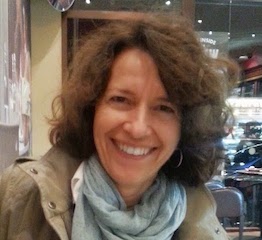
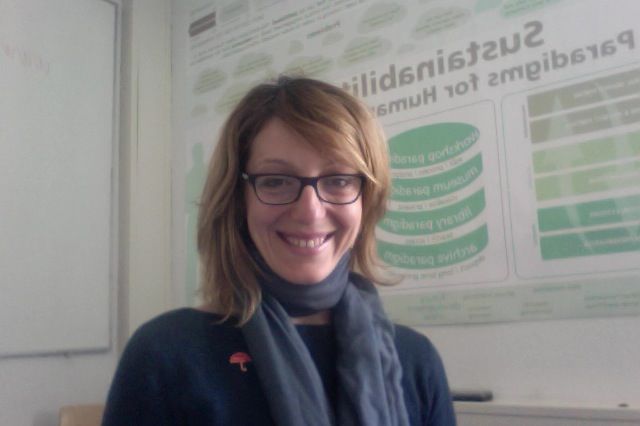
Academic staff
 +39 045802 8409


 alessandro.bigardi@univr.it


Bradas Marija
marija.bradas@univr.it

 paolamaria.caleffi@univr.it








 veronica.gobbato@univr.it



 tiziana.mancinelli@univr.it






 silvia.zollo@univr.it
Study Plan
The Study Plan includes all modules, teaching and learning activities that each student will need to undertake during their time at the University.
Please select your Study Plan based on your enrollment year.
1° Year
| Modules | Credits | TAF | SSD |
|---|
2° Year activated in the A.Y. 2019/2020
| Modules | Credits | TAF | SSD |
|---|
3° Year activated in the A.Y. 2020/2021
| Modules | Credits | TAF | SSD |
|---|
| Modules | Credits | TAF | SSD |
|---|
| Modules | Credits | TAF | SSD |
|---|
| Modules | Credits | TAF | SSD |
|---|
| Modules | Credits | TAF | SSD |
|---|
Legend | Type of training activity (TTA)
TAF (Type of Educational Activity) All courses and activities are classified into different types of educational activities, indicated by a letter.
Spanish Literature I (2018/2019)
Teaching code
4S00853
Teacher
Coordinator
Credits
9
Language
Italian
Scientific Disciplinary Sector (SSD)
L-LIN/05 - SPANISH LITERATURE
Period
II semestre dal Feb 18, 2019 al Jun 1, 2019.

Learning outcomes
The main objective of the course (within the Languages and Cultures for Publishing) is the acquisition of good skills in the field of Spanish literature from 18th to 21st Centuries. The expected learning outcomes are as follows:
- Knowledge and understanding: a depth knowledge of the Spanish literature of the considered period: historical context, texts, genres, movements and authors taught in the course.
- Applied knowledge and understanding skills: the student must acquire the ability to understand complex texts of a certain length as well as implicit meanings both in Italian and at a basic level, in Spanish.
Program
The coursewill provide the coordinates for the knowledge of the main movements, authors and genres of Spanish literature of the twentieth century, focusing in particular on the prose fiction. In particular, we will explore the female Spanish novel of the Middle Century Generation and the works of the contemporary novelist Ángeles Caso. The topics planned as follows:
- History: the Cuban crisis of '98, the Second Republic, Franco, the democratic transition
- Literature: the Avant-gardes, the Generation of '27, the novel during Franco's dictatorship, the
of the Transition
- Texts: the major Spanish writers of the Twentieth Century included in the Anthology uploaded to the e-learning portal. Detailed analysis of one of the two novels by Ángeles Caso included in the bibliography.
Teaching Mode: Teaching will take place in Italian and Spanish through frontal teaching, case studies and e-learning. The course will have an e-learning platform, which will contain mandatory contents and optional materials. For students who do not have a previous Spanish language education, we will consider the possibility of organizing support courses. This program is also valid for non-attending students who, however, are advised to contact the teacher during the reception hours. Throughout the academic year, the individual reception service managed by the teacher is available, at the timetable indicated on the web pages (no need to set a specific appointment).
| Author | Title | Publishing house | Year | ISBN | Notes |
|---|---|---|---|---|---|
| L. Rodríguez Cacho, | 3 Manual de historia de la literatura española. Vol. II, Siglos XVIII al XX, Castalia | Castalia | 2017 | Testo facoltativo e limitatamente ai capitoli sul Novecento (pp. 241-326; 379-548): gli studenti che intendono preparare il programma in spagnolo potranno scegliere questo testo in alternativa alla dispensa e studiare le pagine indicate. | |
| Ángeles Caso | Contra el viento | Planeta | 2010 | 9788408103455 | Testo da scegliere in alternativa a "Un largo silencio" della stessa autrice |
| Stefano Neri | Dispensa e antologia del corso sul portale E-learning | 2021 | |||
| Julio Valdeón, Joseph Pérez, Santos Juliá | Historia de España | Austral | 2005 | Facoltativo: gli studenti che intendono preparare il programma in spagnolo posso scegliere questo testo in alternativa a "Il Franchismo" e studiare solo la parte relativa al Novecento (pp. 469-578) | |
| Giuliana Di Febo; Santos Juliá | Il franchismo | Carocci | 2003 | ||
| Ángeles Caso | Un largo silencio | Planeta | 2003 | 9788408068167 | Testo da scegliere in alternativa a "Contra el viento" della stessa autrice |
Examination Methods
The exam takes place in Italian and Spanish and consists of an interview aimed at verifying the depth and breadth of the matured knowledge, the analytical and argumentative ability, the ability to systematically connect knowledge, the property of language. The exam covers the topics covered throughout the program. Students will have the opportunity to take an informal and optional written exam based on the blocks of history and literature (open questions and multiple-choice tests). For those who get a positive result for this test, the oral exam will only focus on the text commentary (reading, translating, contextualizing, analyzing a text fragment).
Type D and Type F activities
To discover all the teaching activities accredited by the foreign teaching college click here
Career prospects
Module/Programme news
News for students
There you will find information, resources and services useful during your time at the University (Student’s exam record, your study plan on ESSE3, Distance Learning courses, university email account, office forms, administrative procedures, etc.). You can log into MyUnivr with your GIA login details: only in this way will you be able to receive notification of all the notices from your teachers and your secretariat via email and soon also via the Univr app.
Student login and resources
Assegnazione tutore
Attività accreditate D/F
Calendario didattico dettagliato
Cambio lingua curriculare
Competenze informatiche
Competenze linguistiche (prima e seconda lingua)
Competenze linguistiche in triennale (terza lingua CFU F)
Compilazione del piano didattico
Corso di Lingua portoghese
Erasmus+ e altre esperienze all'estero
Linguistic training CLA
Graduation
List of theses and work experience proposals
| Stage | Research area |
|---|---|
| PROGETTO MAMBRINO Stage per bibliografia | Various topics |
Stage e tirocini
Nel piano didattico della laurea triennale in Lingue e culture per l’editoria (L11 ED) è previsto un tirocinio/stage obbligatorio (CFU 6).
Le attività di stage sono finalizzate a far acquisire allo studente una conoscenza diretta in settori di particolare interesse per l’inserimento nel mondo del lavoro e per l’acquisizione di abilità professionali specifiche.
Le attività di stage sono svolte sotto la diretta responsabilità di un singolo docente presso studi professionali, enti della pubblica amministrazione, aziende accreditate dall’Ateneo veronese.
I crediti maturati in seguito ad attività di stage saranno attribuiti secondo quanto disposto nel dettaglio dal “Regolamento d’Ateneo per il riconoscimento dei crediti maturati negli stage universitari” vigente.
- Tutte le informazioni in merito agli stage per futuri studenti sono disponibili alla pagina Stage e tirocini.
- Tutte le informazioni in merito agli stage per studenti iscritti sono pubblicate in MyUnivr - come fare per - stage e tirocini.
- Tutte le informazioni in merito agli stage per le aziende sono disponili alla pagina Stage e tirocini per azienze.
Ulteriori informazioni al seguente link https://www.univr.it/it/i-nostri-servizi/gestione-carriere-studenti-lingue-e-letterature-straniere/stage-e-tirocini-lingue-e-letterature-straniere
