Studying at the University of Verona
Here you can find information on the organisational aspects of the Programme, lecture timetables, learning activities and useful contact details for your time at the University, from enrolment to graduation.
Academic calendar
The academic calendar shows the deadlines and scheduled events that are relevant to students, teaching and technical-administrative staff of the University. Public holidays and University closures are also indicated. The academic year normally begins on 1 October each year and ends on 30 September of the following year.
Course calendar
The Academic Calendar sets out the degree programme lecture and exam timetables, as well as the relevant university closure dates..
| Period | From | To |
|---|---|---|
| CuCi IA | Sep 21, 2020 | Oct 31, 2020 |
| CuCi IB | Nov 9, 2020 | Jan 9, 2021 |
| CuCi IIA | Feb 15, 2021 | Apr 1, 2021 |
| CuCi IIB | Apr 14, 2021 | May 29, 2021 |
| Session | From | To |
|---|---|---|
| sessione d'esame invernale CuCi | Jan 11, 2021 | Feb 13, 2021 |
| sessione d'esame estiva CuCi | Jun 7, 2021 | Jul 24, 2021 |
| sessione d'esame autunnale CuCi | Aug 23, 2021 | Sep 18, 2021 |
| Session | From | To |
|---|---|---|
| sessione di laurea invernale 19-20 | Apr 7, 2021 | Apr 13, 2021 |
| sessione di laurea estiva 20-21 | Jul 5, 2021 | Jul 10, 2021 |
| Sessione autunnale di laurea a.a. 2020/21 | Nov 8, 2021 | Nov 13, 2021 |
| Sessione straordinaria di laurea a.a. 2020/21 | Mar 28, 2022 | Apr 2, 2022 |
| Period | From | To |
|---|---|---|
| Festa di Ognissanti | Nov 1, 2020 | Nov 1, 2020 |
| Chiusura Ateneo ponte Immacolata | Dec 7, 2020 | Dec 7, 2020 |
| Festa dell'Immacolata | Dec 8, 2020 | Dec 8, 2020 |
| Vacanze di Natale | Dec 24, 2020 | Jan 6, 2021 |
| Vacanze di Pasqua | Apr 2, 2021 | Apr 6, 2021 |
| Festa della liberazione | Apr 25, 2021 | Apr 25, 2021 |
| Festa del lavoro | May 1, 2021 | May 1, 2021 |
| Festa del Santo Patrono | May 21, 2021 | May 21, 2021 |
| Sospensione delle lezioni | May 22, 2021 | May 22, 2021 |
| Festa della Repubblica | Jun 2, 2021 | Jun 2, 2021 |
| Vacanze estive | Aug 9, 2021 | Aug 15, 2021 |
Exam calendar
Exam dates and rounds are managed by the relevant Culture and Civilisation Teaching and Student Services Unit.
To view all the exam sessions available, please use the Exam dashboard on ESSE3.
If you forgot your login details or have problems logging in, please contact the relevant IT HelpDesk, or check the login details recovery web page.
Should you have any doubts or questions, please check the Enrollment FAQs
Academic staff
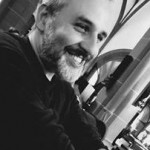

Bassetti Massimiliano
 massimiliano.bassetti@univr.it
 045802 8376



 andrea.chiurato@univr.it

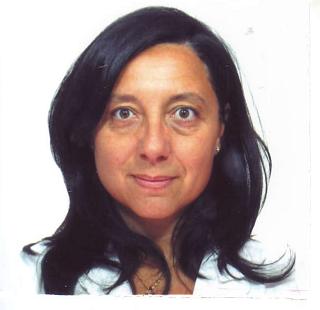



Mastrocinque Attilio
attilio.mastrocinque@univr.it
+39 045802 8386

 dino.piovan@univr.it




Rocconi Eleonora
eleonora.rocconi@univr.it

 alberto.scandola@univr.it



Tani Stefano
stefano.tani@univr.it
+39 045802 8110
 luciamaddalena.tissi@univr.it
 carlo.vannini@accademiabelleartiverona.it


Study Plan
The Study Plan includes all modules, teaching and learning activities that each student will need to undertake during their time at the University.
Please select your Study Plan based on your enrollment year.
1° Year
| Modules | Credits | TAF | SSD |
|---|
1 module to be chosen among the following2 modules to be chosen among the following1 module to be chosen between the following2° Year activated in the A.Y. 2021/2022
| Modules | Credits | TAF | SSD |
|---|
1 module to be chosen among the following2 modules to be chosen among the following1 module to be chosen among the following| Modules | Credits | TAF | SSD |
|---|
1 module to be chosen among the following2 modules to be chosen among the following1 module to be chosen between the following| Modules | Credits | TAF | SSD |
|---|
1 module to be chosen among the following2 modules to be chosen among the following1 module to be chosen among the following| Modules | Credits | TAF | SSD |
|---|
Legend | Type of training activity (TTA)
TAF (Type of Educational Activity) All courses and activities are classified into different types of educational activities, indicated by a letter.
Medieval and Humanistic Philology (m) (2020/2021)
Teaching code
4S02278
Teacher
Coordinator
Credits
6
Also offered in courses:
- Medieval and Humanistic Philology (m) of the course Master's degree in Arts (interuniversity)
- Italian Philology II (Medieval and Humanistic Philology) of the course Master’s degree in Historical Studies (interuniversity)
Language
Italian
Scientific Disciplinary Sector (SSD)
L-FIL-LET/13 - PHILOLOGY OF ITALIAN LITERATURE
Period
CuCi IB dal Nov 9, 2020 al Jan 9, 2021.

Learning outcomes
The course aims to study the textual tradition of some exemplary works, with special regard to the works of Dante Alighieri.
KNOWLEDGE
The course will teach the basic principles of textual criticism and Lachmann's method. Students will analyze the critical editions of some works by Dante Alighieri. Exercises will be conducted directly on handwritten witnesses working on the classification of manuscripts and on the constitution of the text in its individual stages.
LEARNING OUTCOMES
At the end of the course, the student will learn: 1) how to transcribe a manuscript and produce a diplomatic edition; 2) how to distinguish between errors and variants and to classify witnesses on these bases; 3) how to read a critical edition and to understand its apparatus with special regard to the main textual problems; 4) how to acquire autonomy in understanding and interpreting the text.
Program
The course is divided into three steps:
1) Lachmann method
2) The textual tradition of Dante's works (Epistles)
3) Transcription and edition of Dante's epistles
The course will consist of lectures during which students will work directly on the reproductions of manuscripts of Dante's works, learning how to: (1) transcribe them; (2) recognize errors; (3) prepare a critical text.
Students will be stimulated by the teacher to intervene in the first person and to face directly the problems connected with the preparation of the text.
REFERENCE TEXTS
Bibliography must be integrated with the essay by Giorgio Padoan, Introduction to Dante, Florence, Sansoni, 1975 (or 1981), available on the e-learning platform in PDF format.
Non-attending students are also required to prepare the essay by Gianfranco Folena, The tradition of Dante Alighieri's works. In Proceedings of the International Congress of Dante Studies, Florence – Verona – Ravenna, 20–27 April 1965. Florence: Sansoni, 1965, 1–78 available on the e-learning platform in PDF format
| Author | Title | Publishing house | Year | ISBN | Notes |
|---|---|---|---|---|---|
| M. Bertè-M. Petoletti | ‘La filologia medievale e umanistica’ | Il Mulino | 2017 | 9788815265432 |
Examination Methods
The exam is oral and consists of two questions:
1. Discussion of a general issue concerning the philological method.
2. Discussion of a particular issue concerning the textual tradition of Dante's works. Students must explain the proposed issue by showing that they can apply the knowledge they acquired.
Non-attending students must also illustrate the content of one of the articles agreed with the teacher.
Each of the two questions weighs 15/30 on the final evaluation (with possible honors). For non-attending students, each of the three questions weighs 10/30 on the final evaluation.
Type D and Type F activities
| years | Modules | TAF | Teacher |
|---|---|---|---|
| 1° 2° | Dialogoi. Interdepartmental seminar on the texts of philosophy and ancient literature | F |
Gherardo Ugolini
(Coordinator)
|
| 1° 2° | Giornata mondiale della poesia | F |
Arnaldo Soldani
(Coordinator)
|
| 1° 2° | Il testo en abyme: rappresentazioni della scrittura nell’Europa romantica - Convegno internazionale del CRIER - 5-6 novembre 2020 | F |
Corrado Viola
(Coordinator)
|
| 1° 2° | Laboratory to introduce the study of Ancient Greek | F |
Dino Piovan
(Coordinator)
|
| 1° 2° | Books and writings of the Greek world | F |
Paolo Scattolin
(Coordinator)
|
| years | Modules | TAF | Teacher |
|---|---|---|---|
| 1° 2° | Convegno su carlo gozzi nel terzo centenario della nascita | F |
Nicola Pasqualicchio
(Coordinator)
|
| 1° 2° | Dialogoi. Interdepartmental seminar on the texts of philosophy and ancient literature | F |
Gherardo Ugolini
(Coordinator)
|
| 1° 2° | Laboratory to introduce the study of Ancient Greek | F |
Dino Piovan
(Coordinator)
|
| 1° 2° | Books and writings of the Greek world | F |
Paolo Scattolin
(Coordinator)
|
| years | Modules | TAF | Teacher |
|---|---|---|---|
| 1° 2° | Dialogoi. Interdepartmental seminar on the texts of philosophy and ancient literature | F |
Gherardo Ugolini
(Coordinator)
|
| 1° 2° | Laboratory of photo | F |
Carlo Vannini
(Coordinator)
|
| 1° 2° | Laboratory to introduce the study of Ancient Greek | F |
Dino Piovan
(Coordinator)
|
| 1° 2° | Opera Workshop | F |
Nicola Pasqualicchio
(Coordinator)
|
| years | Modules | TAF | Teacher |
|---|---|---|---|
| 1° 2° | Cycle of CRIER Conferences for the Napoleon’s Death Bicentenary | F |
Corrado Viola
(Coordinator)
|
| 1° 2° | PhD Conference 2021: Margins and Forgotten places | F |
Simona Brunetti
(Coordinator)
|
| 1° 2° | International Study Conference “Scrivere agli altri, scrivere di sé, scrivere per sé” | F |
Fabio Danelon
(Coordinator)
|
| 1° 2° | Dialogoi. Interdepartmental seminar on the texts of philosophy and ancient literature | F |
Gherardo Ugolini
(Coordinator)
|
| 1° 2° | Laboratory of photo | F |
Carlo Vannini
(Coordinator)
|
| 1° 2° | Laboratory to introduce the study of Ancient Greek | F |
Dino Piovan
(Coordinator)
|
| 1° 2° | Opera Workshop | F |
Nicola Pasqualicchio
(Coordinator)
|
| years | Modules | TAF | Teacher |
|---|---|---|---|
| 1° 2° | The origins of Christianity | F | Not yet assigned |
Career prospects
Module/Programme news
News for students
There you will find information, resources and services useful during your time at the University (Student’s exam record, your study plan on ESSE3, Distance Learning courses, university email account, office forms, administrative procedures, etc.). You can log into MyUnivr with your GIA login details: only in this way will you be able to receive notification of all the notices from your teachers and your secretariat via email and soon also via the Univr app.
Graduation
List of theses and work experience proposals
| theses proposals | Research area |
|---|---|
| tesi di Glottologia, Storia comparata, Linguistica storica | ENGLISH LANGUAGE - Grammar and Syntax – Grammatik und Syntax |
| tesi di Glottologia, Storia comparata, Linguistica storica | GERMANIC LANGUAGE - Dialectology - Dialektologie |
| tesi di Glottologia, Storia comparata, Linguistica storica | HUMANITIES & SOCIAL STUDIES - HUMANITIES & SOCIAL STUDIES |
| tesi di Glottologia, Storia comparata, Linguistica storica | Indo-European languages & literatures - Indo-European languages & literatures |
| tesi di Glottologia, Storia comparata, Linguistica storica | LINGUISTICS - LINGUISTICS |
Gestione carriere
Linguistic training CLA
Double Degree
The University of Verona, through a network of agreements with foreign universities, offers international courses that enable students to gain a Double/Joint degree at the time of graduation. Indeed, students enrolled in a Double/Joint degree programme will be able to obtain both the degree of the University of Verona and the degree issued by the Partner University abroad - where they are expected to attend part of the programme -, in the time it normally takes to gain a common Master’s degree. The institutions concerned shall ensure that both degrees are recognised in the two countries.
Places on these programmes are limited, and admissions and any applicable grants are subject to applicants being selected in a specific Call for applications.
The latest Call for applications for Double/Joint Degrees at the University of Verona is available now!
Student mentoring
Requisiti classi di abilitazione insegnamento
Requisiti necessari per accedere alle classi di abilitazione per l'insegnamento.
vedi allegato pdf
Inoltre, per informazioni sui 24 CFU nelle discipline antropo-psico-pedagogiche e nelle metodologie e tecnologie didattiche, si veda -> LINK
Documents
| Title | Info File |
|---|---|
 Classi insegnamento con LM-14
|
pdf, it, 307 KB, 30/11/21 |
