Studying at the University of Verona
Here you can find information on the organisational aspects of the Programme, lecture timetables, learning activities and useful contact details for your time at the University, from enrolment to graduation.
Academic calendar
The academic calendar shows the deadlines and scheduled events that are relevant to students, teaching and technical-administrative staff of the University. Public holidays and University closures are also indicated. The academic year normally begins on 1 October each year and ends on 30 September of the following year.
Course calendar
The Academic Calendar sets out the degree programme lecture and exam timetables, as well as the relevant university closure dates..
| Period | From | To |
|---|---|---|
| Sem. IA | Oct 1, 2014 | Nov 16, 2014 |
| Sem. IB | Nov 17, 2014 | Jan 18, 2015 |
| Sem. IIA | Feb 23, 2015 | Apr 19, 2015 |
| Sem. IIB | Apr 20, 2015 | Jun 7, 2015 |
| Session | From | To |
|---|---|---|
| Sessione Estiva (Esami sospesi dal 14 al 16 luglio) | Jun 8, 2015 | Jul 31, 2015 |
| Sessione Autunnale | Sep 1, 2015 | Sep 30, 2015 |
| Sessione Invernale | Jan 18, 2016 | Feb 21, 2016 |
| Session | From | To |
|---|---|---|
| Sessione Estiva | Jul 14, 2015 | Jul 16, 2015 |
| Sessione Autunnale | Nov 10, 2015 | Nov 12, 2015 |
| Sessione Invernale | Mar 14, 2016 | Mar 17, 2016 |
| Period | From | To |
|---|---|---|
| Festa di Ognissanti | Nov 1, 2014 | Nov 1, 2014 |
| Festa dell'Immacolata Concezione | Dec 8, 2014 | Dec 8, 2014 |
| Vacanze Natalizie | Dec 22, 2014 | Jan 6, 2015 |
| Vacanze Pasquali | Apr 2, 2015 | Apr 7, 2015 |
| Festa della Liberazione | Apr 25, 2015 | Apr 25, 2015 |
| Festa dei lavoratori | May 1, 2015 | May 1, 2015 |
| Festa del S. Patrono S. Zeno | May 21, 2015 | May 21, 2015 |
| Festa della Repubblica | Jun 2, 2015 | Jun 2, 2015 |
| Vacanze Estive | Aug 10, 2015 | Aug 16, 2015 |
Exam calendar
Exam dates and rounds are managed by the relevant Humanistic Studies Teaching and Student Services Unit.
To view all the exam sessions available, please use the Exam dashboard on ESSE3.
If you forgot your login details or have problems logging in, please contact the relevant IT HelpDesk, or check the login details recovery web page.
Should you have any doubts or questions, please check the Enrollment FAQs
Academic staff
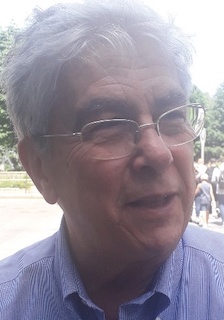
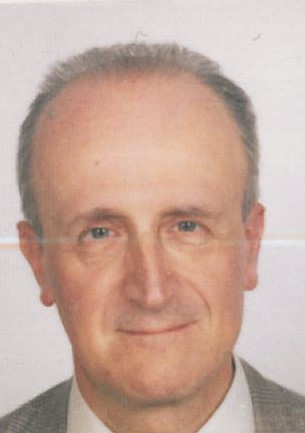
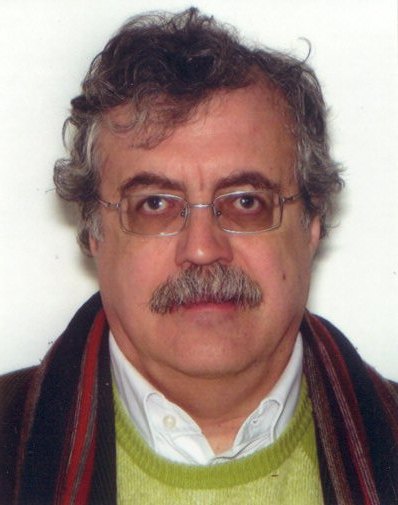
Avezzu' Guido
 guido.avezzu@univr.it






Longo Mario
mario.longo@univr.it
 045 8028393

Mastrocinque Attilio
attilio.mastrocinque@univr.it
+39 045802 8386
 linda.napolitano@univr.it








Study Plan
The Study Plan includes all modules, teaching and learning activities that each student will need to undertake during their time at the University.
Please select your Study Plan based on your enrollment year.
1° Year
| Modules | Credits | TAF | SSD |
|---|
2° Year activated in the A.Y. 2015/2016
| Modules | Credits | TAF | SSD |
|---|
| Modules | Credits | TAF | SSD |
|---|
| Modules | Credits | TAF | SSD |
|---|
| Modules | Credits | TAF | SSD |
|---|
Legend | Type of training activity (TTA)
TAF (Type of Educational Activity) All courses and activities are classified into different types of educational activities, indicated by a letter.
Public Ethics (M) (2014/2015)
Teaching code
4S003316
Teacher
Coordinator
Credits
6
Language
Italian
Scientific Disciplinary Sector (SSD)
M-FIL/03 - MORAL PHILOSOPHY
Period
Sem. IA, Sem. IB
Learning outcomes
The interrogation on public ethics concerns those questions that emerge around the human behavior. The issues are discussed taking into account the historical context, but with prevailing theoretical commitment. Knowledge and various skills (historical, political, legal, theological) are part of this discipline as proper setting for further interdisciplinary developments.
Program
Fourth-person singular. The notion of “impersonal”
Contemporary philosophy is characterized by the emergence of a new figure of thought. We call it the “impersonal”. The course aims to query the traces of this rest with recpect to the idea of human subjectivity and also the practice of ethics.
Textbooks:
The bibliography of the course consists in a selection of texts, whose final version will be available only at the end of the semester, according to the readings during lessons. Please, refer to the website of the teacher for more precise indications, updates or proposals for reading when the course has started. Based on the performance of the course additions or changes of the program will be possible.
1. Sigmund Freud, Il perturbante, in Opere, vol. 9, L'Io e l'Es e altri scritti 1917-1923, Bollati Boringhieri, Torino 2000.
2. Simone Weil, La persona e il sacro, Adelphi, Milano 2012.
3. Gilles Deleuze, L’esausto, Cronopio, Napoli 1999.
4. Marcel Mauss, Una categoria dello spirito umano; la nozione di persona, quella di “io”, in Teoria generale della magia, Einaudi, Torino 2000.
Examination Methods
Oral Exam.
Type D and Type F activities
Modules not yet included
Career prospects
Module/Programme news
News for students
There you will find information, resources and services useful during your time at the University (Student’s exam record, your study plan on ESSE3, Distance Learning courses, university email account, office forms, administrative procedures, etc.). You can log into MyUnivr with your GIA login details: only in this way will you be able to receive notification of all the notices from your teachers and your secretariat via email and soon also via the Univr app.
Competenze linguistiche
I crediti formativi universitari relativi alle "Ulteriori competenze linguistiche" (B1 informatizzato se seconda lingua; livello B2 completo se stessa lingua della triennale) possono essere acquisiti in una delle due seguenti modalità:
- iscrizione da parte della/o studente presso il Centro Linguistico di Ateneo (CLA ➔ https://cla.univr.it/it/test-e-certificazioni) per il sostenimento e il superamento delle prove + iscrizione, sempre da parte della/o studente, in apposita lista per la registrazione crediti e registrazione CFU (senza presenza) da parte dell’Università.
Oppure
- equipollenza di certificazioni linguistiche esterne: riconoscimento equipollenza di certificazioni linguistiche esterne (➔ https://cla.univr.it/it/servizi/riconoscimento-delle-certificazioni-linguistiche-esterne).
Gestione carriere
Linguistic training CLA
Internships
Graduation
Documents
| Title | Info File |
|---|---|
 Adempimenti amministrativi domanda di laurea Aprile 2024 - a.a. 2022/2023
|
pdf, it, 99 KB, 13/10/23 |
|
Adempimenti amministrativi domanda di laurea Luglio 2024-a.a. 2023/2024
|
pdf, it, 101 KB, 10/04/24 |
List of theses and work experience proposals
| theses proposals | Research area |
|---|---|
| Linguaggio e mito in Tolkien | ENGLISH LITERATURE - Critical Theory & Poetics |
| Dialettica del negativo in Meister Eckhart | HISTORY OF PHILOSOPHY - MIDDLE AGES |
| La felicità nel Medioevo | HISTORY OF PHILOSOPHY - MIDDLE AGES |
| Le figure di Eva e Maria in Ildegarda di Bingen | HISTORY OF PHILOSOPHY - MIDDLE AGES |
| IA. Una critica fenomenologica al concetto di Intelligenza Artificiale | The Human Mind and Its Complexity: Cognitive science, psychology, linguistics, philosophy of mind - Philosophy of science, epistemology and logic |
Practical information for students
Documents
| Title | Info File |
|---|---|
|
1 - Guida per lo studente - AGGIORNAMENTO 2022
|
pdf, it, 325 KB, 02/05/23 |
|
2 - Guida per lo studente - AGGIORNAMENTO 2020
|
pdf, it, 212 KB, 02/05/23 |
|
3 - Guida per lo studente - AGGIORNAMENTO 2013
|
pdf, it, 131 KB, 02/05/23 |
