Studying at the University of Verona
Here you can find information on the organisational aspects of the Programme, lecture timetables, learning activities and useful contact details for your time at the University, from enrolment to graduation.
Academic calendar
The academic calendar shows the deadlines and scheduled events that are relevant to students, teaching and technical-administrative staff of the University. Public holidays and University closures are also indicated. The academic year normally begins on 1 October each year and ends on 30 September of the following year.
Course calendar
The Academic Calendar sets out the degree programme lecture and exam timetables, as well as the relevant university closure dates..
| Period | From | To |
|---|---|---|
| primo semestre (lauree magistrali) | Oct 5, 2020 | Dec 23, 2020 |
| secondo semestre (lauree magistrali) | Mar 1, 2021 | Jun 1, 2021 |
| Session | From | To |
|---|---|---|
| sessione invernale | Jan 11, 2021 | Feb 12, 2021 |
| sessione estiva | Jun 7, 2021 | Jul 23, 2021 |
| sessione autunnale | Aug 23, 2021 | Sep 17, 2021 |
| Session | From | To |
|---|---|---|
| sessione autunnale (validità a.a. 2019/20) | Dec 9, 2020 | Dec 11, 2020 |
| sessione invernale (validità a.a. 2019/20) | Apr 7, 2021 | Apr 9, 2021 |
| sessione estiva (validità a.a. 2020/21) | Sep 6, 2021 | Sep 8, 2021 |
| Period | From | To |
|---|---|---|
| Vacanze di Natale | Dec 24, 2020 | Jan 6, 2021 |
| Vacanze di Pasqua | Apr 3, 2021 | Apr 6, 2021 |
| Vacanze estive | Aug 9, 2021 | Aug 15, 2021 |
Exam calendar
Exam dates and rounds are managed by the relevant Economics Teaching and Student Services Unit.
To view all the exam sessions available, please use the Exam dashboard on ESSE3.
If you forgot your login details or have problems logging in, please contact the relevant IT HelpDesk, or check the login details recovery web page.
Should you have any doubts or questions, please check the Enrollment FAQs
Academic staff

 mariacaterina.baruffi@univr.it

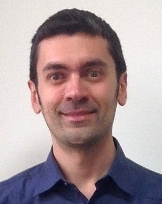


 daniela.cavallo@univr.it
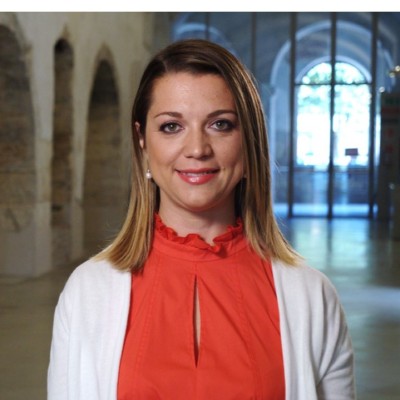
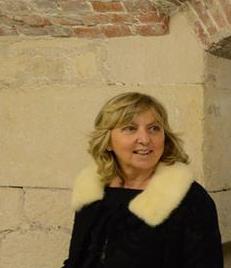
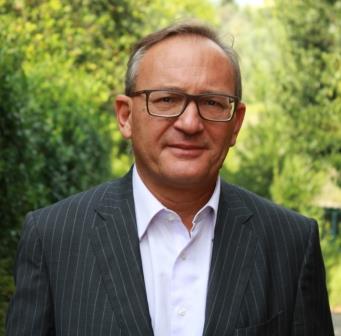


 sofia.mansoldo@univr.it
 alberto.mariutto@univr.it
 martina.menon@univr.it

 paolo.pasquetto@univr.it
 francesca.rossignoli@univr.it
 0444 393941 (Ufficio Vicenza) 0458028261 (Ufficio Verona)




Vannucci Virginia
virginia.vannucci@univr.it



Study Plan
The Study Plan includes all modules, teaching and learning activities that each student will need to undertake during their time at the University.
Please select your Study Plan based on your enrollment year.
1° Year
| Modules | Credits | TAF | SSD |
|---|
2° Year activated in the A.Y. 2021/2022
| Modules | Credits | TAF | SSD |
|---|
| Modules | Credits | TAF | SSD |
|---|
| Modules | Credits | TAF | SSD |
|---|
| Modules | Credits | TAF | SSD |
|---|
Legend | Type of training activity (TTA)
TAF (Type of Educational Activity) All courses and activities are classified into different types of educational activities, indicated by a letter.
Creativity and marketing innovation (2020/2021)
Teaching code
4S009096
Academic staff
Coordinator
Credits
9
Language
Italian
Scientific Disciplinary Sector (SSD)
SECS-P/08 - MANAGEMENT
Period
primo semestre (lauree magistrali) dal Oct 5, 2020 al Dec 23, 2020.

Learning outcomes
The course aims to analyze business creative processes, highlighting their connections with marketing and innovation, with particular attention to product innovation.
Within a theoretical framework that sees creativity as a primary intangible resource to face and promote change, manage problem solving and generate innovation, the reasoning is articulated on different levels, individual, group and organizational, in which it can be declined the development of creativity.
At the end of the course, the student will have acquired: - a basic knowledge of the paradigms of creativity and innovation in marketing; - method indications (mental and technical approaches) to creatively carry out any professional activity, even beyond the marketing sphere, and to develop the creativity of a work team; - awareness of the personal skills to be equipped to generate innovation and change.
Program
Product innovation
- A multidimensional concept
- The importance of product innovation
- Product innovation and competitiveness
- The determinants of product innovation: Novelty, Resolution, Elaboration
- Product innovation and organizational creativity
- The obstacles to product innovation. Not only costs and risks: the brakes to change and creativity killers
Organizational creativity
- The three-dimensionality of corporate creativity: individual, group and organizational factors
- Where good ideas come from: long time, collision, connection and creative failure
- The principles of creativity: breaking of the paradigm, paradox and multisensoriality
- Creative thinking and creative process
- Techniques for developing creativity
- Managerial approaches and soft skills for the creative marketing manager
Marketing and innovation
- The marketing strategies of innovation: timing and positioning
- Product development: from concept generation to market launch
- Creativity and words: the choice of the name, a complex activity
- The role of marketing tests
- Leadership in marketing teams: from leadership of one's ideas to innovation leadership
Reference Books
1. Vicari S., Cillo P., Raccagni D., Product Innovation. Dall'idea al lancio del nuovo prodotto, Egea, Milano, 2013.
2. additional material uploaded to the teaching moodle.
The content of the textbooks, as well as the lessons and exercises, is part of the program. Further in-depth educational material is available during the semester of lesson on the e-learning platform.
(update to 30/06/2020 - The program may be subject to changes)
| Author | Title | Publishing house | Year | ISBN | Notes |
|---|---|---|---|---|---|
| Vicari S., Cillo P., Raccagni D. | Product innovation. Dall'idea al lancio del nuovo prodotto | Egea | 2013 |
Examination Methods
The examination will be carried out in remote mode on a zoom platform.
The exam is structured in a written part (compulsory) and in a possible oral part proposed by the teacher in case of doubt. The oral exam can also be requested by the student as a supplement to the written mark.
The written part consists of 5 open but precise questions, which will focus on the textbook, notes (for attending students) and the handouts available on the course moodle.
Type D and Type F activities
| years | Modules | TAF | Teacher |
|---|---|---|---|
| 1° 2° | Future matters | D |
Alessandro Bucciol
(Coordinator)
|
| 1° 2° | Future matters | D |
Alessandro Bucciol
(Coordinator)
|
| years | Modules | TAF | Teacher |
|---|---|---|---|
| 1° 2° | The fashion lab (1 ECTS) | D |
Maria Caterina Baruffi
(Coordinator)
|
| 1° 2° | The fashion lab (2 ECTS) | D |
Maria Caterina Baruffi
(Coordinator)
|
| 1° 2° | The fashion lab (3 ECTS) | D |
Maria Caterina Baruffi
(Coordinator)
|
| years | Modules | TAF | Teacher | |
|---|---|---|---|---|
| 1° | Wake up Italia - 2020/2021 | D |
Sergio Noto
(Coordinator)
|
|
| 1° 2° | Design and Evaluation of Economic and Social Policies | D |
Federico Perali
(Coordinator)
|
|
| 1° 2° | Public debate and scientific writing - 2020/2021 | D |
Martina Menon
(Coordinator)
|
|
| years | Modules | TAF | Teacher |
|---|---|---|---|
| 2° | Conoscere e usare i tool del marketing digitale: Google Ads 2021 - 2020/2021 | D |
Federico Brunetti
(Coordinator)
|
Career prospects
Module/Programme news
News for students
There you will find information, resources and services useful during your time at the University (Student’s exam record, your study plan on ESSE3, Distance Learning courses, university email account, office forms, administrative procedures, etc.). You can log into MyUnivr with your GIA login details: only in this way will you be able to receive notification of all the notices from your teachers and your secretariat via email and soon also via the Univr app.
Linguistic training CLA
Graduation
List of theses and work experience proposals
| theses proposals | Research area |
|---|---|
| Brand identity e corporate brand storytelling | Various topics |
| Il futuro del corporate reporting (COVID19) | Various topics |
| Le scelte alimentari dei giovani italiani: quanto è importante la sostenibilità? | Various topics |
| Nuovi scenari e nuovi contesti di acquisto e consumo di bevande alcoliche | Various topics |
| Sfide e opportunità del contesto digitale | Various topics |
| Tesi di Laurea in Economia Comportamentale | Various topics |
