Studying at the University of Verona
Here you can find information on the organisational aspects of the Programme, lecture timetables, learning activities and useful contact details for your time at the University, from enrolment to graduation.
Academic calendar
The academic calendar shows the deadlines and scheduled events that are relevant to students, teaching and technical-administrative staff of the University. Public holidays and University closures are also indicated. The academic year normally begins on 1 October each year and ends on 30 September of the following year.
Course calendar
The Academic Calendar sets out the degree programme lecture and exam timetables, as well as the relevant university closure dates..
| Period | From | To |
|---|---|---|
| I semestre | Oct 1, 2015 | Jan 29, 2016 |
| I sem. (solo studenti del III anno di Viti) | Nov 2, 2015 | Jan 29, 2016 |
| II semestre | Mar 1, 2016 | Jun 10, 2016 |
| Session | From | To |
|---|---|---|
| Sessione straordinaria Appelli d'esame | Feb 1, 2016 | Feb 29, 2016 |
| Sessione estiva Appelli d'esame | Jun 13, 2016 | Jul 29, 2016 |
| Sessione autunnale Appelli d'esame | Sep 1, 2016 | Sep 30, 2016 |
| Session | From | To |
|---|---|---|
| Sess. autun. App. di Laurea L25 | Nov 27, 2015 | Nov 27, 2015 |
| Sess. invern. 2016 App. di Laurea L25 | Mar 18, 2016 | Mar 18, 2016 |
| Sess. estiva App. di Laurea L25 | Jul 15, 2016 | Jul 15, 2016 |
| Sess. autun 2016 App. di Laurea L25 | Nov 25, 2016 | Nov 25, 2016 |
| Sess. invern. 2017 App. di Laurea L25 | Mar 22, 2017 | Mar 22, 2017 |
| Period | From | To |
|---|---|---|
| Festività dell'Immacolata Concezione | Dec 8, 2015 | Dec 8, 2015 |
| Vacanze di Natale | Dec 23, 2015 | Jan 6, 2016 |
| Vancanze di Pasqua | Mar 24, 2016 | Mar 29, 2016 |
| Anniversario della Liberazione | Apr 25, 2016 | Apr 25, 2016 |
| Festa del S. Patrono S. Zeno | May 21, 2016 | May 21, 2016 |
| Festa della Repubblica | Jun 2, 2016 | Jun 2, 2016 |
| Vacanze Estive | Aug 8, 2016 | Aug 15, 2016 |
Exam calendar
Exam dates and rounds are managed by the relevant Science and Engineering Teaching and Student Services Unit.
To view all the exam sessions available, please use the Exam dashboard on ESSE3.
If you forgot your login details or have problems logging in, please contact the relevant IT HelpDesk, or check the login details recovery web page.
Should you have any doubts or questions, please check the Enrollment FAQs
Academic staff
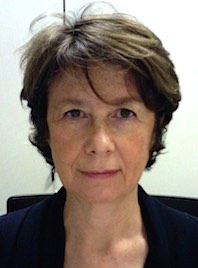
Bailetti Lucia Irene
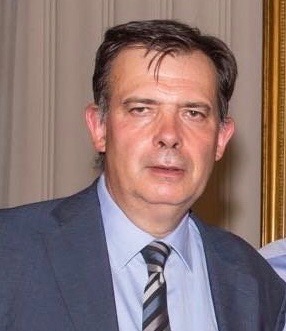

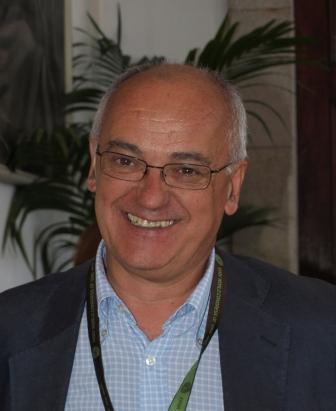
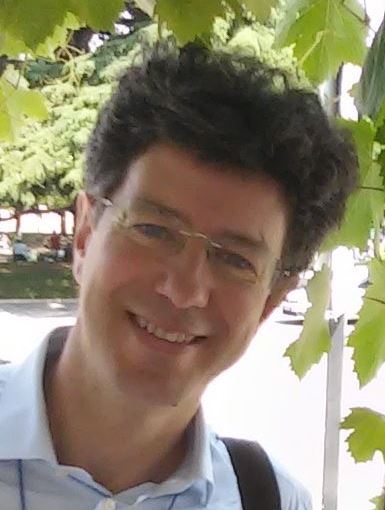
Boselli Maurizio
 maurizio.boselli@univr.it
 045 6835628


 malear@alice.it
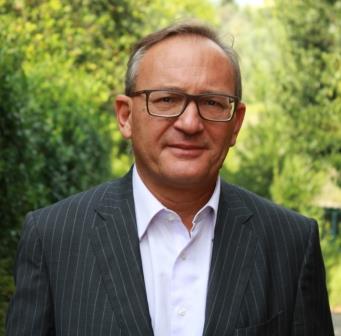

 lorenzo.meneghini@univr.it





Study Plan
The Study Plan includes all modules, teaching and learning activities that each student will need to undertake during their time at the University.
Please select your Study Plan based on your enrollment year.
1° Year
| Modules | Credits | TAF | SSD |
|---|
2° Year activated in the A.Y. 2016/2017
| Modules | Credits | TAF | SSD |
|---|
3° Year activated in the A.Y. 2017/2018
| Modules | Credits | TAF | SSD |
|---|
| Modules | Credits | TAF | SSD |
|---|
| Modules | Credits | TAF | SSD |
|---|
| Modules | Credits | TAF | SSD |
|---|
Legend | Type of training activity (TTA)
TAF (Type of Educational Activity) All courses and activities are classified into different types of educational activities, indicated by a letter.
Oenology II - TECNOLOGIE E PROCESSI ENOLOGICI (2017/2018)
Teaching code
4S00151
Credits
9
Coordinator
Not yet assigned
Language
Italian
Scientific Disciplinary Sector (SSD)
AGR/15 - FOOD SCIENCE AND TECHNOLOGY

To show the organization of the course that includes this module, follow this link: Course organization
The teaching is organized as follows:
Teoria
Laboratorio [Laboratorio - esercitazioni 1° turno]
Laboratorio [Laboratorio - esercitazioni 2° turno]
Esercitazioni
Learning outcomes
The purpose of this course is to provide knowledge concerning the chemical and biochemical mechanisms taking place during winemaking, as well as on the main steps of the winemaking process and related modulating factors. In addition to discussing the major red and white winemaking protocols, the course features a section on ‘special’ winemaking procedures, including production of rosé wines, sparkling wines, low sulfites wines and wines from withered grapes. The mechanisms contributing to wine ageing and maturation will be discussed in relationship to the most recent advances in wine science.
Program
- Grape ripening and its influence on the main berry components of enological interest
- Must enziamtic activities
- Grape harvest and its influence on wine quality
- Mechanins of sulfur dioxide action
- Wine aroma: nature and origin of wine aroma compounds
- The management of alcoholic fermentation: Yeast metabolism and production of aroma compounds. Fermentation nutrients. Criteria for the selection of yeast strains
- The production of white wine: Pre-fermentative steps. Management of pressing. Reductive and oxidative handling of grape must. The management of alcoholic fermentation. The contribution of yeast lees. Main process indicators and relative analyses.
- The production of red wine: Pre-fermentative steps. Management of maceration. The management of alcoholic fermentation. Main process indicators and relative analyses.
- The manageemnt of malolactic fermentation. Bacteria metabolism and production of aroma compounds. Fermentation nutrients. Criteria for the selection of bacterial strain.
- Wine maturation and ageing in tank and in barrel. The contribution of oxygen
- Special wines: Rosé wines, sparkling wines, low sulfites wines and wines from withered grapes.
- Wine stabilization treatments.
- Wine bottle aging. Main chemical mechanisms. Role of oxygen. Evolution of mouthfeel and formation of the aging ‘bouquet’
- Wine defects, prevention and cure.
Bibliography
| Activity | Author | Title | Publishing house | Year | ISBN | Notes |
|---|---|---|---|---|---|---|
| Teoria | Ribereau-Gayon | Trattato di enologia vol I e II (Edizione 3) | Edagricole | 2007 | 88-506-4770-0 | |
| Teoria | Jackson, Ronald | Wine Science (Edizione 3) | Elsevier | 2014 | 978-0-12-381468-5 | |
| Laboratorio | Ribereau-Gayon | Trattato di enologia vol I e II (Edizione 3) | Edagricole | 2007 | 88-506-4770-0 | |
| Laboratorio | Ribereau-Gayon | Trattato di enologia vol I e II (Edizione 3) | Edagricole | 2007 | 88-506-4770-0 | |
| Esercitazioni | Ribereau-Gayon | Trattato di enologia vol I e II (Edizione 3) | Edagricole | 2007 | 88-506-4770-0 |
Examination Methods
Oral exam to verify knowledge of the topics discussed during theoretical and practical classes. No distinctions to exams modalities are applied between students who have attended or not attended the classes. Exam score is attributed on a 0-30 scale.
Type D and Type F activities
Modules not yet included
Career prospects
Module/Programme news
News for students
There you will find information, resources and services useful during your time at the University (Student’s exam record, your study plan on ESSE3, Distance Learning courses, university email account, office forms, administrative procedures, etc.). You can log into MyUnivr with your GIA login details: only in this way will you be able to receive notification of all the notices from your teachers and your secretariat via email and soon also via the Univr app.
Graduation
Attendance
As stated in the Teaching Regulations for the A.Y. 2022/2023, attendance is mandatory for practical and laboratory activities, unless otherwise determined by the Teaching Committee.
Documents
| Title | Info File |
|---|---|
 Prospetto laboratori /esercitazioni
|
pdf, it, 121 KB, 18/10/23 |
