Studying at the University of Verona
Here you can find information on the organisational aspects of the Programme, lecture timetables, learning activities and useful contact details for your time at the University, from enrolment to graduation.
Academic calendar
The academic calendar shows the deadlines and scheduled events that are relevant to students, teaching and technical-administrative staff of the University. Public holidays and University closures are also indicated. The academic year normally begins on 1 October each year and ends on 30 September of the following year.
Course calendar
The Academic Calendar sets out the degree programme lecture and exam timetables, as well as the relevant university closure dates..
| Period | From | To |
|---|---|---|
| I sem. | Oct 2, 2017 | Jan 31, 2018 |
| I sem - 3° anno | Oct 30, 2017 | Jan 31, 2018 |
| II sem. | Mar 1, 2018 | Jun 15, 2018 |
| Session | From | To |
|---|---|---|
| Sessione invernale d'esame | Feb 1, 2018 | Feb 28, 2018 |
| Sessione estiva d'esame | Jun 18, 2018 | Jul 31, 2018 |
| Sessione autunnale d'esame | Sep 3, 2018 | Sep 28, 2018 |
| Session | From | To |
|---|---|---|
| Sessione estiva di laurea | Jul 20, 2018 | Jul 20, 2018 |
| Sessione autunnale di laurea | Nov 27, 2018 | Nov 27, 2018 |
| Sessione invernale di laurea | Mar 27, 2019 | Mar 27, 2019 |
| Period | From | To |
|---|---|---|
| Christmas break | Dec 22, 2017 | Jan 7, 2018 |
| Easter break | Mar 30, 2018 | Apr 3, 2018 |
| Patron Saint Day | May 21, 2018 | May 21, 2018 |
| VACANZE ESTIVE | Aug 6, 2018 | Aug 19, 2018 |
Exam calendar
Exam dates and rounds are managed by the relevant Science and Engineering Teaching and Student Services Unit.
To view all the exam sessions available, please use the Exam dashboard on ESSE3.
If you forgot your login details or have problems logging in, please contact the relevant IT HelpDesk, or check the login details recovery web page.
Should you have any doubts or questions, please check the Enrollment FAQs
Academic staff

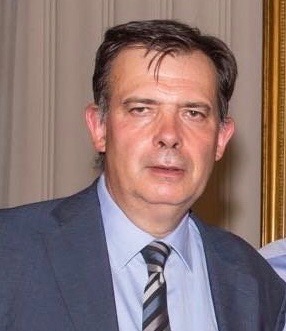

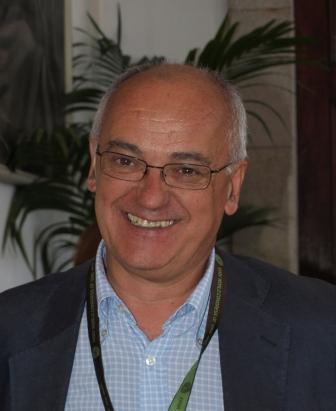
Boselli Maurizio
 maurizio.boselli@univr.it
 3478344185


 malear@alice.it
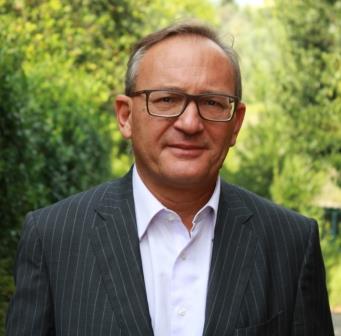
 lorenzo.meneghini@univr.it

Sandri Marco
marco.sandri@univr.it

 lorenzo.tonina@univr.it




Study Plan
The Study Plan includes all modules, teaching and learning activities that each student will need to undertake during their time at the University.
Please select your Study Plan based on your enrollment year.
1° Year
| Modules | Credits | TAF | SSD |
|---|
2° Year activated in the A.Y. 2018/2019
| Modules | Credits | TAF | SSD |
|---|
3° Year activated in the A.Y. 2019/2020
| Modules | Credits | TAF | SSD |
|---|
| Modules | Credits | TAF | SSD |
|---|
| Modules | Credits | TAF | SSD |
|---|
| Modules | Credits | TAF | SSD |
|---|
Legend | Type of training activity (TTA)
TAF (Type of Educational Activity) All courses and activities are classified into different types of educational activities, indicated by a letter.
Viticulture - ECOLOGIA E FISIOLOGIA VITICOLA (2018/2019)
Teaching code
4S02736
Credits
6
Coordinator
Not yet assigned
Language
Italian
Scientific Disciplinary Sector (SSD)
AGR/03 - ARBORICULTURE AND FRUITCULTURE
To show the organization of the course that includes this module, follow this link: Course organization
The teaching is organized as follows:
Teoria
Esercitazioni
Learning outcomes
------------------------
MM: Teoria
------------------------
In the module Viticultural Ecology and Physiology, various aspects of viticultural ecology are treated with regard to the description of environmental and biological factors that determine the cultivation areas of the grapevine. The influence of the environment and growing techniques on grape physiology is also examined. The student will learn how to consider the main climate and environmental parameters to understand the physiological response of the grapevine and their influence on grape yield and quality. Moreover, varietal-related responses to the growing environment will be discussed.
------------------------
MM: Esercitazioni
------------------------
In the training module, various technical and applicative aspects related to the recording, the elaboration and calculation dealing with environmental parameters will be treated. The students will increase their experience with the grapevine plants at some developmental stages and with the ecological and agronomical aspects of a vineyard. To this end, examples of techniques and approaches to measure physiological, agronomical and production parameters will be given.
Program
------------------------
MM: Teoria
------------------------
- Ecological factors influencing grapevine development and conditioning the grapevine cultivation areas. Bioclimatic indices. - Annual and life cycle; vegetative and reproductive sub-cycles. Phenology and phenology classification systems. Factors impacting on phenology. Climate change. - Morphology and anatomy of the bud complex. Prompt bud, latent bud. Inflorescence induction and bud fruitfulness. Factors influencing fruitfulness. - Bud dormancy, bud break, flowering. Different flower types. Pollination and fertilization, fruit set. Partenocarpy, stenospermocarpy. Seed number and berry development. - The grape cluster, anatomy of the berry and of the seed. Classification, characteristics, biosynthesis, tissue localization of the major compounds of a ripe berry (organic acids, sugars, phenolics, etc.), and their changes during berry growth and ripening. - Regulation of development and ripening of the grape berry: the role of hormones; influence of the main environmental and growing factors; stress physiology and impact on grape ripening.
------------------------
MM: Esercitazioni
------------------------
Environmental parameters: recording, calculation and elaboration. Bio-climatic indexes calculation and interpretation. Recording of agronomical, physiological and production parameters from a plant or from a vineyard.
Bibliography
| Activity | Author | Title | Publishing house | Year | ISBN | Notes |
|---|---|---|---|---|---|---|
| Teoria | Alberto Palliotti, Stefano Poni, Oriana Silvestroni | MANUALE DI VITICOLTURA (Edizione 1) | Edagricole - New Business Media | 2018 | 978-88-506-5533-5 | |
| Teoria | Markus Keller | The Science of Grapevines: Anatomy and Physiology (Edizione 2) | Elsevier | 2015 | 978-0-12-419987-3 | |
| Teoria | P.R. Dry and B.G. Coombe | Viticulture Volume 1 – Resources – | Winetitles | 2000 | ||
| Esercitazioni | Delrot, S., Medrano, H., Or, E., Bavaresco, L., Grando, S | Methodologies and Results in Grapevine Research | Springer | 2010 | 978-90-481-9283-0 | E-Book disponibile presso la biblioteca Meneghetti di Univr: https://link.springer.com/book/10.1007%2F978-90-481-9283-0 |
Examination Methods
------------------------
MM: Teoria
------------------------
The exam is oral for both students following and not following lectures. The aim of the exam is to assess the knowledge of the subjects listed in the course program. The ability to connect systemically different subjects, the deep knowledge and understanding of the subjects will be also matter of evaluation. The final vote will be expressed out of a maximum of 30 points.
------------------------
MM: Esercitazioni
------------------------
The exam is oral for both students following and not following lectures and will be held aside of the theory oral exam. The aim of the exam is to assess the knowledge of the subjects described during the training module.
Type D and Type F activities
Modules not yet included
Career prospects
Module/Programme news
News for students
There you will find information, resources and services useful during your time at the University (Student’s exam record, your study plan on ESSE3, Distance Learning courses, university email account, office forms, administrative procedures, etc.). You can log into MyUnivr with your GIA login details: only in this way will you be able to receive notification of all the notices from your teachers and your secretariat via email and soon also via the Univr app.
Graduation
Attendance
As stated in the Teaching Regulations for the A.Y. 2022/2023, attendance is mandatory for practical and laboratory activities, unless otherwise determined by the Teaching Committee.
Documents
| Title | Info File |
|---|---|
 Prospetto laboratori /esercitazioni
|
pdf, it, 121 KB, 18/10/23 |
