Studying at the University of Verona
Here you can find information on the organisational aspects of the Programme, lecture timetables, learning activities and useful contact details for your time at the University, from enrolment to graduation.
Academic calendar
The academic calendar shows the deadlines and scheduled events that are relevant to students, teaching and technical-administrative staff of the University. Public holidays and University closures are also indicated. The academic year normally begins on 1 October each year and ends on 30 September of the following year.
Course calendar
The Academic Calendar sets out the degree programme lecture and exam timetables, as well as the relevant university closure dates..
| Period | From | To |
|---|---|---|
| I semestre | Oct 1, 2015 | Jan 29, 2016 |
| I sem. (solo studenti del III anno di Viti) | Nov 2, 2015 | Jan 29, 2016 |
| II semestre | Mar 1, 2016 | Jun 10, 2016 |
| Session | From | To |
|---|---|---|
| Sessione straordinaria Appelli d'esame | Feb 1, 2016 | Feb 29, 2016 |
| Sessione estiva Appelli d'esame | Jun 13, 2016 | Jul 29, 2016 |
| Sessione autunnale Appelli d'esame | Sep 1, 2016 | Sep 30, 2016 |
| Session | From | To |
|---|---|---|
| Sess. autun. App. di Laurea L25 | Nov 27, 2015 | Nov 27, 2015 |
| Sess. invern. 2016 App. di Laurea L25 | Mar 18, 2016 | Mar 18, 2016 |
| Sess. estiva App. di Laurea L25 | Jul 15, 2016 | Jul 15, 2016 |
| Sess. autun 2016 App. di Laurea L25 | Nov 25, 2016 | Nov 25, 2016 |
| Sess. invern. 2017 App. di Laurea L25 | Mar 22, 2017 | Mar 22, 2017 |
| Period | From | To |
|---|---|---|
| Festività dell'Immacolata Concezione | Dec 8, 2015 | Dec 8, 2015 |
| Vacanze di Natale | Dec 23, 2015 | Jan 6, 2016 |
| Vancanze di Pasqua | Mar 24, 2016 | Mar 29, 2016 |
| Anniversario della Liberazione | Apr 25, 2016 | Apr 25, 2016 |
| Festa del S. Patrono S. Zeno | May 21, 2016 | May 21, 2016 |
| Festa della Repubblica | Jun 2, 2016 | Jun 2, 2016 |
| Vacanze Estive | Aug 8, 2016 | Aug 15, 2016 |
Exam calendar
Exam dates and rounds are managed by the relevant Science and Engineering Teaching and Student Services Unit.
To view all the exam sessions available, please use the Exam dashboard on ESSE3.
If you forgot your login details or have problems logging in, please contact the relevant IT HelpDesk, or check the login details recovery web page.
Should you have any doubts or questions, please check the Enrollment FAQs
Academic staff
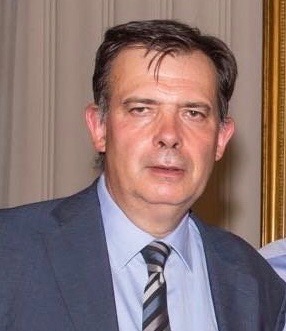
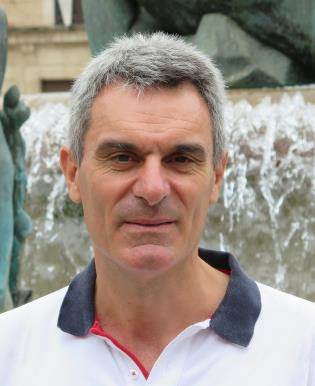
Bailetti Lucia Irene


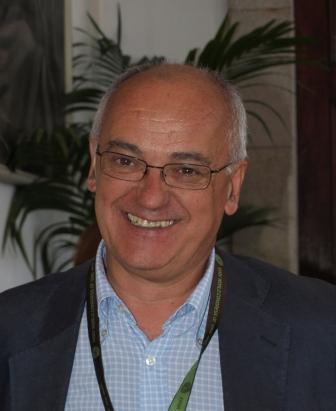
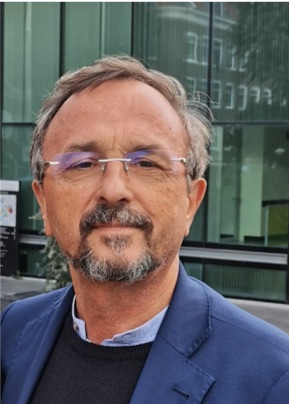
Boselli Maurizio
 maurizio.boselli@univr.it
 045 6835628


 malear@alice.it
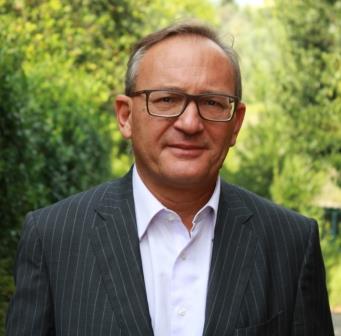

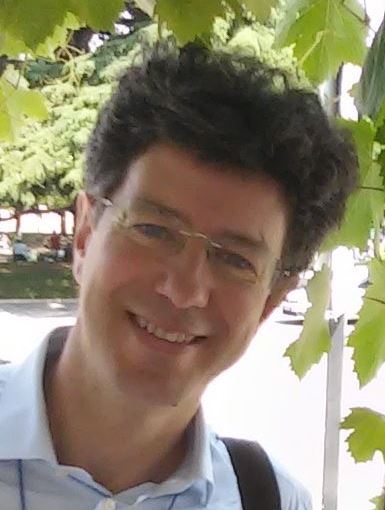
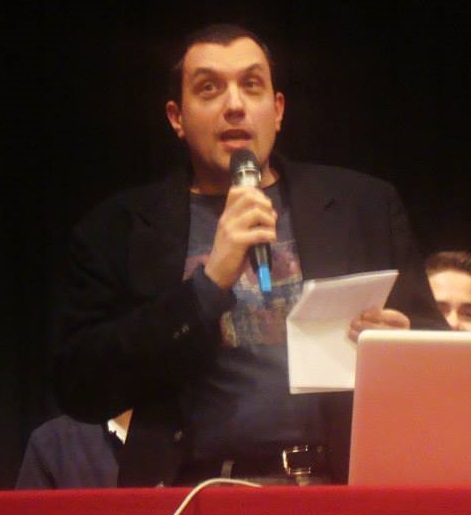 lorenzo.meneghini@univr.it








Study Plan
The Study Plan includes all modules, teaching and learning activities that each student will need to undertake during their time at the University.
Please select your Study Plan based on your enrollment year.
1° Year
| Modules | Credits | TAF | SSD |
|---|
2° Year activated in the A.Y. 2016/2017
| Modules | Credits | TAF | SSD |
|---|
3° Year activated in the A.Y. 2017/2018
| Modules | Credits | TAF | SSD |
|---|
| Modules | Credits | TAF | SSD |
|---|
| Modules | Credits | TAF | SSD |
|---|
| Modules | Credits | TAF | SSD |
|---|
Legend | Type of training activity (TTA)
TAF (Type of Educational Activity) All courses and activities are classified into different types of educational activities, indicated by a letter.
Wine production engineering and winery wastewater and waste treatment - IMPIANTISTICA ENOLOGICA (2017/2018)
Teaching code
4S02748
Teacher
Credits
6
Language
Italian
Scientific Disciplinary Sector (SSD)
ING-IND/25 - CHEMICAL PLANTS
Period
I sem - 3° anno dal Oct 30, 2017 al Jan 31, 2018.
To show the organization of the course that includes this module, follow this link: Course organization
Learning outcomes
The module of “Wine process engineering (6CFU)” is part of the course of “Wine Process Engineering and Winery Waste and Wastewater Management” which is the core of the technological part of the course in Viticulture and Oenology.
In this module the student will receive the basic knowledge of the train of unit operation which operate in a wine making facility (destemming and crushing, press, fermentation, filtration ….) including the main operational parameters.
At the end of the course the student will have acquired the basic knowledge for the understating of a typical train of unit operation and the skills and language necessary to interact with specialist of the different sectors like engineers working in design and sizing of heat exchangers.
Program
The main topics encountered in the module of Wine Process Engineering are the following:
- Introduction to fundamental knowledge of this sector (units, transport phenomena for mass, energy and momentum, heat exchange …)
- Grapes convey and architecture of a wine making facility
- Destemming and crushing
- Press and must production
- Fermentation: technological aspects of fermentation, materials, mixing, heat exchange and temperature control
- Solid/liquid separation units (flotation, drum sieve, membranes …)
- Thermal balance and heat exchangers
- Bottling
Beside the classroom activity also site visits will be organised at Borgo Rocca Sveva, Masi Agricola, Cà Rugate … in order to acquire some practical knowledge.
Fundamental textbooks, beside the class material, are
• “Impiantistica Enologica” di Nardin, Gaudio, Antonel, Simeoni, ed. Edagricole
• “Manuale pratico del viticoltore e del cantiniere” di Saracco et al., ed. Edagricole
• “Enologia” di Navarre C., ed. Hoepli
Examination Methods
The final examination will consist of both a written and oral parts. The written tests will be a multiple-choice test aimed at understanding the general level of understanding of students. Both theoretical and numerical exercise will be part of the exam. The test will be made of 30 questions, each one with vale +1 (if correctly answered).
Students who will pass the written test will have an oral exam dedicated to the evaluation of the specific knowledge of the technological aspects.
The final evaluation will be the average of both written and oral exams.
Type D and Type F activities
Modules not yet included
Career prospects
Module/Programme news
News for students
There you will find information, resources and services useful during your time at the University (Student’s exam record, your study plan on ESSE3, Distance Learning courses, university email account, office forms, administrative procedures, etc.). You can log into MyUnivr with your GIA login details: only in this way will you be able to receive notification of all the notices from your teachers and your secretariat via email and soon also via the Univr app.
Graduation
Attendance
As stated in the Teaching Regulations for the A.Y. 2022/2023, attendance is mandatory for practical and laboratory activities, unless otherwise determined by the Teaching Committee.
Documents
| Title | Info File |
|---|---|
 Prospetto laboratori /esercitazioni
|
pdf, it, 121 KB, 18/10/23 |
