Studying at the University of Verona
Here you can find information on the organisational aspects of the Programme, lecture timetables, learning activities and useful contact details for your time at the University, from enrolment to graduation.
Academic calendar
The academic calendar shows the deadlines and scheduled events that are relevant to students, teaching and technical-administrative staff of the University. Public holidays and University closures are also indicated. The academic year normally begins on 1 October each year and ends on 30 September of the following year.
Course calendar
The Academic Calendar sets out the degree programme lecture and exam timetables, as well as the relevant university closure dates..
| Period | From | To |
|---|---|---|
| I sem. | Oct 3, 2016 | Jan 31, 2017 |
| II sem. | Mar 1, 2017 | Jun 9, 2017 |
| Session | From | To |
|---|---|---|
| Sessione invernale Appelli d'esame | Feb 1, 2017 | Feb 28, 2017 |
| Sessione estiva Appelli d'esame | Jun 12, 2017 | Jul 31, 2017 |
| Sessione autunnale Appelli d'esame | Sep 1, 2017 | Sep 29, 2017 |
| Session | From | To |
|---|---|---|
| Sessione estiva Appelli di Laurea | Jul 18, 2017 | Jul 18, 2017 |
| Sessione autunnale Appelli di laurea | Nov 22, 2017 | Nov 22, 2017 |
| Sessione invernale Appelli di laurea | Mar 20, 2018 | Mar 20, 2018 |
| Period | From | To |
|---|---|---|
| Festa di Ognissanti | Nov 1, 2016 | Nov 1, 2016 |
| Festa dell'Immacolata Concezione | Dec 8, 2016 | Dec 8, 2016 |
| Vacanze di Natale | Dec 23, 2016 | Jan 8, 2017 |
| Vacanze di Pasqua | Apr 14, 2017 | Apr 18, 2017 |
| Anniversario della Liberazione | Apr 25, 2017 | Apr 25, 2017 |
| Festa del Lavoro | May 1, 2017 | May 1, 2017 |
| Festa della Repubblica | Jun 2, 2017 | Jun 2, 2017 |
| Vacanze estive | Aug 8, 2017 | Aug 20, 2017 |
Exam calendar
Exam dates and rounds are managed by the relevant Science and Engineering Teaching and Student Services Unit.
To view all the exam sessions available, please use the Exam dashboard on ESSE3.
If you forgot your login details or have problems logging in, please contact the relevant IT HelpDesk, or check the login details recovery web page.
Should you have any doubts or questions, please check the Enrollment FAQs
Academic staff
 alberto.benvegnu@univr.it

 +39 045 802 7072











 bruno.gobbi@univr.it




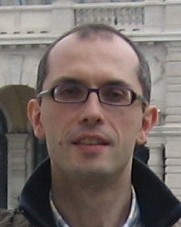



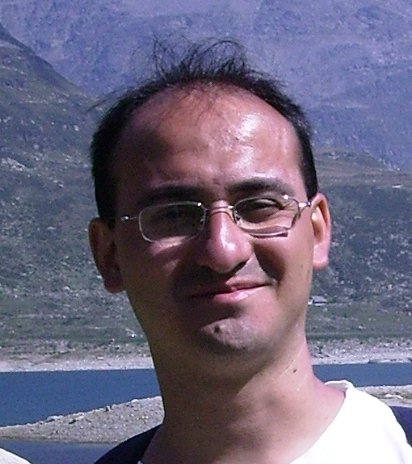

Ugolini Simone
simone.ugolini@univr.it



Study Plan
The Study Plan includes all modules, teaching and learning activities that each student will need to undertake during their time at the University.
Please select your Study Plan based on your enrollment year.
1° Year
| Modules | Credits | TAF | SSD |
|---|
2° Year activated in the A.Y. 2017/2018
| Modules | Credits | TAF | SSD |
|---|
3° Year activated in the A.Y. 2018/2019
| Modules | Credits | TAF | SSD |
|---|
| Modules | Credits | TAF | SSD |
|---|
| Modules | Credits | TAF | SSD |
|---|
| Modules | Credits | TAF | SSD |
|---|
Legend | Type of training activity (TTA)
TAF (Type of Educational Activity) All courses and activities are classified into different types of educational activities, indicated by a letter.
Mathematical analysis (2016/2017)
Teaching code
4S00006
Academic staff
Coordinator
Credits
6
Language
Italian
Scientific Disciplinary Sector (SSD)
MAT/05 - MATHEMATICAL ANALYSIS
Period
I sem. dal Oct 3, 2016 al Jan 31, 2017.

Learning outcomes
The course aims to introduce differential and integral calculus in one real variable.
Program
1) Some notions of set theory.
2) The complete ordered field of the real numbers. Subsets of R. Complex numbers.
3) Euclidean distance and induced topology on the real line. Absolute value of a real number. Cartesian plane.
4) Real functions of one real variable.
5) Polynomials and polynomial functions. Power, exponential and logarithmic functions. Trigonometric functions.
6) Sequences.
7) Limit of a function of one real variable.
8) Continuity of a function of one real variable at one point. Fundamental theorems on continuos functions.
9) Derivative of a function. Derivation rules. Fundamental theorems on differentiable functions.
10) Monotonicity of a function. Local and global minima and maxima of a function.
11) Convex functions.
12) Taylor polynomials.
13) Riemann integral. Integration rules. Improper integrals.
| Author | Title | Publishing house | Year | ISBN | Notes |
|---|---|---|---|---|---|
| M.Bramanti,C.D.Pagani,S.Salsa | Analisi Matematica 1 | Zanichelli | 2009 | 978-88-08-06485-1 |
Examination Methods
The exam is written. It consists of open-ended questions. Any topic covered during the lectures will be part of the exam program. Detailed information about the program of the course can be retrieved from the slides of the lectures, which can be found in the e-learning webpages. An intermediate test will take place during the first semester.
Type D and Type F activities
Modules not yet included
Career prospects
Module/Programme news
News for students
There you will find information, resources and services useful during your time at the University (Student’s exam record, your study plan on ESSE3, Distance Learning courses, university email account, office forms, administrative procedures, etc.). You can log into MyUnivr with your GIA login details: only in this way will you be able to receive notification of all the notices from your teachers and your secretariat via email and soon also via the Univr app.
Graduation
List of theses and work experience proposals
| Stage | Research area |
|---|---|
| Correlated mutations | Various topics |
Attendance
As stated in the Teaching Regulations for the A.Y. 2022/2023, attendance at the course of study is not mandatory.
