Studying at the University of Verona
Here you can find information on the organisational aspects of the Programme, lecture timetables, learning activities and useful contact details for your time at the University, from enrolment to graduation.
Academic calendar
The academic calendar shows the deadlines and scheduled events that are relevant to students, teaching and technical-administrative staff of the University. Public holidays and University closures are also indicated. The academic year normally begins on 1 October each year and ends on 30 September of the following year.
Course calendar
The Academic Calendar sets out the degree programme lecture and exam timetables, as well as the relevant university closure dates..
| Period | From | To |
|---|---|---|
| INF BZ - 1° anno 1° sem | Oct 3, 2016 | Dec 23, 2016 |
| INF BZ - 2° anno 1° sem | Oct 10, 2016 | Dec 23, 2016 |
| INF BZ - 3° anno 1° sem | Oct 10, 2016 | Dec 23, 2016 |
| INF BZ - 1° anno 2° sem | Feb 1, 2017 | Apr 7, 2017 |
| INF BZ - 3° anno 2° sem | Mar 1, 2017 | Apr 13, 2017 |
| INF BZ - 2° anno 2° sem | Apr 26, 2017 | Jun 16, 2017 |
| Session | From | To |
|---|---|---|
| INF. BZ SESSIONE INVERNALE 1° - 2° ANNO | Jan 7, 2017 | Jan 31, 2017 |
| INF. BZ SESSIONE INVERNALE 3° ANNO | Feb 8, 2017 | Feb 28, 2017 |
| INF. BZ SESSIONE ESTIVA 1° ANNO (1 parte) | Apr 10, 2017 | Apr 28, 2017 |
| INF. BZ SESSIONE ESTIVA 3° ANNO (1 parte) | Apr 18, 2017 | Apr 28, 2017 |
| INF. BZ SESSIONE ESTIVA 1° ANNO (2 parte) | Jun 19, 2017 | Jul 7, 2017 |
| INF. BZ SESSIONE ESTIVA 2° ANNO | Jun 19, 2017 | Jul 7, 2017 |
| INF. BZ SESSIONE ESTIVA 3° ANNO (2 parte) | Jun 19, 2017 | Jul 7, 2017 |
| INF. BZ SESSIONE AUTUNNALE 2° ANNO | Sep 4, 2017 | Oct 6, 2017 |
| INF. BZ SESSIONE AUTUNNALE 1° ANNO | Sep 12, 2017 | Oct 6, 2017 |
| INF. BZ SESSIONE AUTUNNALE 3° ANNO | Sep 21, 2017 | Oct 20, 2017 |
| Session | From | To |
|---|---|---|
| SESSIONE AUTUNNALE | Nov 1, 2017 | Dec 31, 2017 |
| SESSIONE PRIMAVERILE | Mar 1, 2018 | Apr 30, 2018 |
| Period | From | To |
|---|---|---|
| Festa di Tutti i Santi | Nov 1, 2016 | Nov 1, 2016 |
| Festa dell'Immacolata | Dec 8, 2016 | Dec 8, 2016 |
| Vacanze Natalizie | Dec 23, 2016 | Jan 7, 2017 |
| Vacanze Pasquali | Apr 14, 2017 | Apr 18, 2017 |
| Festa della Liberazione | Apr 25, 2017 | Apr 25, 2017 |
| Festa dei Lavoratori | May 1, 2017 | May 1, 2017 |
| Festa della Repubblica | Jun 2, 2017 | Jun 2, 2017 |
| Description | Period | From | To |
|---|---|---|---|
| INF. BZ TIROCINIO 3 ANNO (1 esp.) | INF. BZ TIROCINIO 3 ANNO (1 esp.) | Jan 9, 2017 | Feb 7, 2017 |
| INF. BZ TIROCINIO 2 ANNO (1 esp.) | INF. BZ TIROCINIO 2 ANNO (1 esp.) | Feb 7, 2017 | Mar 12, 2017 |
| INF. BZ TIROCINIO 2 ANNO (2 esp.) | INF. BZ TIROCINIO 2 ANNO (2 esp.) | Mar 16, 2017 | Apr 23, 2017 |
| INF. BZ TIROCINIO 1 ANNO (1 esp.) | INF. BZ TIROCINIO 1 ANNO (1 esp.) | May 2, 2017 | Jun 9, 2017 |
| INF. BZ TIROCINIO 3 ANNO (2 esp.) | INF. BZ TIROCINIO 3 ANNO (2 esp.) | May 2, 2017 | Jun 11, 2017 |
| INF. BZ TIROCINIO 2 ANNO (3 esp.) | INF. BZ TIROCINIO 2 ANNO (3 esp.) | Jul 10, 2017 | Aug 7, 2017 |
| INF. BZ TIROCINIO 1 ANNO (2 esp.) | INF. BZ TIROCINIO 1 ANNO (2 esp.) | Aug 7, 2017 | Sep 11, 2017 |
| INF. BZ TIROCINIO 3 ANNO (3 esp.) | INF. BZ TIROCINIO 3 ANNO (3 esp.) | Aug 7, 2017 | Sep 20, 2017 |
Exam calendar
Exam dates and rounds are managed by the relevant Medicine Teaching and Student Services Unit.
To view all the exam sessions available, please use the Exam dashboard on ESSE3.
If you forgot your login details or have problems logging in, please contact the relevant IT HelpDesk, or check the login details recovery web page.
Should you have any doubts or questions, please check the Enrollment FAQs
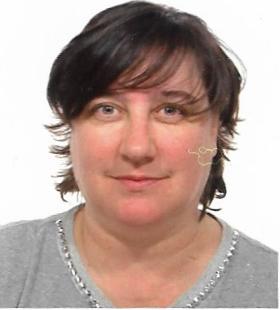
Academic staff

 +39 045 8027657






 liliana.favari@univr.it
 astrid.kustatscher@claudiana.bz.it
 sylvia.lintner@sabes.it
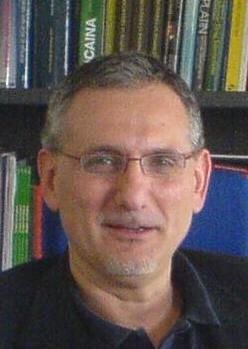 m.mussner@virgilio.it

Study Plan
The Study Plan includes all modules, teaching and learning activities that each student will need to undertake during their time at the University.
Please select your Study Plan based on your enrollment year.
1° Year
| Modules | Credits | TAF | SSD |
|---|
Professional Laboratories (1st year)
2° Year activated in the A.Y. 2017/2018
| Modules | Credits | TAF | SSD |
|---|
Professional Laboratories (2nd year)
3° Year activated in the A.Y. 2018/2019
| Modules | Credits | TAF | SSD |
|---|
Professional Laboratories (3rd year)
| Modules | Credits | TAF | SSD |
|---|
Professional Laboratories (1st year)
| Modules | Credits | TAF | SSD |
|---|
Professional Laboratories (2nd year)
| Modules | Credits | TAF | SSD |
|---|
Professional Laboratories (3rd year)
Legend | Type of training activity (TTA)
TAF (Type of Educational Activity) All courses and activities are classified into different types of educational activities, indicated by a letter.
Pathophysiology applied at Nursing - INFERMIERISTICA CLINICA (2016/2017)
Teaching code
4S000090
Credits
3
Coordinator
Not yet assigned
Language
Italian
Scientific Disciplinary Sector (SSD)
MED/45 - NURSING

To show the organization of the course that includes this module, follow this link: Course organization
The teaching is organized as follows:
Infermieristica clinica 1
Infermieristica clinica 2
Learning outcomes
------------------------
MM: Infermieristica clinica 1
------------------------
---
------------------------
MM: Infermieristica clinica 2
------------------------
Develop a problem-solving approach to the choice of prevention and management of alterations of the intestinal and urinary elimination function of body care. Identify the problems of the assisted with structured and systematic techniques and modalities. Monitor and monitor the clinical and psychosocial situation of patients, early identification of signs and symptoms
Program
------------------------
MM: Infermieristica clinica 1
------------------------
---
------------------------
MM: Infermieristica clinica 2
------------------------
Methods, concept of head-to-head evaluation: • Assessment types: Global, Targeted, Emergency • Concept of: surveillance, monitoring, monitoring • Physical-objective examination: meaning and tools • Techniques: inspection, palpation, auscultation, percussion. • Data collection: primary source, secondary source • Cognitive function: state of consciousness (GCS), orientation, mood tone, language / memory • Sensory function: eye, ear, nose, mouth • Head-neck detection • Respiratory examination • Cardiac diagnosis • Abdominal examination • Genital-urinary detection • Vascular examination and skeletal muscle • Tegumentary assessment 2. Body Care and Nursing Care Management: • the social and cultural significance of body care • assessment of self-care capacity • self-care deficits: specific assessment data (degree of dependence / ADL, index of autonomy, Barthel index, Katz scale), assistance interventions • body care services: detoxification and guiding principles, hygiene and body care in the bathroom and bed. Hygiene in behavioral mode. Hygiene with problems of intolerance to physical activity. Dressing. • Oral and tooth hygiene: assessment of oral hygiene of the person, medicines and products, oral hygiene routine hygiene and care of the prosthesis. Definition of major changes in the oral cavity • Removing empty and busy bed 3.Urinal elimination: • Factors that influence urinary elimination • Chemical-physical characteristics of urine • Most common signs and symptoms in urinary disorders • Urinary incontinence • Instrumental diagnostic procedures • Urine Exam: random sample for biochemical, urocultur, multistax, pregnancy test • Chronic and acute urinary retention: care interventions • Urinary tract infections: specific data on presence / risk assessment and care interventions (bladder bundle) • Assistance to the person with bladder catheter: positioning, care, removal and prevention of associated infections. • Extemporaneous catheterization • Bladder catheterisation such as DM 4. Intestinal elimination: • Defecation mechanism • Physiological characteristics of the stools • Most common signs and symptoms in intestinal disorders and major alterations • Intestinal function detection and diagnostic procedures • Constipations: Pathophysiology, Specific Data on Presence / Risk Assessment and Care Assistance with Focus on Laxatives • Acute and chronic diarrhea: care interventions • Clisms: typologies, procedures, complications. • Clostridium difficult • Exam on the stools: chemical-physical, bacteriological, parasitic, occult blood tests
Bibliography
| Activity | Author | Title | Publishing house | Year | ISBN | Notes |
|---|---|---|---|---|---|---|
| Infermieristica clinica 2 | Saiani, L., Brugnolli, A. | Trattato di cure infermieristiche (Edizione 3) | Idelson-Gnocchi | 2020 | 978-88-7947-576-1 |
Examination Methods
------------------------
MM: Infermieristica clinica 1
------------------------
---
------------------------
MM: Infermieristica clinica 2
------------------------
Written to multiple answers, an article's analysis of the conclusions
Teaching materials e documents
-
 programma per esteso
(it, 152 KB, 22/02/16)
programma per esteso
(it, 152 KB, 22/02/16)
-
programma per esteso
(it, 102 KB, 22/02/16)
Career prospects
Module/Programme news
News for students
There you will find information, resources and services useful during your time at the University (Student’s exam record, your study plan on ESSE3, Distance Learning courses, university email account, office forms, administrative procedures, etc.). You can log into MyUnivr with your GIA login details: only in this way will you be able to receive notification of all the notices from your teachers and your secretariat via email and soon also via the Univr app.
Gestione carriere
Orario lezioni
COMUNICAZIONE DEL PRESIDENTE DEL COLLEGIO DIDATTICO
Carissime Studentesse,
Carissimi Studenti,
di seguito un promemoria relativo alle modalità di erogazione della didattica per il corso di studio in Infermieristica A.A. 2022/2023.
In ottemperanza alle linee guida della Commissione didattica di Ateneo, che prevedono una didattica improntata ad un pieno recupero delle modalità regolari di erogazione in presenza, la Commissione didattica del CdL nella seduta del 29 settembre 2022, ha deliberato il pieno ritorno all’utilizzo della didattica frontale in presenza.
Solo nei casi di comprovata positività al COVID-19, e/o in situazioni di particolare fragilità (sempre correlate alla pandemia) sarà previsto il collegamento sincrono in modalità streaming; a tal proposito ogni Docente, sulla propria pagina web, darà chiare indicazioni sulla modalità di fruizione della didattica.
La modalità asincrona (registrazioni delle lezioni) non è prevista.
Nell’augurarvi un buon Anno Accademico, vi saluto cordialmente
Prof. Paolo F Fabene
Guida ai programmi degli insegnamenti
Guida ai programmi degli insegnamenti
Documents
| Title | Info File |
|---|---|
|
Guida ai programmi degli insegnamenti
|
pdf, it, 1594 KB, 12/12/22 |
|
Guida ai programmi degli insegnamenti - inglese
|
pdf, it, 1310 KB, 02/09/21 |
Linee guida per riconoscimento cfu
Lo studente che intende chiedere il riconoscimento di moduli o insegnamenti pregressi dovrà presentare domanda, entro il 30 novembre dell’anno accademico in corso, seguendo le indicazioni indicate al link seguente: https://www.univr.it/it/i-nostri-servizi/segreterie-studenti/gestione-carriere-studenti-medicina-e-chirurgia/riconoscimento-crediti-acquisiti-da-una-carriera-pregressa-medicina
Documents
| Title | Info File |
|---|---|
|
linee guida per riconoscimento cfu
|
pdf, it, 295 KB, 09/11/21 |
Student login and resources
Attività didattiche regime part-time
Modalità di richiesta
La domanda di iscrizione part-time può essere presentata all'inizio di ogni anno accademico e comunque entro il 30 novembre di ogni anno. Entro lo stesso termine, se necessario, lo studente potrà richiedere di tornare al regime full-time. Al link seguente la pagina del servizio https://www.univr.it/it/i-nostri-servizi/segreterie-studenti/flessibilita-nella-frequenza-dei-corsi/possibilita-di-iscrizione-part-time-e-ripristino-full-time
Una volta inviata la domanda, lo studente concorda in via preventiva con il Coordinatore della didattica professionale (CDP), il piano di studi che intende perseguire nel periodo di part-time compilando il modulo in allegato
Documents
| Title | Info File |
|---|---|
 Modulo piano di studi part-time da concordare con CDP
|
octet-stream, it, 1309 KB, 21/10/22 |
Graduation
Documents
| Title | Info File |
|---|---|
|
Avviso date laurea 2^ sessione A.A. 2022/2023
|
pdf, it, 242 KB, 19/01/24 |
|
Calendario discussione tesi - Commissione n. 1
|
pdf, it, 80 KB, 06/04/24 |
|
Calendario discussione tesi - Commissione n. 2
|
pdf, it, 43 KB, 06/04/24 |
|
Calendario discussione tesi - Commissione n. 3
|
pdf, it, 44 KB, 09/04/24 |
|
ESITI ESAME DI STATO 6/04/24 - COMM. 1
|
pdf, it, 148 KB, 06/04/24 |
|
ESITI ESAME DI STATO 6/04/24 - COMM. 2
|
pdf, it, 108 KB, 06/04/24 |
|
ESITI ESAME DI STATO 6/04/24 - COMM. 3
|
pdf, it, 115 KB, 06/04/24 |
|
Indicazioni metodologiche per l'elaborazione della tesi
|
pdf, it, 1487 KB, 18/02/22 |
|
Indicazioni prova pratica 06/04/2024
|
pdf, it, 437 KB, 22/03/24 |
|
Mappa entrate Istituti Biologici - esame di stato 06/04/2024
|
pdf, it, 957 KB, 22/03/24 |
|
Scadenziario 2^ sessione A.A. 2022/2023
|
pdf, it, 424 KB, 19/01/24 |
