Studying at the University of Verona
Here you can find information on the organisational aspects of the Programme, lecture timetables, learning activities and useful contact details for your time at the University, from enrolment to graduation.
Academic calendar
The academic calendar shows the deadlines and scheduled events that are relevant to students, teaching and technical-administrative staff of the University. Public holidays and University closures are also indicated. The academic year normally begins on 1 October each year and ends on 30 September of the following year.
Course calendar
The Academic Calendar sets out the degree programme lecture and exam timetables, as well as the relevant university closure dates..
| Period | From | To |
|---|---|---|
| Sem. 1A | Sep 24, 2018 | Nov 10, 2018 |
| Sem. 1B | Nov 19, 2018 | Jan 12, 2019 |
| Sem. 2A | Feb 18, 2019 | Mar 30, 2019 |
| Sem. 2B | Apr 8, 2019 | Jun 1, 2019 |
| Session | From | To |
|---|---|---|
| Sessione Invernale | Jan 14, 2019 | Feb 16, 2019 |
| Sessione Estiva (Gli esami sono sospesi durante la Sessione di laurea) | Jun 3, 2019 | Jul 27, 2019 |
| Sessione Autunnale | Aug 26, 2019 | Sep 21, 2019 |
| Session | From | To |
|---|---|---|
| Sessione Estiva | Jul 8, 2019 | Jul 13, 2019 |
| Sessione Autunnale | Nov 4, 2019 | Nov 9, 2019 |
| Sessione Invernale | Mar 30, 2020 | Apr 4, 2020 |
| Period | From | To |
|---|---|---|
| Festa di Ognissanti | Nov 1, 2018 | Nov 1, 2018 |
| Festa dell’Immacolata | Dec 8, 2018 | Dec 8, 2018 |
| Vacanze di Natale | Dec 22, 2018 | Jan 6, 2019 |
| Vacanze di Pasqua | Apr 19, 2019 | Apr 23, 2019 |
| Festa della liberazione | Apr 25, 2019 | Apr 25, 2019 |
| Festa del lavoro | May 1, 2019 | May 1, 2019 |
| Festa del Santo Patrono - S. Zeno | May 21, 2019 | May 21, 2019 |
| Festa della Repubblica | Jun 2, 2019 | Jun 2, 2019 |
| Vacanze Estive | Aug 12, 2019 | Aug 17, 2019 |
Exam calendar
Exam dates and rounds are managed by the relevant Humanistic Studies Teaching and Student Services Unit.
To view all the exam sessions available, please use the Exam dashboard on ESSE3.
If you forgot your login details or have problems logging in, please contact the relevant IT HelpDesk, or check the login details recovery web page.
Should you have any doubts or questions, please check the Enrollment FAQs
Academic staff

 claudia.annechini@univr.it
 cristina.bertazzoni@univr.it












 luca.odini@univr.it

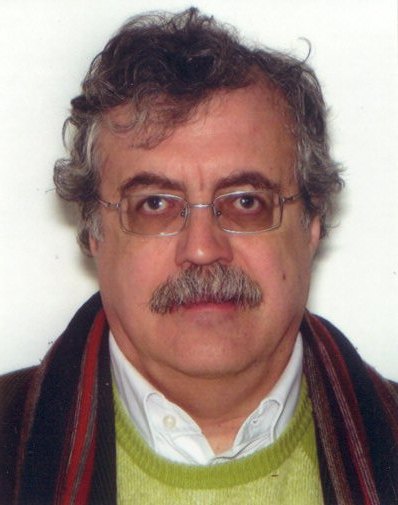
 stefania.pontrandolfo@univr.it

Pozzo Riccardo
riccardo.pozzo@univr.it
 +390458028053

 marco.ubbiali@univr.it
Study Plan
The Study Plan includes all modules, teaching and learning activities that each student will need to undertake during their time at the University.
Please select your Study Plan based on your enrollment year.
1° Year
| Modules | Credits | TAF | SSD |
|---|
2° Year activated in the A.Y. 2019/2020
| Modules | Credits | TAF | SSD |
|---|
| Modules | Credits | TAF | SSD |
|---|
| Modules | Credits | TAF | SSD |
|---|
| Modules | Credits | TAF | SSD |
|---|
Legend | Type of training activity (TTA)
TAF (Type of Educational Activity) All courses and activities are classified into different types of educational activities, indicated by a letter.
Ethnography in the educational contexts (2018/2019)
Teaching code
4S003376
Academic staff
Coordinator
Credits
6
Language
Italian
Scientific Disciplinary Sector (SSD)
M-DEA/01 - DEMOLOGY, ETHNOLOGY AND ANTHROPOLOGY
Period
Sem. 1B dal Nov 19, 2018 al Jan 12, 2019.

Learning outcomes
1. To have a basic knowledge of the methodologies and main scientific plausibility criteria of anthropological ethnography.
2. To understand the construction and analysis processes of qualitative, empirical and inductive data in anthropological field research.
3. To have a basic knowledge of ethnographic methodologies in educational contexts in order to understand the deviation between regulations and practices in an educational context; between implicit and explicit components of teaching-learning processes and to recognize and analyze the cultural constructions produced in particular educational contexts.
4. To be able to conduct ethnographic research in various educational contexts in order to recognize and analyze ideas and educational practices observed in the field as particular socio-cultural constructions.
5. To be able to activate educational strategies that would improve the educational contexts observed, bearing in mind the empirical knowledge produced by anthropological field research.
6. To be able to programme, create and evaluate educational projects in a social inclusion and intercultural dialogue perspective.
Program
- The ethnographic method according to Malinowski;
- Participant observation;
- Ethnographic conversation;
- Ethnographic census;
- Triangulation and iteration;
- Ethnography as experience;
- The concept of resonance;
- Context observation and description;
- One-sited and multi-sited ethnography;
- Productivity of ethnographic failures;
- Self-ethnography;
- Ethnographic research initiation in the educational field.
| Author | Title | Publishing house | Year | ISBN | Notes |
|---|---|---|---|---|---|
| A. M. Gomes | "Vegna che ta fago scriver". Etnografia della scolarizzazione in una comunità di Sinti (Edizione 2) | CISU | 2017 | 978-88-7975-203-9 | |
| F. Cappelletto | Vivere l'etnografia | SEID | 2009 | 978-88-89473-11-5 |
Examination Methods
Learning levels will be assessed by one of the following means:
Attending students will be able to choose between:
a) writing a report based on the ethnographic survey proposed during lessons;
b) written examination on the mentioned texts;
Non-attending students will sit a written examination on the mentioned texts.
Students must be able to demonstrate:
- to have understood the basic elements of ethnographic methods;
- to have understood how to apply ethnographic knowledge to educational contexts;
- to be able to express their own reasoning in a precise manner, identifying and selecting the essential elements;
- to be able to critically analyze the relationship between pedagogical-educational thought and ethnographic practice.
Type D and Type F activities
Modules not yet included
Career prospects
Module/Programme news
News for students
There you will find information, resources and services useful during your time at the University (Student’s exam record, your study plan on ESSE3, Distance Learning courses, university email account, office forms, administrative procedures, etc.). You can log into MyUnivr with your GIA login details: only in this way will you be able to receive notification of all the notices from your teachers and your secretariat via email and soon also via the Univr app.
Student mentoring
Graduation
Documents
| Title | Info File |
|---|---|
 Adempimenti amministrativi domanda di laurea Aprile 2024 - a.a. 2022/2023
|
pdf, it, 99 KB, 13/10/23 |
|
Adempimenti amministrativi domanda di laurea Luglio 2024-a.a. 2023/2024
|
pdf, it, 101 KB, 10/04/24 |
List of theses and work experience proposals
| theses proposals | Research area |
|---|---|
| Psicoanalisi | Psychology - Psychology, Psychoanalysis |
Gestione carriere
Linguistic training CLA
Practical information for students
Documents
| Title | Info File |
|---|---|
|
1 - Guida per lo studente - AGGIORNAMENTO 2022
|
pdf, it, 325 KB, 02/05/23 |
|
2 - Guida per lo studente - AGGIORNAMENTO 2020
|
pdf, it, 212 KB, 02/05/23 |
|
3 - Guida per lo studente - AGGIORNAMENTO 2013
|
pdf, it, 131 KB, 02/05/23 |
Stage e Tirocini
Per le altre attività formative (crediti F) sono previsti 9 cfu (pari a 225 ore) da acquisire solamente attraverso l’attività di tirocinio obbligatoria, a sua volta suddivisa in:
- tirocinio indiretto (1 cfu: 25 ore di frequenza obbligatoria in università per il 75%) in preparazione dell’attività formativa sul campo;
- tirocinio diretto (8 cfu), da svolgersi presso enti convenzionati.
L’ordinamento didattico della LM in Scienze pedagogiche prevede che il tirocinio indiretto a frequenza obbligatoria si svolga in università per il 75% nel secondo anno (1 CFU: 25 ore).
Il tirocinio indiretto consiste in un accompagnamento iniziale delle/degli studenti da parte dei tutor attraverso un percorso di formazione della durata di 25 ore.
La finalità di questo percorso è quella di preparare le/gli studenti alla particolare forma di apprendimento costituita dal tirocinio, dotandoli di conoscenze e strumenti adeguati a osservare, comprendere e rielaborare criticamente l’esperienza di tirocinio nei servizi educativi e ad affrontare il tirocinio negli enti con metodo e consapevolezza.
Il percorso, da attuare in gruppi da 20-25 persone sotto la supervisione di un tutor proveniente dal mondo professionale di educatori e pedagogisti, risponde alle esigenze costantemente espresse sia dalle/dagli studenti stessi sia dalle parti sociali che dai referenti degli enti convenzionati.
Nuove Linee Guida per il tirocinio di Scienze pedagogiche.
- Tutte le informazioni in merito agli stage per futuri studenti sono disponibili alla pagina Stage e tirocini.
- Tutte le informazioni in merito agli stage per studenti iscritti sono pubblicate in MyUnivr - come fare per - stage e tirocini.
- Tutte le informazioni in merito agli stage per le aziende sono disponili alla pagina Stage e tirocini per azienze.
