Studying at the University of Verona
Here you can find information on the organisational aspects of the Programme, lecture timetables, learning activities and useful contact details for your time at the University, from enrolment to graduation.
Academic calendar
The academic calendar shows the deadlines and scheduled events that are relevant to students, teaching and technical-administrative staff of the University. Public holidays and University closures are also indicated. The academic year normally begins on 1 October each year and ends on 30 September of the following year.
Course calendar
The Academic Calendar sets out the degree programme lecture and exam timetables, as well as the relevant university closure dates..
| Period | From | To |
|---|---|---|
| I SEMESTRE | Oct 1, 2018 | Jan 25, 2019 |
| II SEMESTRE | Mar 4, 2019 | May 31, 2019 |
| Session | From | To |
|---|---|---|
| Sessione invernale | Jan 28, 2019 | Feb 28, 2019 |
| Sessione estiva | Jun 3, 2019 | Jul 5, 2019 |
| Sessione autunnale | Aug 26, 2019 | Sep 30, 2019 |
| Sessione straordinaria | Jan 27, 2020 | Feb 28, 2020 |
| Session | From | To |
|---|---|---|
| Sessione invernale | Mar 18, 2018 | Apr 5, 2018 |
| Sessione estiva | Jul 8, 2019 | Jul 26, 2019 |
| Sessione autunnale | Oct 14, 2019 | Nov 5, 2019 |
| Sessione straordinaria | Mar 16, 2020 | Apr 3, 2020 |
Exam calendar
Exam dates and rounds are managed by the relevant Exercise Science Teaching and Student Services Unit.
To view all the exam sessions available, please use the Exam dashboard on ESSE3.
If you forgot your login details or have problems logging in, please contact the relevant IT HelpDesk, or check the login details recovery web page.
Should you have any doubts or questions, please check the Enrollment FAQs
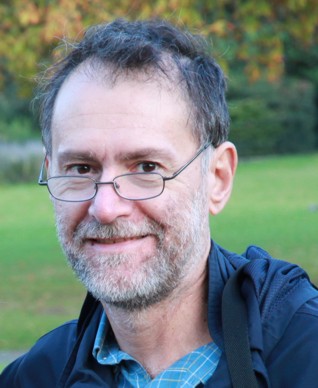
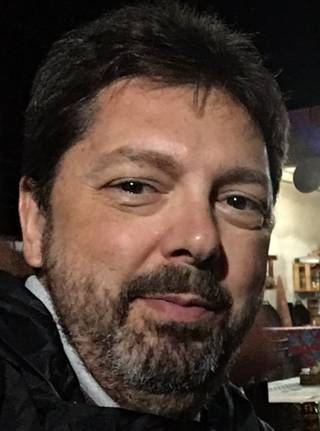
Academic staff
 elena.antelmi@univr.it
 +39 045 842 5117


 paola.cesari@univr.it
 paolo.dellaquila@univr.it





 nicola.rovetti@univr.it
 fabio.sartori@univr.it





Study Plan
The Study Plan includes all modules, teaching and learning activities that each student will need to undertake during their time at the University.
Please select your Study Plan based on your enrollment year.
1° Year
| Modules | Credits | TAF | SSD |
|---|
2° Year activated in the A.Y. 2019/2020
| Modules | Credits | TAF | SSD |
|---|
| Modules | Credits | TAF | SSD |
|---|
| Modules | Credits | TAF | SSD |
|---|
| Modules | Credits | TAF | SSD |
|---|
1 module among the followingLegend | Type of training activity (TTA)
TAF (Type of Educational Activity) All courses and activities are classified into different types of educational activities, indicated by a letter.
Type D and Type F activities
| years | Modules | TAF | Teacher | |
|---|---|---|---|---|
| 1° | Biochemistry for sport | D |
Massimo Donadelli
(Coordinator)
|
|
| 1° | Methodology of sport activities measures | D |
Luca Paolo Ardigo'
(Coordinator)
|
|
| 2° | Adapted motor learning | D |
Mirta Fiorio
(Coordinator)
|
|
| 2° | Advanced nutrition for sports | D |
Silvia Pogliaghi
(Coordinator)
|
|
| years | Modules | TAF | Teacher | |
|---|---|---|---|---|
| 1° | Sports and drugs | D |
Roberto Leone
(Coordinator)
|
|
| 1° | Forensic medicine and social security | D |
Aldo Eliano Polettini
(Coordinator)
|
|
| 1° | Neurological diseases and movement disorders | D |
Michele Tinazzi
(Coordinator)
|
|
| 1° | Research methodology applied to sport | D |
Barbara Pellegrini
(Coordinator)
|
|
| 1° | Statistics applied to movement sciences | D |
Maria Elisabetta Zanolin
(Coordinator)
|
|
| 2° | Neuromotor rehabilitation | D |
Nicola Smania
(Coordinator)
|
|
| 2° | Theory and pedagogy of nordic walking | D |
Barbara Pellegrini
(Coordinator)
|
|
| 1° 2° | Physiology of sport nutrition | D |
Silvia Pogliaghi
(Coordinator)
|
|
Physical bases of exercise prescription (2019/2020)
Teaching code
4S008918
Teacher
Coordinator
Credits
3
Also offered in courses:
- Physical bases of exercise prescription of the course Bachelor's degree in Sport and Exercise Science
- Physical bases of exercise prescription of the course Master's degree in Sport Science and Physical Performance
Language
English
Scientific Disciplinary Sector (SSD)
BIO/09 - PHYSIOLOGY
Period
MOTORIE 1° semestre dal Oct 1, 2019 al Jan 24, 2020.

Learning outcomes
The aim of the course is to consolidate, through practical application, the student's ability to modulate the metabolic intensity element in the prescription of the individualized exercise. The course explores the theoretical skills related to the main functional indices used to quantify the metabolic intensity element in the exercise prescription and the measurement methods of these indices. Referring to the most recent international literature, the course provides advanced skills related to the correct individualization of the workload and the translation of metabolic intensity indices into an equivalent external load.
Program
Physiological bases of exercise prescription
The course is articualted in 12 lessons of 2 hrs each, alternated between traditional lectures and “reversed classroom” lessons during which the students will be engaged in the study of “clinical cases”, calculations, critical revision of articles on the following topics:
1. Maximal oxygen consumption: physiological bases, practical importance, sensitivity to training, effect of ageing, sex and normative population data.
2. VO2max: direct measurement methods: instruments, protocols, the max-peak issue, usefulness of a verification trial.
3. VO2max: indirect measurement methods: estimate equations, Astrand test and variations, heart rate-based methods.
4. Critical power and other thresholds: the concept of intensity zones, physiological bases.
5. Critical power and other thresholds: laboratory and “field” methods of measurement, correspondence between methods.
6. Translation of functional indexes into exercise prescriptions.
| Author | Title | Publishing house | Year | ISBN | Notes |
|---|---|---|---|---|---|
| American College of Sports Medicine | ACSM's Guidelines for exercise testing and prescription (Edizione 10) | Wolters Kluwer | 2018 | 9781496339065 |
Examination Methods
Exam: written (15 multiple choice questions with 5 answers + 4 open questions)
Marking: attendance (1/4), participation to class work (1/4), exam (1/2)
Career prospects
Module/Programme news
News for students
There you will find information, resources and services useful during your time at the University (Student’s exam record, your study plan on ESSE3, Distance Learning courses, university email account, office forms, administrative procedures, etc.). You can log into MyUnivr with your GIA login details: only in this way will you be able to receive notification of all the notices from your teachers and your secretariat via email and soon also via the Univr app.
Graduation
List of theses and work experience proposals
Student mentoring
Gestione carriere
Orario lezioni
L’orario delle lezioni comprende
Lezioni Frontali in aula
Esercitazioni e laboratori
Questi ultimi sono organizzati per gruppi dai singoli docenti responsabili dei corsi.
L'orario è pubblicato nel portale studenti
Modalità di frequenza
Vige l'obbligo di frequenza al 70% come specificato nel Regolamento di ogni singolo corso di laurea e laurea magistrale:
Ulteriori informazioni:
L'accesso alle pagine Moodle dei singoli insegnamenti è vincolato alla compilazione del piano di studi.
App Univr Lezioni, FAQ e guida all'utilizzo sono disponibili al seguente link: orario-lezioni-e-modalita-di-frequenza
Comunicati: Avvisi per studenti
Internships
Internships are aimed at enabling students to gain direct knowledge of the world of work and to acquire specific professional skills.
Internships are carried out under the responsibility of an individual lecturer, and can be carried out in professional firms, public administration bodies and companies recognised by the University of Verona.
Any CFU credits gained by doing internships will be recognised and recorded by the University in accordance with the relevant University regulations in force (Regolamento d’Ateneo per il riconoscimento dei crediti maturati negli stage universitari).
For further information on internships, please go to: https://www.univr.it/it/i-nostri-servizi/stage-e-tirocini.
Linguistic training CLA
Certificazione medica di idoneità
Riferimenti normativi principali: DM 24 aprile 2013 art. 3, GU 169 del 20-07-2013; Decreto del Ministro della Salute dell’8 agosto 2014 e s.m.i.
Per frequentare le attività dei corsi di Laurea e Laurea magistrale di Scienze motorie è obbligatorio presentare la certificazione medica di idoneità fisica per attività sportiva non agonistica. La certificazione è necessaria per accedere alle attività pratiche-esercitative e al tirocinio.
à COME OTTENERE LA CERTIFICAZIONE
La certificazione - riportante l’indicazione che è stato eseguito l’ECG a riposo - può essere rilasciata da:
- centri o servizi di medicina dello sport delle ASL (ora ATS) e delle aziende ospedaliere
- istituti della Federazione Medico Sportiva Italiana
- centri pubblici o privati autorizzati:
- dai medici di medicina generale di libera scelta, relativamente ai propri assistiti;
- dal medico specialista in medicina dello sport.
L’ECG a riposo deve essere ripetuto annualmente.
E’ ammesso anche il certificato medico di idoneità alla pratica sportiva agonistica, per chi ne fosse già in possesso.
à SCADENZA PER LA PRESENTAZIONE
La certificazione medica deve essere prodotta al momento dell'immatricolazione e, comunque, entro l’inizio delle lezioni alla Segreteria Corsi di Studio Scienze motorie. Spetta agli studenti rinnovarla annualmente alla scadenza - per ogni anno di iscrizione in corso o fuori corso. La Segreteria effettuerà periodicamente dei controlli sulla consegna dei certificati.
NOTA: Studenti immatricolati a seguito di SUBENTRO/RIPESCAGGIO/TRASFERIMENTO IN INGRESSO: se non è possibile rispettare la scadenza di presentazione del certificato sopra indicata, avvisare la Segreteria Corsi di Studio Scienze, scrivendo all’indirizzo certmed.scienzemotorie@ateneo.univr.it
à MODALITA’ DI CONSEGNA
La certificazione va inviata alla Segreteria Corsi di Studio Scienze motorie dalla propria e-mail istituzionale nome.cognome@studenti.univr.it all’indirizzo certmed.scienzemotorie@ateneo.univr.it.
Student login and resources
Competenze linguistiche
DOPO LA LAUREA TRIENNALE
Per proseguire gli studi in uno dei corsi di Laurea Magistrale dell'ambito delle Scienze motorie è necessario possedere competenze linguistiche almeno di livello B1 informatizzato (o superiore) specificamente di lingua inglese, poichè i corsi di studio di livello superiore prevedono nel proprio piano didattico la presenza di insegnamenti o di moduli impartiti dai docenti direttamente in inglese.
Inoltre, tali competenze costituiscono requisito di accesso indispensabile per poter partecipare alla prova di ìngresso oppure per iscriversi ad una laurea magistrale.
La conoscenza di altre lingue diverse dall'Inglese NON può venire riconosciuta come "requisito" utile per l'accesso ai corsi di laurea magistrale. Tuttavia, la certificazione posseduta potrà essere valutata da un'apposita Commissione di docenti ed eventualmente riconosciuta in termini di crediti (CFU) a scelta dello studente, presentando domanda al momento dell'immatricolazione.
Si invita a leggere con attenzione i bandi di concorso annuali per l'ammissione ai corsi di laurea magistrali per maggiori informazioni - consultare nel sito del corso di studio anche la sezione "Iscriversi".
