Studying at the University of Verona
Here you can find information on the organisational aspects of the Programme, lecture timetables, learning activities and useful contact details for your time at the University, from enrolment to graduation.
Academic calendar
The academic calendar shows the deadlines and scheduled events that are relevant to students, teaching and technical-administrative staff of the University. Public holidays and University closures are also indicated. The academic year normally begins on 1 October each year and ends on 30 September of the following year.
Course calendar
The Academic Calendar sets out the degree programme lecture and exam timetables, as well as the relevant university closure dates..
| Period | From | To |
|---|---|---|
| Sem. 1A | Sep 27, 2021 | Nov 6, 2021 |
| Sem. 1B | Nov 15, 2021 | Jan 12, 2022 |
| Sem. 2A | Feb 14, 2022 | Mar 26, 2022 |
| Sem. 2B | Apr 4, 2022 | Jun 4, 2022 |
| Session | From | To |
|---|---|---|
| Sessione Invernale | Jan 10, 2022 | Feb 12, 2022 |
| Sessione estiva | Jun 6, 2022 | Jul 23, 2022 |
| Sessione autunnale | Aug 29, 2022 | Sep 24, 2022 |
| Session | From | To |
|---|---|---|
| Sessione estiva | Jul 11, 2022 | Jul 16, 2022 |
| Sessione autunnale | Nov 7, 2022 | Nov 12, 2022 |
| Period | From | To |
|---|---|---|
| FESTIVITA' OGNISSANTI | Nov 1, 2021 | Nov 1, 2021 |
| Vacanze di Natale | Dec 25, 2021 | Jan 6, 2022 |
| VACANZE DI PASQUA | Apr 15, 2022 | Apr 19, 2022 |
| Festa della Liberazione | Apr 25, 2022 | Apr 25, 2022 |
| FESTA DEL LAVORO | May 1, 2022 | May 1, 2022 |
| Festività Santo Patrono di Verona | May 21, 2022 | May 21, 2022 |
Exam calendar
Exam dates and rounds are managed by the relevant Humanistic Studies Teaching and Student Services Unit.
To view all the exam sessions available, please use the Exam dashboard on ESSE3.
If you forgot your login details or have problems logging in, please contact the relevant IT HelpDesk, or check the login details recovery web page.
Should you have any doubts or questions, please check the Enrollment FAQs
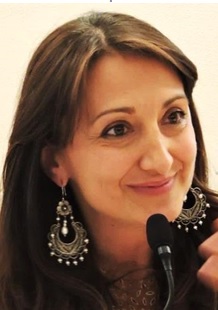
Academic staff
 +39 045802 8405








 giorgia.decarli@univr.it


 licia.landi@univr.it








 angeloluigi.sangalli@univr.it




 francesco.tommasi@univr.it

Study Plan
The Study Plan includes all modules, teaching and learning activities that each student will need to undertake during their time at the University.
Please select your Study Plan based on your enrollment year.
1° Year
| Modules | Credits | TAF | SSD |
|---|
2° Year activated in the A.Y. 2022/2023
| Modules | Credits | TAF | SSD |
|---|
3° Year activated in the A.Y. 2023/2024
| Modules | Credits | TAF | SSD |
|---|
| Modules | Credits | TAF | SSD |
|---|
| Modules | Credits | TAF | SSD |
|---|
| Modules | Credits | TAF | SSD |
|---|
| Modules | Credits | TAF | SSD |
|---|
Legend | Type of training activity (TTA)
TAF (Type of Educational Activity) All courses and activities are classified into different types of educational activities, indicated by a letter.
Type D and Type F activities
I 12 crediti liberi a scelta dello studente (ambito “D”) hanno lo scopo di offrire allo studente la possibilità di personalizzare il proprio percorso formativo permettendo di approfondire uno o più argomenti di particolare interesse legati al proprio percorso accademico.
Per garantire questo fine, si invitano gli studenti a rispettare le seguenti indicazioni per il completamento di tale ambito:
- almeno un’attività formativa erogata come esame universitario (con relativo voto in trentesimi) - è possibile scegliere fra i vari insegnamenti del proprio CdS non sostenuti in precedenza, fra i vari insegnamenti degli altri CdS di I° livello afferenti al Dipartimento di Scienze Umane ed anche fra i vari insegnamenti dei CdS di I° livello ad accesso libero erogati dall'Ateneo di Verona;
- massimo 6 cfu relativi a competenze linguistiche (oltre a quelli previsti dal PdS);
- massimo 6 cfu relativi a competenze informatiche (oltre a quelli previsti dal PdS);
- massimo 4 cfu di tirocinio, (oltre a quelli previsti dal PdS);
- massimo 6 cfu di attività laboratoriale/esercitazioni (compresi quelli previsti nei PdS per l’ambito) di regola viene riconosciuto 1 cfu ogni 25 ore di attività;
- massimo 6 cfu di attività seminariale/convegni/cicli di incontri/formative in genere (sia accreditata dal Dipartimento di Scienze Umane che extrauniversitaria) – di regola viene riconosciuto 1 cfu ogni 8 ore di partecipazione e/o 2 giornate salvo diversamente deliberato;
- non vengono valutate attività svolte in Erasmus non inserite nei Learning Agreement.
COMPETENZE TRASVERSALI
Scopri i percorsi formativi promossi dal Teaching and learning centre dell'Ateneo, destinati agli studenti iscritti ai corsi di laurea, volti alla promozione delle competenze trasversali:
https://talc.univr.it/it/competenze-trasversali
| years | Modules | TAF | Teacher |
|---|---|---|---|
| 1° 2° 3° | What paradigms beyond the pandemic? | D |
Paola Dal Toso
(Coordinator)
|
| 1° 2° 3° | The contagion and the cure. The world after the virus | D |
Carlo Chiurco
(Coordinator)
|
| 1° 2° 3° | The ethics and aesthetics of the image | D |
Gianluca Solla
(Coordinator)
|
| years | Modules | TAF | Teacher |
|---|---|---|---|
| 1° 2° 3° | What paradigms beyond the pandemic? | D |
Paola Dal Toso
(Coordinator)
|
| 1° 2° 3° | The contagion and the cure. The world after the virus | D |
Carlo Chiurco
(Coordinator)
|
| 1° 2° 3° | Laboratorio “Calendario di Memoria Civile – Giornata della Memoria” | D |
Olivia Guaraldo
(Coordinator)
|
| 1° 2° 3° | Eros and Polis ”and“ In the name of Tiresias: Subjectivation, transit, sexuation | D |
Matteo Bonazzi
(Coordinator)
|
| years | Modules | TAF | Teacher |
|---|---|---|---|
| 1° 2° 3° | Introduction to robotics for humanities students | D |
Paolo Fiorini
(Coordinator)
|
| years | Modules | TAF | Teacher |
|---|---|---|---|
| 1° 2° 3° | "Common world. 2022 Arendt Seminars | D |
Ilaria Possenti
(Coordinator)
|
| 1° 2° 3° | Restorative Justice | D |
Cristina Lonardi
(Coordinator)
|
| 1° 2° 3° | New Working Times and Workplaces and Skills Development for Techno-Stress Resilience and Focus Group | D |
Margherita Pasini
(Coordinator)
|
| 1° 2° 3° | Group Psychology and the Analysis of the Ego, a hundred years later: social bond and new forms of subjectivation. | D |
Matteo Bonazzi
(Coordinator)
|
| 1° 2° 3° | The contagion and the cure. The world after the virus | D |
Carlo Chiurco
(Coordinator)
|
| 1° 2° 3° | Gnoseology and Metaphysics Workshop | D |
Davide Poggi
(Coordinator)
|
| 1° 2° 3° | Workshop for communication mediator "A bridge for wellbeing" | D |
Margherita Pasini
(Coordinator)
|
| 1° 2° 3° | Eros and Polis ”and“ In the name of Tiresias: Subjectivation, transit, sexuation | D |
Matteo Bonazzi
(Coordinator)
|
| years | Modules | TAF | Teacher |
|---|---|---|---|
| 1° 2° 3° | "Common world. 2022 Arendt Seminars | D |
Ilaria Possenti
(Coordinator)
|
| 1° 2° 3° | New Working Times and Workplaces and Skills Development for Techno-Stress Resilience and Focus Group | D |
Margherita Pasini
(Coordinator)
|
| 1° 2° 3° | Partecipated justice and reforms. The settlement of conflicts with people and for people | D |
Cristina Lonardi
(Coordinator)
|
| 1° 2° 3° | Gnoseology and Metaphysics Workshop | D |
Davide Poggi
(Coordinator)
|
| 1° 2° 3° | Eros and Polis ”and“ In the name of Tiresias: Subjectivation, transit, sexuation | D |
Matteo Bonazzi
(Coordinator)
|
Psychological testing (2022/2023)
Teaching code
4S007360
Credits
6
Language
Italian
Scientific Disciplinary Sector (SSD)
M-PSI/03 - PSYCHOMETRICS

The teaching is organized as follows:
Lezione
Esercitazione
Learning objectives
1) Know and understand methods of research and measurement of psychological phenomena related to the individual, interpersonal relationship and groups. 2) Apply the knowledge of the psychological measurement tools of the individual's assessment to the assessment of the needs of learning, training and development of individuals in the life cycle, groups, organizations and communities Specific learning objectives: This course aims: • to learn the basic skill about the creation, the use of psychological tests; • to develop capabilities of judgment making on the use of psychological tests, understanding and examining some problematic areas in psychological measurement and on the interpretation and communication of test results; • to develop the required communication skills needed for the test administration and the communication of the results.
Prerequisites and basic notions
Basic knowledge of the scientific method and knowledge acquired in particular in teaching psychological research methodology are prerequisites
Program
MM: Lezioni
------------------------
The program is the same for both students who attend the course and who not attend it.
The program of the course will cover the following topics:
- The issue of the measure in psychology
- The administration of a questionnaire
- How to build a psychological test: what we want to measure
- The scaling models - How to write a test
- Preliminary analysis of the items
- Exploratory and confirmatory analysis and criterion validity
- Interpretation and standardization of the scores
- Introduction and application of two famous psychological tests
------------------------
MM: Esercitazioni
------------------------
A brief description of the program that will be done during the lab:
L1. How to write the items of a questionnaire, to collect data and prepare a database;
L2. Preparation of the database (continue), coding of the variables and transformation of the reverse;
L3. Analysis of the quality of the data and of the scale;
L4. Introduction of JAMOVI, descriptive statistics and reliability of the scale;
L5. Exploratory factor analysis
L6. Confirmatory factor analysis and criterio validity
L7. Exercitations
L8. Final exxercitation
Bibliography
Didactic methods
The program will be developed trough frontal lessons, workshop with psychologists expert on the application of psychological tests in clinical and organizational context and work groups. The work group activities will be optional. During the hours of practice will be experimented the techniques learned during the hours of lation through the use of software such as excel and jamovi. It will be possible to follow the hours of practice also in streaming given the limited capacity of the computer room.
The moodle platform will be used to support the course activities.
Learning assessment procedures
------------------------
MM: Lezioni
------------------------
The exam is written and it is composed by 32 questions with multiple choice responses on the topics of the course. The final score of the exam is the sum of the score of a written exam (compulsory, score from 0 to 32), the score of the laboratory exercitation (facultative, score from 0 to 3), the score of the work-group presentation and discussion on a paper (facultative, score from 0 to 2). After the written exam, the teacher could ask the students to take an additional oral exam to verify the acquired knowledge.
------------------------
MM: Esercitazioni
------------------------
Final written exam (facultative, score from 0 to 3) with exercises on Excel and JAMOVI to test the psychometric properties of a test.
Evaluation criteria
The objective of each test is to ascertain the achievement of the expected teaching results, in terms of theoretical and applied knowledge and understanding.
Criteria for the composition of the final grade
The final grade is given by the sum of the points obtained during the written exam (0-32) to which, if at least the score of 18 is reached, the points obtained with the optional laboratory test (0-3 points) and the points group work which is always optional (0-2 points)
Exam language
italiano
Career prospects
Module/Programme news
News for students
There you will find information, resources and services useful during your time at the University (Student’s exam record, your study plan on ESSE3, Distance Learning courses, university email account, office forms, administrative procedures, etc.). You can log into MyUnivr with your GIA login details: only in this way will you be able to receive notification of all the notices from your teachers and your secretariat via email and soon also via the Univr app.
Gestione carriere
Linguistic training CLA
Student mentoring
Practical information for students
Documents
| Title | Info File |
|---|---|
 1 - Guida per lo studente - AGGIORNAMENTO 2022
|
pdf, it, 325 KB, 02/05/23 |
|
2 - Guida per lo studente - AGGIORNAMENTO 2020
|
pdf, it, 212 KB, 02/05/23 |
|
3 - Guida per lo studente - AGGIORNAMENTO 2013
|
pdf, it, 131 KB, 02/05/23 |
Graduation
Documents
| Title | Info File |
|---|---|
|
Adempimenti amministrativi domanda di laurea Aprile 2024 - a.a. 2022/2023
|
pdf, it, 99 KB, 13/10/23 |
|
Adempimenti amministrativi domanda di laurea Luglio 2024-a.a. 2023/2024
|
pdf, it, 101 KB, 10/04/24 |
|
Linee guida per la stesura della tesi
|
pdf, it, 296 KB, 28/07/22 |
|
Memorandum per l'organizzazione della tesi
|
pdf, it, 142 KB, 28/07/22 |
 Template per la stesura della tesi
|
octet-stream, it, 24 KB, 28/07/22 |
List of theses and work experience proposals
Stage e Tirocini
Le attività che ci si aspetta il/la tirocinante curriculare in Scienze psicologiche per la formazione svolga presso gli enti che lo/la ospitano riguardano principalmente attività di affiancamento nei seguenti ambiti:
- Formazione, sviluppo, innovazione e gestione delle risorse umane;
- Orientamento scolastico e professionale;
- Ricerca, selezione e valutazione psicologica del personale.
Sono ritenuti ambiti adeguati le diverse agenzie per il lavoro, le agenzie di formazione, le agenzie di orientamento, le società di consulenza e tutti gli enti, le associazioni, le aziende, le imprese e, in generale, le organizzazioni che al loro interno operano attività di ricerca, selezione e valutazione psicologica del personale, attività di formazione, sviluppo, innovazione e gestione delle risorse umane e attività di orientamento scolastico e professionale. Anche enti di ricerca e Università dove si conducono studi e indagini su questi temi sono ambiti ritenuti adeguati.
Lo/la studente/essa sarà seguito/a da un tutor accademico e da un tutor aziendale. Alle attività di tirocinio sono attribuiti 9 CFU (pari a 225 ore).
Il tutor aziendale deve essere un laureato in psicologia anche non iscritto all’albo.
Linee Guida per lo Svolgimento dei Tirocini Curriculari
- Tutte le informazioni in merito agli stage per futuri studenti sono disponibili alla pagina Stage e tirocini.
- Tutte le informazioni in merito agli stage per studenti iscritti sono pubblicate in MyUnivr - come fare per - stage e tirocini.
- Tutte le informazioni in merito agli stage per le aziende sono disponili alla pagina Stage e tirocini per azienze.
