Studying at the University of Verona
Here you can find information on the organisational aspects of the Programme, lecture timetables, learning activities and useful contact details for your time at the University, from enrolment to graduation.
Academic calendar
The academic calendar shows the deadlines and scheduled events that are relevant to students, teaching and technical-administrative staff of the University. Public holidays and University closures are also indicated. The academic year normally begins on 1 October each year and ends on 30 September of the following year.
Course calendar
The Academic Calendar sets out the degree programme lecture and exam timetables, as well as the relevant university closure dates..
| Period | From | To |
|---|---|---|
| primo semestre (lauree magistrali) | Oct 4, 2021 | Dec 17, 2021 |
| secondo semestre (lauree magistrali) | Feb 21, 2022 | May 13, 2022 |
| Session | From | To |
|---|---|---|
| sessione invernale | Jan 10, 2022 | Feb 18, 2022 |
| sessione estiva | May 23, 2022 | Jul 8, 2022 |
| sessione autunnale | Aug 22, 2022 | Sep 23, 2022 |
| Session | From | To |
|---|---|---|
| sessione autunnale (validità a.a. 2020/2021) | Dec 6, 2021 | Dec 10, 2021 |
| sessione invernale (validità a.a. 2020/2021) | Apr 6, 2022 | Apr 8, 2022 |
| sessione estiva (validità a.a. 2021/2022) | Sep 5, 2022 | Sep 6, 2022 |
Exam calendar
Exam dates and rounds are managed by the relevant Economics Teaching and Student Services Unit.
To view all the exam sessions available, please use the Exam dashboard on ESSE3.
If you forgot your login details or have problems logging in, please contact the relevant IT HelpDesk, or check the login details recovery web page.
Should you have any doubts or questions, please check the Enrollment FAQs
Academic staff
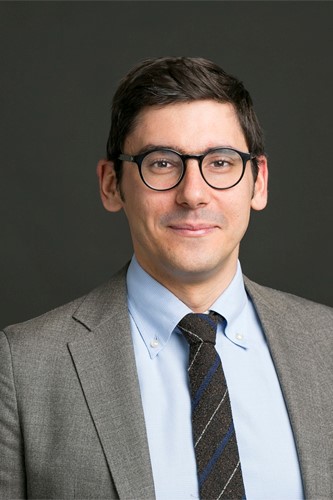




 mario.furno@univr.it
 cecilia.mancini@univr.it

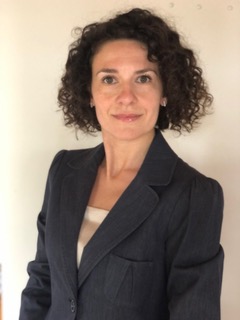 francesca.rossignoli@univr.it
 0444 393941 (Ufficio Vicenza) 0458028261 (Ufficio Verona)


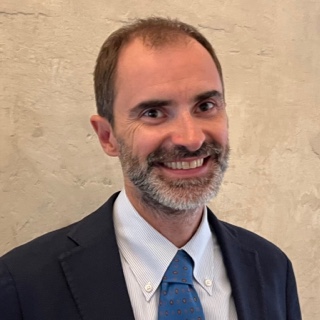

Vannucci Virginia
virginia.vannucci@univr.it

Study Plan
The Study Plan includes all modules, teaching and learning activities that each student will need to undertake during their time at the University.
Please select your Study Plan based on your enrollment year.
1° Year
| Modules | Credits | TAF | SSD |
|---|
2° Year activated in the A.Y. 2022/2023
| Modules | Credits | TAF | SSD |
|---|
| Modules | Credits | TAF | SSD |
|---|
| Modules | Credits | TAF | SSD |
|---|
| Modules | Credits | TAF | SSD |
|---|
Legend | Type of training activity (TTA)
TAF (Type of Educational Activity) All courses and activities are classified into different types of educational activities, indicated by a letter.
Type D and Type F activities
| years | Modules | TAF | Teacher |
|---|---|---|---|
| 1° 2° | The fashion lab (1 ECTS) | D |
Caterina Fratea
(Coordinator)
|
| 1° 2° | The fashion lab (2 ECTS) | D |
Caterina Fratea
(Coordinator)
|
| 1° 2° | The fashion lab (3 ECTS) | D |
Caterina Fratea
(Coordinator)
|
| years | Modules | TAF | Teacher |
|---|---|---|---|
| 1° 2° | Job Club | D |
Paola Signori
(Coordinator)
|
| 1° 2° | Marketing plan | D |
Virginia Vannucci
(Coordinator)
|
| 1° 2° | Soft skills Coaching Days (Esu 4 job) - 2021/2022 | D |
Paola Signori
(Coordinator)
|
| years | Modules | TAF | Teacher |
|---|---|---|---|
| 1° 2° | Internationalization and Sustainability. Friends or Enemies? | D |
Angelo Zago
(Coordinator)
|
| 1° 2° | Internationalization and Sustainability. Friends or Enemies? | D |
Angelo Zago
(Coordinator)
|
| 1° 2° | Internationalization and Sustainability. Friends or Enemies? | D |
Angelo Zago
(Coordinator)
|
| 1° 2° | Data Analysis Laboratory with R (Vicenza) | D |
Marco Minozzo
(Coordinator)
|
| 1° 2° | Data Visualization Laboratory | D |
Marco Minozzo
(Coordinator)
|
| 1° 2° | Python Laboratory | D |
Marco Minozzo
(Coordinator)
|
| 1° 2° | Data Science Laboratory with SAP | D |
Marco Minozzo
(Coordinator)
|
| 1° 2° | Advanced Excel Laboratory (Vicenza) | D |
Marco Minozzo
(Coordinator)
|
| 1° 2° | Excel Laboratory (Vicenza) | D |
Marco Minozzo
(Coordinator)
|
| 1° 2° | Programming in Matlab | D |
Marco Minozzo
(Coordinator)
|
| 1° 2° | Programming in SAS | D |
Marco Minozzo
(Coordinator)
|
| 1° 2° | Samsung Innovation Camp | D |
Marco Minozzo
(Coordinator)
|
| years | Modules | TAF | Teacher |
|---|---|---|---|
| 1° 2° | An introduction to multivariate statistical analysis using R - 2021/2022 | D |
Francesca Rossi
(Coordinator)
|
| 1° 2° | Business & Predictive Analytics for International Firms (with Excel Applications) - 2021/2022 | D |
Angelo Zago
(Coordinator)
|
| 1° 2° | What paradigms beyond the pandemic? Individual vs. Society, Private vs. Public | D |
Federico Brunetti
(Coordinator)
|
| 1° 2° | English for business and economics | F |
Angelo Zago
|
| 1° 2° | Integrated Financial Planning | D |
Riccardo Stacchezzini
(Coordinator)
|
| years | Modules | TAF | Teacher |
|---|---|---|---|
| 1° 2° | The fashion lab (1 ECTS) | D |
Caterina Fratea
(Coordinator)
|
| 1° 2° | The fashion lab (2 ECTS) | D |
Caterina Fratea
(Coordinator)
|
| 1° 2° | The fashion lab (3 ECTS) | D |
Caterina Fratea
(Coordinator)
|
| years | Modules | TAF | Teacher |
|---|---|---|---|
| 1° 2° | La metodologia SEM applicata allo studio della relazione tra gestione del rischio e performance nelle PMI | D |
Cristina Florio
(Coordinator)
|
| 1° 2° | Laboratory on research methods for business | D |
Cristina Florio
(Coordinator)
|
| 1° 2° | Professional Communication for Economics A.A. 2021-22 | D |
Claudio Zoli
(Coordinator)
|
| years | Modules | TAF | Teacher |
|---|---|---|---|
| 1° 2° | How to Enter in a Foreign Market. Theory and Applications - 2021/2022 | D |
Angelo Zago
(Coordinator)
|
International Economics (2021/2022)
Teaching code
4S003745
Teacher
Coordinator
Credits
9
Language
English
Scientific Disciplinary Sector (SSD)
SECS-P/01 - ECONOMICS
Period
secondo semestre (lauree magistrali) dal Feb 21, 2022 al May 13, 2022.

Learning outcomes
The course aims at giving students knowledge of causes and effects of international trade, of trade policies and of the role of the World Trade Organisation (WTO) in the regulation of world trade. Thanks to participation in classroom seminars and workgroups students shall improve their communication skills and upon completion of the course students shall be able to understand the dynamics of international trade and use both economic theory and the main international databases in order to evaluate the impact of international trade flows on countries specialisation in production and domestic welfare.
Program
Comparative advantages and the Ricardian theory of international trade;
The Heckscher-Ohlina theory of international trade;
Limits of neo-classical theory of international trade;
The Leontieff Paradox and empirical tests of the Heckscher-Ohlin theory;
Technical change and international trade: the neo-technological approach;
Imperfect competition and intra-industry trade;
International factor movements
International trade, tariffs and protectionism;
The role of WTO in the world economy.
Textbook: Appleyard and Field, International Economics, McGraw Hill, 9° edition, 2017 (chapters from 1 to 15 only)
Additional material shall be available on the e-learning site of the course.
Bibliography
Examination Methods
The final exam consists in a written test on the international trade theories presented in the course. No intermediate tests shall be scheduled.
In the test, student should show the knowledge of the main international trade theories along with the capability of using both graphical and mathematical analysis of international trade topics.
The final mark shall be the result of both correctness and accuracy of answers to the test questions.
Career prospects
Module/Programme news
News for students
There you will find information, resources and services useful during your time at the University (Student’s exam record, your study plan on ESSE3, Distance Learning courses, university email account, office forms, administrative procedures, etc.). You can log into MyUnivr with your GIA login details: only in this way will you be able to receive notification of all the notices from your teachers and your secretariat via email and soon also via the Univr app.
Double degree
To contribute to the internationalization of the experience of students enrolled in the MSc in IEB, Double Degree agreements have been activated with the University of Bordeaux (FR) and with the University of Bamberg (D). Each agreement provides for the participation of a maximum of five students, therefore a total of (maximum) ten students can benefit from the experience.
Bordeaux
Students selected for the Double Degree program with Bordeaux will spend the first semester of the second year at the partner university, during which they will participate in the Master Mention “Economie Internationale” - Parcours “Economie, banque et finance internationales”. Students will attend the following courses in France (on the right the equivalent courses of the MSc in IEB):
Import/Export Techniques 8ECTS <---> International business law 9CFU
Growth and Development 7ECTS <---> International trade and economic development 9CFU
International Trade and FDI 8ECTS <---> Export decisions, FDI, and global value chains 9CFU
Strategic Analysis and Applications 7ECTS <---> Stage 3CFU
Bamberg
Students selected for the Double Degree program with Bamberg, on the other hand, will participate in the Master of Science in European Economic Studies program, where they will attend the following courses:
- One course to be chosen in the MAEES1 Methods and Fundamentals module group:
Modul MAEES1.1 Advanced Microeconomics 6 ECTS
Modul MAEES1.2 Advanced Macroeconomics 6 ECTS
- Three courses (18 ECTS) with modules of the module groups MAEES Specialisation (of 6 ECTS each):
MAEES3 Internationale Wirtschaft (International Economics)
MAEES4 Empirische Mikroökonomik (Empirical Microeconomics)
MAEES5 Finanzwissenschaft (Public Economics)
MAEES7 Wirtschaftstheorie (Economic Theory)
MAEES8 Angewandte Wirtschaftsforschung (Applied Economic Research)
- 12 ECTS among the following Foreign Business Languages at master level:
German (for not German native speakers)
Business English
Business French
Business Italian (for not Italian native speakers)
Business Spanish
Business Russian
- 24 ECTS for thesis completion.
Requirements and selection procedure
Students regularly enrolled in the first year of the MSc in IEB can be admitted to the Double Degree programs. The call for applications will be published around September 2021 or later in the University web page on double degrees. The choice of students to be admitted is made during the first semester of the first year, through a multi-stage process:
- a selection of students based on the results achieved in their bachelor degree, on their CV and on a motivational interview. Following this selection, the ranking of students "admitted under condition" will be published;
- an ongoing confirmation of the above ranking, based on the academic achievement of the students in the first part of their studies at the University of Verona. Specifically, are confirmed the students "admitted under condition" which - at the end of the first semester of the first year - have achieved a weighted average score greater than or equal to 24 and a number of credits not lower than the average of the cohort of students enrolled in the first year are taken into consideration).
The ranking of selected and confirmed students will be unique and the choice of destination - Bamberg or Bordeaux - will be made starting with the first classified student, then the second and so on.
Finally, the students selected and confirmed will participate in the call to obtain the Erasmus scholarships reserved for the assigned location.
Disclaimer
The information on this site may be subject to changes during construction. Please consult the site for any updates.
Linguistic training CLA
Internships
Gestione carriere
Student login and resources
Prova finale
La prova finale consiste in un elaborato in forma scritta di almeno 60 cartelle, che approfondisce un tema a scelta relativo a uno degli insegnamenti previsti dal piano didattico dello studente. Il tema e il titolo dell’elaborato dovranno essere selezionati in accordo con un docente dell’Ateneo di un SSD fra quelli presenti nel piano didattico dello studente. Il lavoro deve essere sviluppato sotto la guida del docente. La tesi è oggetto di esposizione e discussione orale, in una delle date appositamente stabilite dal calendario delle attività didattiche, dinanzi a una Commissione di Laurea nominata ai sensi del RDA. In accordo con il Relatore, la tesi potrà essere redatta e la discussione potrà svolgersi in lingua inglese.
Per maggiori informazioni e la consultazione delle scadenze e delle commissioni di laurea si rimanda all'apposita sezione dei Servizi di Segreteria studenti.
