Studying at the University of Verona
Here you can find information on the organisational aspects of the Programme, lecture timetables, learning activities and useful contact details for your time at the University, from enrolment to graduation.
Academic calendar
The academic calendar shows the deadlines and scheduled events that are relevant to students, teaching and technical-administrative staff of the University. Public holidays and University closures are also indicated. The academic year normally begins on 1 October each year and ends on 30 September of the following year.
Course calendar
The Academic Calendar sets out the degree programme lecture and exam timetables, as well as the relevant university closure dates..
| Period | From | To |
|---|---|---|
| I semestre (Lingue e letterature straniere) | Sep 27, 2021 | Jan 8, 2022 |
| II semestre (Lingue e letterature straniere) | Feb 14, 2022 | May 28, 2022 |
| Session | From | To |
|---|---|---|
| ESAMI LINGUE - sessione invernale | Jan 10, 2022 | Feb 12, 2022 |
| ESAMI LINGUE - sessione estiva | May 30, 2022 | Jul 23, 2022 |
| ESAMI LINGUE - sessione autunnale | Aug 29, 2022 | Sep 24, 2022 |
| Session | From | To |
|---|---|---|
| LAUREE LINGUE - sessione autunnale (a.a. 2020-2021) | Nov 8, 2021 | Nov 13, 2021 |
| LAUREE LINGUE - sessione straordinaria (a.a. 2020-2021) | Mar 28, 2022 | Apr 2, 2022 |
| LAUREE LINGUE - sessione estiva (a.a. 2021-2022) | Jul 11, 2022 | Jul 16, 2022 |
Exam calendar
Exam dates and rounds are managed by the relevant Foreign Languages and Literatures Teaching and Student Services Unit.
To view all the exam sessions available, please use the Exam dashboard on ESSE3.
If you forgot your login details or have problems logging in, please contact the relevant IT HelpDesk, or check the login details recovery web page.
Should you have any doubts or questions, please check the Enrollment FAQs
Academic staff
 +39 045802 8409












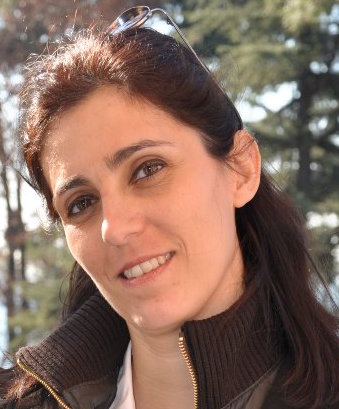




 piergiovanna.grossi@univr.it



 luca.mazzoni@univr.it




 sara.paolini@univr.it






 matteo.tirelli@univr.it
Study Plan
The Study Plan includes all modules, teaching and learning activities that each student will need to undertake during their time at the University.
Please select your Study Plan based on your enrollment year.
1° Year
| Modules | Credits | TAF | SSD |
|---|
1ST FOREIGN LANGUAGE2ND FOREIGN LANGUAGE1ST FOREIGN LITERATURE2ND FOREIGN LITERATURE2° Year activated in the A.Y. 2022/2023
| Modules | Credits | TAF | SSD |
|---|
1ST FOREIGN LANGUAGE2ND FOREIGN LANGUAGE1ST FOREIGN LITERATURE2ND FOREIGN LITERATUREPHILOLOGY RELATED TO 1ST OR 2ND FOREIGN LANGUAGEIntroduction to Germanic Philology
3° Year activated in the A.Y. 2023/2024
| Modules | Credits | TAF | SSD |
|---|
1ST FOREIGN LANGUAGE2ND FOREIGN LANGUAGE| Modules | Credits | TAF | SSD |
|---|
1ST FOREIGN LANGUAGE2ND FOREIGN LANGUAGE1ST FOREIGN LITERATURE2ND FOREIGN LITERATURE| Modules | Credits | TAF | SSD |
|---|
1ST FOREIGN LANGUAGE2ND FOREIGN LANGUAGE1ST FOREIGN LITERATURE2ND FOREIGN LITERATUREPHILOLOGY RELATED TO 1ST OR 2ND FOREIGN LANGUAGEIntroduction to Germanic Philology
| Modules | Credits | TAF | SSD |
|---|
1ST FOREIGN LANGUAGE2ND FOREIGN LANGUAGE| Modules | Credits | TAF | SSD |
|---|
3rd foreign language B1 levelLegend | Type of training activity (TTA)
TAF (Type of Educational Activity) All courses and activities are classified into different types of educational activities, indicated by a letter.
Type D and Type F activities
Nei piani didattici di ciascun Corso di studio è previsto l’obbligo di conseguire un certo numero di CFU di tipologia D e di tipologia F.
CFU D (attività a scelta dello studente)
I CFU D possono essere acquisiti mediante:
- insegnamenti non obbligatori nel proprio piano didattico (previa approvazione del Presidente del Collegio didattico per insegnamenti non selezionabili in autonomia)
- attività accreditate dal Collegio didattico
- competenze linguistiche (diverse o ulteriori) rispetto a quelle obbligatorie
- tirocini o stage
- TALC (competenze trasversali).
Competenze trasversali TALC
Nota bene: i corsi TALC sono riconosciuti solo come CFU D.
Il numero di CFU D va calcolato complessivamente sull’intero triennio/biennio e non è legato all'annualità.
CFU F
I CFU F sono solitamente relativi ad abilità informatiche, competenze linguistiche, stage e tirocini e ulteriori attività formative accreditate in questa tipologia dal Collegio Didattico.
Nel corso di laurea in Lingue e letterature per l’editoria e i media digitali sono previste le seguenti tipologie:
- 3 CFU per terza lingua (livello B1)
- 6 CFU per tirocinio obbligatorio
- 3 CFU per informatica (curriculum Editoria)
- 9 CFU per laboratori (curriculum Digital Humanities).
Le competenze informatiche possono essere acquisite attraverso:
- il superamento della prova pratica presso le aule informatiche di Ateneo,
- la frequenza dei corsi attivati da scuole e centri accreditati dall’AICA (Associazione Italiana per l’Informatica e il Calcolo Automatico) o riconosciuti dalla Provincia e dalla Regione e superamento della relativa prova finale. Le domande per il riconoscimento delle competenze informatiche acquisite precedentemente vengono esaminate dalla Commissione per il riconoscimento delle Competenze Informatiche.Le attività di tirocinio sono finalizzate a far acquisire allo studente una conoscenza diretta nel settore editoriale e delle Digital Humanities nonché abilità specifiche d’interesse professionale (revisione bozze, grafica editoriale, costruzione di pagine web, archivi digitali etc.).
| years | Modules | TAF | Teacher |
|---|---|---|---|
| 1° 2° 3° | Introduction to robotics for humanities students | D |
Paolo Fiorini
(Coordinator)
|
| years | Modules | TAF | Teacher |
|---|---|---|---|
| 1° 2° 3° | Wikimedia workshop for international dissemination of cultural heritage | D |
Piergiovanna Grossi
(Coordinator)
|
To discover all the teaching activities accredited by the foreign teaching college click here
Wikimedia workshop for international dissemination of cultural heritage (2021/2022)
Teaching code
4S010451
Teacher
Coordinator
Credits
3
Language
Italian
Scientific Disciplinary Sector (SSD)
NN - -
Period
Not yet assigned
Erasmus students
Not available

Learning outcomes
The workshop aims to provide knowledge of wiki technologies and methodologies for the publication of online content and for the translation of texts into Italian. At the end of the workshop, the participants will have to demonstrate that they have acquired the methodological and technical skills necessary for the creation and translation of Wikipedia entries, that is to say that they know how to orient themselves in research, analysis and critical revision of entries dedicated specifically to cultural heritage and to integrate the contents, where necessary, with bibliographic documents.
Program
COURSE WITH LIMITED NUMBER OF PLACES, SUBJECT TO SELECTION THROUGH ENROLLMENT IN A SPECIFIC CALL.
The program is divided into two modules:
Module 1: theoretical and practical lessons:
-laws governing the publication and dissemination of information related to cultural heritage;
-copyright and free licenses on the web;
-introduction to Wikimedia: Wikipedia, Wikidata, Commons;
-wiki technology: how to create and translate a page on Wikipedia;
Module 2: laboratory activities:
-creation of Wikipedia entries:
-choice of one or more Wikipedia entries to update and translate into Italian from a language of one's own study path;
-translation of the selected Wikipedia entries in Italian (via wiki);
-verification and publication of new entries created.
Teaching aproach:
The course is structured in frontal lessons and practical/laboratory activities. After a theoretical introduction, students will practice translating and updating Wikipedia entries, experimenting with the main wiki tools and other technologies used by Wikimedia (wikidata, open street map, etc.).
Bibliography
Examination Methods
- Objectives of the test(s): assessment of the understanding of the topics covered in class, familiarity with the tools used during the laboratory and the ability to analyze and interpret bibliographic documents and Wikipedia entries;
- contents of the test/s: the test will focus on the activities carried out.
- method of assessment: oral;
- evaluation mode: approval/rejection.
Career prospects
Module/Programme news
News for students
There you will find information, resources and services useful during your time at the University (Student’s exam record, your study plan on ESSE3, Distance Learning courses, university email account, office forms, administrative procedures, etc.). You can log into MyUnivr with your GIA login details: only in this way will you be able to receive notification of all the notices from your teachers and your secretariat via email and also via the Univr app.
Student login and resources
Gestione carriere
Assegnazione tutore
Attività accreditate D/F
Calendario didattico dettagliato
Cambio lingua curriculare
Competenze informatiche
Competenze linguistiche (prima e seconda lingua)
Competenze linguistiche in triennale (terza lingua CFU F)
Compilazione del piano didattico
Corso di Lingua portoghese
Erasmus+ e altre esperienze all'estero
Linguistic training CLA
Presentazione dei corsi di studio e Open day
Graduation
Saperi minimi
Stage e tirocini
Nel piano didattico della laurea triennale in Lingue e letterature per l’editoria e i media digitali (L11 ED-DH) è previsto un tirocinio/stage obbligatorio (CFU 6).
Le attività di stage sono finalizzate a far acquisire allo studente una conoscenza diretta in settori di particolare interesse per l’inserimento nel mondo del lavoro e per l’acquisizione di abilità professionali specifiche.
Le attività di stage sono svolte sotto la diretta responsabilità di un singolo docente presso studi professionali, enti della pubblica amministrazione, aziende accreditate dall’Ateneo veronese.
I crediti maturati in seguito ad attività di stage saranno attribuiti secondo quanto disposto nel dettaglio dal “Regolamento d’Ateneo per il riconoscimento dei crediti maturati negli stage universitari” vigente.
- Tutte le informazioni in merito agli stage per futuri studenti sono disponibili alla pagina Stage e tirocini.
- Tutte le informazioni in merito agli stage per studenti iscritti sono pubblicate in MyUnivr - come fare per - stage e tirocini.
- Tutte le informazioni in merito agli stage per le aziende sono disponili alla pagina Stage e tirocini per azienze.
Ulteriori informazioni al seguente link https://www.univr.it/it/i-nostri-servizi/gestione-carriere-studenti-lingue-e-letterature-straniere/stage-e-tirocini-lingue-e-letterature-straniere
