Studying at the University of Verona
Here you can find information on the organisational aspects of the Programme, lecture timetables, learning activities and useful contact details for your time at the University, from enrolment to graduation.
Academic calendar
The academic calendar shows the deadlines and scheduled events that are relevant to students, teaching and technical-administrative staff of the University. Public holidays and University closures are also indicated. The academic year normally begins on 1 October each year and ends on 30 September of the following year.
Course calendar
The Academic Calendar sets out the degree programme lecture and exam timetables, as well as the relevant university closure dates..
| Period | From | To |
|---|---|---|
| I semestre | Oct 1, 2020 | Jan 29, 2021 |
| II semestre | Mar 1, 2021 | Jun 11, 2021 |
| Session | From | To |
|---|---|---|
| Sessione invernale d'esame | Feb 1, 2021 | Feb 26, 2021 |
| Sessione estiva d'esame | Jun 14, 2021 | Jul 30, 2021 |
| Sessione autunnale d'esame | Sep 1, 2021 | Sep 30, 2021 |
| Session | From | To |
|---|---|---|
| Sessione estiva di laurea | Jul 13, 2021 | Jul 13, 2021 |
| Sessione autunnale di laurea | Oct 12, 2021 | Oct 12, 2021 |
| Sessione invernale di laurea | Mar 10, 2022 | Mar 10, 2022 |
| Period | From | To |
|---|---|---|
| Festa dell'Immacolata | Dec 8, 2020 | Dec 8, 2020 |
| Vacanze Natalizie | Dec 24, 2020 | Jan 3, 2021 |
| Epifania | Jan 6, 2021 | Jan 6, 2021 |
| Vacanze Pasquali | Apr 2, 2021 | Apr 5, 2021 |
| Festa del Santo Patrono | May 21, 2021 | May 21, 2021 |
| Festa della Repubblica | Jun 2, 2021 | Jun 2, 2021 |
| Vacanze estive | Aug 9, 2021 | Aug 15, 2021 |
Exam calendar
Exam dates and rounds are managed by the relevant Science and Engineering Teaching and Student Services Unit.
To view all the exam sessions available, please use the Exam dashboard on ESSE3.
If you forgot your login details or have problems logging in, please contact the relevant IT HelpDesk, or check the login details recovery web page.
Should you have any doubts or questions, please check the Enrollment FAQs
Academic staff

 045 802 7823

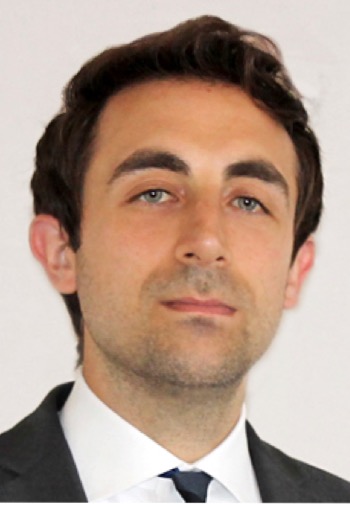
 bernardo.calabrese@univr.it
 vittoria.cozza@univr.it











Study Plan
The Study Plan includes all modules, teaching and learning activities that each student will need to undertake during their time at the University.
Please select your Study Plan based on your enrollment year.
1° Year
| Modules | Credits | TAF | SSD |
|---|
1 module between the following1 module among the following1 module among the following1 module between the following1 module between the following2° Year activated in the A.Y. 2021/2022
| Modules | Credits | TAF | SSD |
|---|
1 module between the following1 module among the following1 module between the following| Modules | Credits | TAF | SSD |
|---|
1 module between the following1 module among the following1 module among the following1 module between the following1 module between the following| Modules | Credits | TAF | SSD |
|---|
1 module between the following1 module among the following1 module between the following| Modules | Credits | TAF | SSD |
|---|
Legend | Type of training activity (TTA)
TAF (Type of Educational Activity) All courses and activities are classified into different types of educational activities, indicated by a letter.
Microbial Ecology (It will be activated in the A.Y. 2020/2021)
Teaching code
4S008294
Credits
6
Scientific Disciplinary Sector (SSD)
AGR/16 - MICROBIOLOGIA AGRARIA
Learning outcomes
The course is designed to provide students with a comprehensive training on both structure and role of microbial communities within different natural and anthropized habitats, as main actors of biogeochemical cycles of the elements. Students will have the opportunity to learn the most up-to-date theoretical principles and experimental methodologies to analyze microbial communities both in natural systems and in engineered (technological) contexts. Students attending the course will also be able to acquire interpretative tools allowing them to identify the occurrence of ecological imbalances and critically evaluate human impacts on the environment in terms of pollution and climate change, possibly even due to perturbations of microbial biocenoses at macro-scale level.
Educational offer 2024/2025
You can see the information sheet of this course delivered in a past academic year by clicking on one of the links below:
Type D and Type F activities
Le attività formative in ambito D o F comprendono gli insegnamenti impartiti presso l'Università di Verona o periodi di stage/tirocinio professionale.
Nella scelta delle attività di tipo D, gli studenti dovranno tener presente che in sede di approvazione si terrà conto della coerenza delle loro scelte con il progetto formativo del loro piano di studio e dell'adeguatezza delle motivazioni eventualmente fornite.
| years | Modules | TAF | Teacher |
|---|---|---|---|
| 1° 2° | Python programming language | D |
Vittoria Cozza
(Coordinator)
|
Career prospects
Module/Programme news
News for students
There you will find information, resources and services useful during your time at the University (Student’s exam record, your study plan on ESSE3, Distance Learning courses, university email account, office forms, administrative procedures, etc.). You can log into MyUnivr with your GIA login details: only in this way will you be able to receive notification of all the notices from your teachers and your secretariat via email and also via the Univr app.
Graduation
Deadlines and administrative fulfilments
For deadlines, administrative fulfilments and notices on graduation sessions, please refer to the Graduation Sessions - Science and Engineering service.
Need to activate a thesis internship
For thesis-related internships, it is not always necessary to activate an internship through the Internship Office. For further information, please consult the dedicated document, which can be found in the 'Documents' section of the Internships and work orientation - Science e Engineering service.
Final examination regulations
List of thesis proposals
| theses proposals | Research area |
|---|---|
| Valutazione dell'applicazione di nanoparticelle biogeniche per il controllo del cancro batterico del kiwi | AGRICULTURE - AGRICULTURE |
| Valutazione dell'applicazione di nanoparticelle biogeniche per il controllo del cancro batterico del kiwi | APPLICATIONS OF LIFE SCIENCES - APPLICATIONS OF LIFE SCIENCES |
| Valorizzazione di scarti agroindustriali mediante fermentazione termofila per la produzione di acidi organici come precursori chimici di polimeri | Applied biotechnology (non-medical), bioreactors, applied microbiology - Applied biotechnology (non-medical), bioreactors, applied microbiology |
| Valutazione dell'applicazione di nanoparticelle biogeniche per il controllo del cancro batterico del kiwi | Applied biotechnology (non-medical), bioreactors, applied microbiology - Applied biotechnology (non-medical), bioreactors, applied microbiology |
| Immobilizzazione di enzimi d’interesse industriale su nanoparticelle biomimetiche magnetiche | Applied Life Sciences and Non-Medical Biotechnology: Applied plant and animal sciences; food sciences; forestry; industrial, environmental and non-medical biotechnologies, nanobiotechnology, bioengineering; synthetic and chemical biology; biomimetics; bioremediation - Biomimetics |
| Immobilizzazione di enzimi d’interesse industriale su nanoparticelle biomimetiche magnetiche | Applied Life Sciences and Non-Medical Biotechnology: Applied plant and animal sciences; food sciences; forestry; industrial, environmental and non-medical biotechnologies, nanobiotechnology, bioengineering; synthetic and chemical biology; biomimetics; bioremediation - Non-medical biotechnology and genetic engineering (including transgenic organisms, recombinant proteins, biosensors, bioreactors, microbiology) |
| Immobilizzazione di enzimi d’interesse industriale su nanoparticelle biomimetiche magnetiche | Chemical engineering, technical chemistry - Chemical engineering, technical chemistry |
| Effetto delle condizioni operative applicate al processo di digestione anaerobica su produzione di biogas e stabilità del carbonio organico del digestato | Earth System Science: Physical geography, geology, geophysics, atmospheric sciences, oceanography, climatology, cryology, ecology, global environmental change, biogeochemical cycles, natural resources management - Biogeochemistry, biogeochemical cycles, environmental chemistry |
| Influenza dalla variazione stagionale del feedstock sulla produzione di biogas e sulla stabilità del carbonio organico presente nel digestato prodotto | Earth System Science: Physical geography, geology, geophysics, atmospheric sciences, oceanography, climatology, cryology, ecology, global environmental change, biogeochemical cycles, natural resources management - Biogeochemistry, biogeochemical cycles, environmental chemistry |
| Valorizzazione di scarti agroindustriali mediante fermentazione termofila per la produzione di acidi organici come precursori chimici di polimeri | Environmental biotechnology, bioremediation, biodegradation - Environmental biotechnology, bioremediation, biodegradation |
| Bilanci di massa e di materia in digestori anaerobici alimentati con residui agricoli e zootecnici. | Products and Processes Engineering: Product design, process design and control, construction methods, civil engineering, energy processes, material engineering - Chemical engineering, technical chemistry |
| Studio della composizione chimica e della stabilità termica di poliidrossialcanoati ottenuti da diverse matrici ambientali. | Products and Processes Engineering: Product design, process design and control, construction methods, civil engineering, energy processes, material engineering - Chemical engineering, technical chemistry |
| Valorizzazione di scarti agroindustriali mediante fermentazione termofila per la produzione di acidi organici come precursori chimici di polimeri | Products and Processes Engineering: Product design, process design and control, construction methods, civil engineering, energy processes, material engineering - Chemical engineering, technical chemistry |
| Immobilizzazione di enzimi d’interesse industriale su nanoparticelle biomimetiche magnetiche | Products and Processes Engineering: Product design, process design and control, construction methods, civil engineering, energy processes, material engineering - Materials engineering (metals, ceramics, polymers, composites, etc.) |
| Valorizzazione di scarti agroindustriali mediante fermentazione termofila per la produzione di acidi organici come precursori chimici di polimeri | Products and Processes Engineering: Product design, process design and control, construction methods, civil engineering, energy processes, material engineering - Production technology, process engineering |
| Studio delle proprietà di luminescenza di lantanidi in matrici proteiche | Synthetic Chemistry and Materials: Materials synthesis, structure-properties relations, functional and advanced materials, molecular architecture, organic chemistry - Colloid chemistry |
| Multifunctional organic-inorganic hybrid nanomaterials for applications in Biotechnology and Green Chemistry | Synthetic Chemistry and Materials: Materials synthesis, structure-properties relations, functional and advanced materials, molecular architecture, organic chemistry - New materials: oxides, alloys, composite, organic-inorganic hybrid, nanoparticles |
Attendance modes and venues
As stated in the Didactic Regulations, there is no generalised obligation of attendance. Individual lecturers are, however, free to require a minimum number of hours of attendance for eligibilitỳ for the profit exam of the teaching they teach. In such cases, attendance of teaching activities is monitored in accordance with procedures communicated in advance to students.
Part-time enrolment is permitted. Find out more on the Part-time enrolment possibilities page.
The course's teaching activities take place in the Science and Engineering area, which is composed of the buildings of Ca‘ Vignal 1, Ca’ Vignal 2, Ca' Vignal 3 and Piramide, located in the Borgo Roma cluster, and Villa Lebrecht and Villa Eugenia located in the San Floriano di Valpolicella cluster.
Lectures are held in the classrooms of Ca‘ Vignal 1, Ca’ Vignal 2 and Ca' Vignal 3, while practical exercises take place in the teaching laboratories dedicated to the various activities.
