The programme
This section provides a comprehensive overview of the degree programme, including details on its structure, regulations, and additional resources. It also introduces the University’s Quality Assurance system and outlines the Student Orientation services available to prospective students, aimed at guiding them in selecting the most suitable course.
Course of study in brief
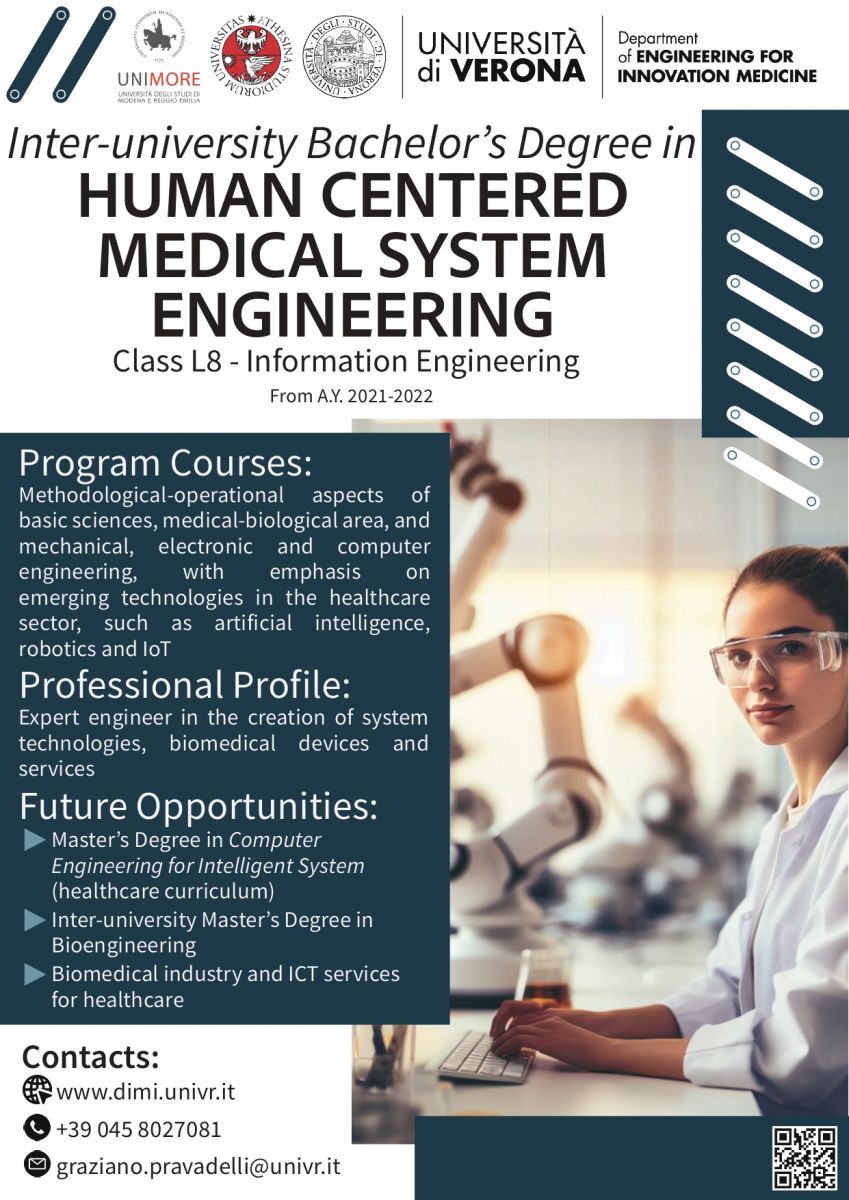
The course is open access. Adequate preparation in basic mathematics is required. The course is inter-university, in collaboration with the University of Modena and Reggio Emilia and the University of Trento. The degree prepares professionals able to develop and manage innovative equipment and services, based on information and engineering technologies that support both social-health personnel and patients in the prevention and treatment of diseases. Respect and attention to the person are addressed, not only for the scientific, preventive, diagnostic, therapeutic, and rehabilitative aspects, but also from a social, moral, legal and psychological point of view.
Graduates of the study course (CdS) will therefore be experts in the development of complex technological systems capable of interacting in a sophisticated way with people, caregivers or patients, in numerous and different situations, such as prevention, diagnosis, treatment therapeutic, convalescence, both in hospital and at home.
To be able to develop such systems, students will acquire, in addition to a solid traditional scientific and engineering foundation, the knowledge and skills necessary to integrate software based on emerging technologies in areas such as control algorithms, data processing and artificial intelligence. with interconnected hardware systems, such as wearable devices, robots and machinery based on advanced hardware architectures.
The classical courses of a Degree in Information Engineering (mathematical analysis, geometry, physics, computer science, electronics and mechanics), and of a Degree Course in Biomedical Engineering, (chemistry, physiology, biomedical instrumentation and medicine), will therefore be accompanied by courses in the fields of robotics and control of remote and autonomous devices, and machine learning. The teachings in these areas also include laboratory activities where students will be able to apply the knowledge acquired during theoretical study.
There are also training contents on anatomy and physiology, ethics, law and psychology so that the graduate can understand the scientific, social and ethical aspects relating to the use of smart devices at the service of the fragile segments of the population. Finally, internships are provided, in external companies or university research laboratories, in order to guarantee the acquisition of skills, including transversal skills, of professional interest, and study experiences and internships abroad, thanks to international mobility programs. In addition to guaranteeing the continuation of studies in master's degree courses, in particular in the areas of computer engineering and bioengineering, the degree course aims to create professionals capable of covering technical roles in the development and management of medical equipment and services . Graduates will therefore be able to find employment in public and private companies in the biomedical, pharmaceutical and biotechnology sectors, including hospitals and nursing homes, rehabilitation and residential centers for the elderly and people with chronic diseases. Upon passing the state exam, graduates will be able to enroll in the Section B of the register of biomedical and clinical engineers.
- Degree type Corsi di laurea
- Duration 3 years
- Part-time Study option available Yes
- Admissions Open degree programme, TOLC-I test required
- Degree class
- Course of National And EU interest Yes
- S.T.E.M. course Yes
- Administrative headquarters verona
- Locations for lessons and exams Map of the Locations
- Language Italian
- conoscere adeguatamente gli aspetti metodologico-operativi della matematica, della fisica e della chimica conoscere adeguatamente gli aspetti metodologico-operativi dell’elettronica, della meccanica e dell’informatica con particolare attenzione ai problemi dell'ingegneria biomedica;
- conoscere adeguatamente gli aspetti metodologico-operativi di carattere medico-biologico;
- comprendere l'impatto delle soluzioni biomedicali nel contesto sociale e fisico-ambientale;
- conoscere le proprie responsabilità̀ professionali ed etiche;
- conoscere gli strumenti cognitivi di base per l'aggiornamento continuo delle proprie conoscenze.
Grazie a tali conoscenze il laureato in Ingegneria dei Sistemi Medicali per la Persona saprà:
utilizzare le metodologie di indagine e gli strumenti matematici, chimico-fisici, meccanici ed elettronici al fine di comprendere, analizzare o modellare sistemi biofisici e biomedici;
- analizzare e risolvere problemi ingegneristici di natura meccanica, elettronica o informatica legati allo sviluppo o alla gestione di dispositivi, sistemi o servizi biomedicali;
- utilizzare le tecnologie informatiche di base, inerenti le architetture, le reti e la programmazione, nell’ambito dello sviluppo o della gestione di dispositivi, sistemi o servizi biomedicali o di sanità elettronica;
- utilizzare le tecnologie meccatroniche nell’ambito dello sviluppo o della gestione di dispositivi, sistemi o servizi biomedicali;
- essere capace di condurre esperimenti di carattere biofisico e di analizzarne e interpretarne i dati;
- lavorare in gruppo, operare con definiti gradi di autonomia, e inserirsi prontamente negli ambienti di lavoro;
- comunicare efficacemente, in forma scritta e orale, in almeno una lingua dell'Unione Europea, oltre l'italiano;
Al fine di fornire il complesso di tali conoscenze e competenze, il piano di studi è stato organizzato come descritto in seguito. I primi due anni sono volti ad acquisire conoscenze di base che coinvolgono quattro aree: matematica-fisica-chimica, medico-biologica ed etica, informatica e applicativa, e ingegneristica. Questa preparazione di base punta in particolare a fornire solide conoscenze per consentire al laureato, fra gli sbocchi possibili, anche il proseguimento degli studi verso una laurea magistrale. Infatti, l’analisi occupazionale rivela che circa il 70% dei laureati in Ingegneria Biomedica tende a proseguire il percorso di studi iscrivendosi a una laurea magistrale.
Parte del secondo e il terzo anno sono dedicati a una formazione più specifica che differenzia il piano in due curricula, che catturano quanto emerso dalla consultazione con le parti interessate.
Tra le tecnologie previste nel piano di studi, possiamo riconoscere un sottogruppo 'hardware' e un sottogruppo 'software'. Si è pertanto proceduto a definire due curricula che avessero una preparazione specializzata su questi due versanti. I due curricula condividono molti insegnamenti di base e si differenziano principalmente nel terzo anno di corso. Per quanto riguarda il curriculum A esso pone enfasi sulle competenze tipiche dell’ingegneria industriale, quali la meccanica e l’elettronica e fornisce contenuti specializzanti negli ambiti dei sistemi di controllo e della robotica. Per quanto riguarda il curriculum B, esso inserisce basi di informatica, e più in generale di ingegneria dell’informazione, con declinazioni professionalizzanti nell’ambito della telemedicina, dell’elaborazione delle immagini e dei sistemi di misura. Le basi di ingegneria industriale e dell’informazione sono comuni a entrambi i curricula permettendo così l’accesso alle tre figure professionali identificate. Insegnamenti dell’area medico-biologico ed insegnamenti a scelta nell’ambito informatico, industriale e gestionale completano la formazione dei curricula con contenuti specialistico-applicativi.
Il terzo anno di corso è caratterizzato anche da un insegnamento obbligatorio di psicologia e etica, per sensibilizzare gli studenti alle problematiche dell’interazione tra macchine dotate di livelli diversi di autonomia e intelligenza e gli utenti, di solito in una situazione di particolare fragilità. Il terzo anno include infine un progetto industriale, che verrà svolto in collaborazione con i partner, industriali e sanitari, del corso di laurea e può includere un periodo di tirocinio. Questo progetto permetterà agli studenti di avvicinarsi alle problematiche lavorative e, potenzialmente, getterà le basi dell’elaborato finale che concluderà il percorso di studio.
PROFILI PROFESSIONALI
- SVILUPPATORE DI DISPOSITIVI E TECNOLOGIE BIOMEDICALI
- SVILUPPATORE DI SERVIZI SANITARI DI ASSISTENZA E CURA DELLA PERSONA
- GESTORE DI STRUMENTAZIONI SANITARIE E DI SERVIZI ICT PER LA SANITA'
SVILUPPATORE DI DISPOSITIVI E TECNOLOGIE BIOMEDICALI
Funzione in un contesto di lavoro: Lo sviluppatore di dispositivi e tecnologie biomedicali può svolgere funzioni relative principalmente a sviluppo, gestione e manutenzione di sistemi e servizi biomedici con particolare riguardo ai dispositivi biomedicali per diagnosi e terapia, ai dispositivi portatili, indossabili o impiantabili come ad esempio smart watch, event recorder, pacemakers o pancreas artificiali, ai sistemi robotici per la chirurgia, per la riabilitazione o per l’assistenza, ai sistemi per l’allenamento e per la medicina sportiva, e ai sistemi di trasporto della persona.
Competenze associate alla funzione: Lo sviluppatore di dispositivi e tecnologie biomedicali saprà:
- utilizzare le metodologie di indagine e gli strumenti matematici, fisici, meccanici ed elettronici al fine di comprendere, analizzare o modellare sistemi biofisici e biomedici;
- analizzare e risolvere problemi ingegneristici di natura meccanica, elettronica o informatica legati allo sviluppo di dispositivi e sistemi biomedicali;
- utilizzare le tecnologie e le conoscenze informatiche di base, inerenti le architetture, le reti e la programmazione, nell’ambito dello sviluppo di dispositivi e sistemi biomedicali anche remoti o interconnessi;
- utilizzare le tecnologie meccatroniche per lo sviluppo di dispositivi e sistemi biomedicali per il trattamento di patologie o condizioni motorie, o più in generale per assistere medico e paziente;
- lavorare in gruppo, operare con definiti gradi di autonomia, e inserirsi prontamente negli ambienti di lavoro.
Sbocchi occupazionali: Lo sviluppatore di dispositivi e tecnologie biomedicali è in grado di svolgere compiti tecnici o professionali nell'ambito delle tecnologie meccaniche, elettroniche e biomediche presso enti pubblici o privati. In particolare, la formazione ingegneristica, fondata su basi di matematica, fisica, meccanica, elettronica e informatica permette al laureato di inserirsi agevolmente sia in imprese che progettano e sviluppano sistemi biomedicali, che in aziende ed enti sanitari, e, più in generale, organizzazioni che utilizzano tali sistemi, riuscendo, in tempi brevi, ad acquisire eventuali competenze specifiche richieste.
SVILUPPATORE DI SERVIZI SANITARI DI ASSISTENZA E CURA DELLA PERSONA
Funzione in un contesto di lavoro: Lo Sviluppatore di servizi sanitari di assistenza e cura della persona può svolgere funzioni relative principalmente a sviluppo, gestione e manutenzione di servizi sanitari di assistenza e cura della persona come ad esempio servizi diagnostici, servizi di telemedicina, telemonitoraggio e teleassistenza, servizi inerenti la riabilitazione e la medicina sportiva, mediante l’utilizzo di strumentazioni hardware e software, l’impiego di tecnologie inerenti ad esempio i dispositivi indossabili, i sistemi distribuiti e la strumentazione biomedicale per diagnosi e trattamenti personalizzati.
Competenze associate alla funzione: Lo Sviluppatore di servizi sanitari di assistenza e cura della persona saprà:
- utilizzare le metodologie di indagine e gli strumenti matematici, fisici, meccanici ed elettronici al fine di comprendere o analizzare sistemi sanitari per la cura e l’assistenza della persona;
- analizzare problemi ingegneristici di natura meccanica, elettronica o informatica legati alla gestione di servizi sanitari;
- utilizzare le tecnologie e le conoscenze informatiche di base, inerenti le architetture e le reti nell’ambito della gestione di servizi sanitari, anche interconnessi;
- integrare nei sistemi sanitari strumenti meccatronici per il trattamento di patologie o condizioni motorie;
- lavorare in gruppo, operare con definiti gradi di autonomia, e inserirsi prontamente negli ambienti di lavoro.
Sbocchi occupazionali: Lo Sviluppatore di servizi sanitari di assistenza e cura della persona è in grado di svolgere compiti tecnici o professionali nell'ambito delle tecnologie informatiche e biomediche presso enti pubblici o privati. In particolare, la formazione ingegneristica, fondata su basi di matematica, fisica, elettronica ed informatica permette al laureato di inserirsi agevolmente sia in imprese che forniscono servizi di tipo biomedicali, che in aziende ed enti sanitari, e, più in generale, organizzazioni che utilizzano sistemi o servizi biomedicali, riuscendo, in tempi brevi, ad acquisire eventuali competenze specifiche richieste.
GESTORE DI STRUMENTAZIONI SANITARIE E DI SERVIZI ICT PER LA SANITA'
Funzione in un contesto di lavoro: Il gestore di strumentazioni sanitarie e di servizi ICT per la sanità può svolgere funzioni legate principalmente a utilizzo, gestione e manutenzione di sistemi e strumentazioni biomedicali e di applicazioni relative alla sanità elettronica
Competenze associate alla funzione: Il gestore di strumentazioni sanitarie e di servizi ICT per la sanità saprà:
- utilizzare le metodologie di indagine e gli strumenti matematici, fisici, meccanici ed elettronici al fine di gestire strumentazioni sanitarie e servizi ICT per la sanità;
- utilizzare le tecnologie informatiche di base, inerenti le architetture e le reti, nell’ambito della gestione di sistemi e dispositivi biomedicali, dell’amministrazione di sistemi informatici di sanità elettronica e di sistemi di reti di calcolatori;
- analizzare problemi ingegneristici di natura meccanica, elettronica o informatica legati alla gestione di strumentazioni sanitarie e servizi ICT per la sanità;
- lavorare in gruppo, operare con definiti gradi di autonomia, e inserirsi prontamente negli ambienti di lavoro.
Sbocchi occupazionali: Il Gestore di strumentazioni sanitarie e di servizi ICT per la sanità è in grado di svolgere compiti tecnici o professionali nell'ambito dei sistemi ICT per la sanità presso enti pubblici o privati. In particolare, la formazione ingegneristica, fondata su basi di matematica, fisica, elettronica ed informatica permette al laureato di inserirsi agevolmente sia in imprese che progettano e sviluppano servizi ICT per la sanità, che in aziende ed enti, e, più in generale, organizzazioni che utilizzano tali servizi, riuscendo, in tempi brevi, ad acquisire eventuali competenze specifiche richieste.
