Studying at the University of Verona
Here you can find information on the organisational aspects of the Programme, lecture timetables, learning activities and useful contact details for your time at the University, from enrolment to graduation.
Academic calendar
The academic calendar shows the deadlines and scheduled events that are relevant to students, teaching and technical-administrative staff of the University. Public holidays and University closures are also indicated. The academic year normally begins on 1 October each year and ends on 30 September of the following year.
Course calendar
The Academic Calendar sets out the degree programme lecture and exam timetables, as well as the relevant university closure dates..
| Period | From | To |
|---|---|---|
| TPALL 1° ANNO 1° SEMESTRE | Oct 1, 2019 | Dec 20, 2019 |
| TPALL 2° ANNO 1° SEMESTRE | Oct 1, 2019 | Dec 20, 2019 |
| TPALL 3° ANNO 1° SEMESTRE | Oct 1, 2019 | Dec 20, 2019 |
| TPALL 1° ANNO 2° SEMESTRE | Feb 1, 2020 | May 31, 2020 |
| TPALL 2° ANNO 2° SEMESTRE | Feb 1, 2020 | May 31, 2020 |
| TPALL 3° ANNO 2° SEMESTRE | Feb 1, 2020 | May 31, 2020 |
Exam calendar
Exam dates and rounds are managed by the relevant Medicine Teaching and Student Services Unit.
To view all the exam sessions available, please use the Exam dashboard on ESSE3.
If you forgot your login details or have problems logging in, please contact the relevant IT HelpDesk, or check the login details recovery web page.
Should you have any doubts or questions, please check the Enrollment FAQs
Academic staff
 borghesi.a@mail.apss.tn.it
cembrani@apss.tn.it
maurizio.grigiante@unitn.it
borghesi.a@mail.apss.tn.it
cembrani@apss.tn.it
maurizio.grigiante@unitn.it
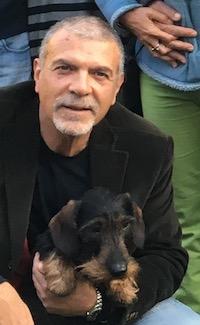
 0458027666
daniele.longo@apss.tn.it
0458027666
daniele.longo@apss.tn.it


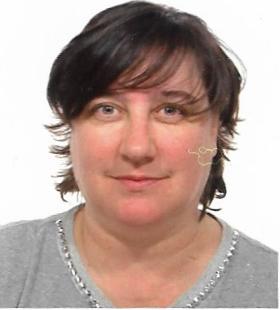 rocco.micciolo@economia.unitn.it


 francesco.torre@apss.tn.it
cinzia.vivori@apss.tn.it
francesco.torre@apss.tn.it
cinzia.vivori@apss.tn.it


Study Plan
The Study Plan includes all modules, teaching and learning activities that each student will need to undertake during their time at the University.
Please select your Study Plan based on your enrollment year.
1° Year
| Modules | Credits | TAF | SSD |
|---|
2° Year activated in the A.Y. 2020/2021
| Modules | Credits | TAF | SSD |
|---|
3° Year activated in the A.Y. 2021/2022
| Modules | Credits | TAF | SSD |
|---|
| Modules | Credits | TAF | SSD |
|---|
| Modules | Credits | TAF | SSD |
|---|
| Modules | Credits | TAF | SSD |
|---|
Legend | Type of training activity (TTA)
TAF (Type of Educational Activity) All courses and activities are classified into different types of educational activities, indicated by a letter.
Prevention sciences applied to hygiene and food education - CHIMICA DEGLI ALIMENTI (2019/2020)
Teaching code
4S006097
Teacher
Credits
2
Language
Italian
Scientific Disciplinary Sector (SSD)
CHIM/10 - FOOD CHEMISTRY
Period
TPALL 1° ANNO 2° SEMESTRE dal Feb 1, 2020 al May 31, 2020.

To show the organization of the course that includes this module, follow this link: Course organization
Learning outcomes
The aim of the course is to provide the basic concepts of the chemistry with particular attention to the relationship between food consumption and production of food and the health of consumers as of operators involved in the food industry. In particular, students will be introduced to the complexity of food matrices and provided with the molecular basis for the understanding of food technology processes.
At the end of the course the student will be able to understand the rationale that underlies the composition of a food and will have the ability to apply the acquired knowledge to evaluate the quality of raw materials and the finished product according to the processes of transformation and conservation applied.
Program
The main components (carbohydrates, lipids, proteins) and minority components (vitamins, additives) of food matrices. Description of biological activities and modifications induced on these chemical compounds by the processes of food technology and conservation, such as Maillard reaction and lipid oxidation. Description of the structure, function and method of use of the main food additives, in particular preservatives and antioxidants. Introduction to undesirable substances in food.
| Author | Title | Publishing house | Year | ISBN | Notes |
|---|---|---|---|---|---|
| Cabras Martelli; Piccin Editore. | “Chimica degli alimenti” | Piccin | 2004 | ||
| T.P. Coultate | La chimica degli alimenti | Zanichelli | |||
| Patrizia Cappelli e Vanna Vannucchi | Principi di chimica degli alimenti | Zanichelli | 2016 | 978-88-08-62123-8 |
Examination Methods
The exam will be written, with open questions.
To pass the exam, students will have to demonstrate:
- to know the chemical characteristics of the different classes of substances that make up a food and the function that they have within the system
- the modifications that they undergo during processing and preservation
- know how to apply such knowledge in order to solve application problems
Career prospects
Module/Programme news
News for students
There you will find information, resources and services useful during your time at the University (Student’s exam record, your study plan on ESSE3, Distance Learning courses, university email account, office forms, administrative procedures, etc.). You can log into MyUnivr with your GIA login details: only in this way will you be able to receive notification of all the notices from your teachers and your secretariat via email and soon also via the Univr app.
Graduation
Documents
| Title | Info File |
|---|---|
 TPALL_sessione laurea Aprile 2023_pubblicazione
|
pdf, it, 142 KB, 14/04/23 |
Gestione carriere
Orario Lezioni
Documents
| Title | Info File |
|---|---|
|
Orario 1° anno 2° semestre a.a. 23-24
|
pdf, it, 509 KB, 11/04/24 |
|
Orario 2° anno 2° semestre a.a. 23-24
|
pdf, it, 499 KB, 11/04/24 |
|
Orario 3° anno 2° semestre a.a. 23-24
|
pdf, it, 621 KB, 11/04/24 |
|
Servizi agli studenti - Polo Universitario Prof.ni Sanitarie - agg. feb 24
|
pdf, it, 1453 KB, 07/02/24 |
