Studying at the University of Verona
Here you can find information on the organisational aspects of the Programme, lecture timetables, learning activities and useful contact details for your time at the University, from enrolment to graduation.
Academic calendar
The academic calendar shows the deadlines and scheduled events that are relevant to students, teaching and technical-administrative staff of the University. Public holidays and University closures are also indicated. The academic year normally begins on 1 October each year and ends on 30 September of the following year.
Course calendar
The Academic Calendar sets out the degree programme lecture and exam timetables, as well as the relevant university closure dates..
| Period | From | To |
|---|---|---|
| Sem. 1A | Sep 25, 2023 | Nov 4, 2023 |
| Sem. 1B | Nov 13, 2023 | Dec 22, 2023 |
| Sem. 2A | Feb 19, 2024 | Mar 29, 2024 |
| Sem. 2B | Apr 9, 2024 | May 31, 2024 |
| Session | From | To |
|---|---|---|
| Sessione d'esame invernale | Jan 8, 2024 | Feb 17, 2024 |
| Sessione d'esame estiva | Jun 3, 2024 | Jul 27, 2024 |
| Sessione d'esame autunnale | Aug 26, 2024 | Sep 21, 2024 |
| Session | From | To |
|---|---|---|
| Sessione estiva | Jul 8, 2024 | Jul 13, 2024 |
| Sessione autunnale | Nov 4, 2024 | Nov 9, 2024 |
| Period | From | To |
|---|---|---|
| Festa di Ognissanti | Nov 1, 2023 | Nov 1, 2023 |
| Festa dell'Immacolata | Dec 8, 2023 | Dec 8, 2023 |
| Vacanze di Natale | Dec 23, 2023 | Jan 6, 2024 |
| Vacanze di Pasqua | Mar 30, 2024 | Apr 1, 2024 |
| Festa della Liberazione | Apr 25, 2024 | Apr 25, 2024 |
| Festa del Lavoro | May 1, 2024 | May 1, 2024 |
| Festa del Patrono S. Zeno | May 21, 2024 | May 21, 2024 |
| Festa della Repubblica | Jun 2, 2024 | Jun 2, 2024 |
| Vacanze estive | Aug 12, 2024 | Aug 17, 2024 |
Exam calendar
Exam dates and rounds are managed by the relevant Humanistic Studies Teaching and Student Services Unit.
To view all the exam sessions available, please use the Exam dashboard on ESSE3.
If you forgot your login details or have problems logging in, please contact the relevant IT HelpDesk, or check the login details recovery web page.
Should you have any doubts or questions, please check the Enrollment FAQs
Academic staff

 tamara.bastianello@univr.it
 cristina.bertazzoni@univr.it

 045 8028383




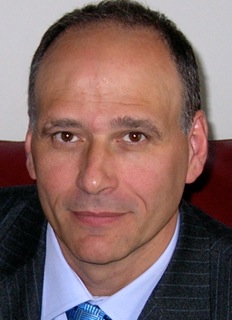


 andrea.ghidini@univr.it






 giacomo.mormino@univr.it

 stefania.pontrandolfo@univr.it

 sorayaelizabeth.shamloo@univr.it




 marco.ubbiali@univr.it


Study Plan
The Study Plan includes all modules, teaching and learning activities that each student will need to undertake during their time at the University.
Please select your Study Plan based on your enrollment year.
1° Year
| Modules | Credits | TAF | SSD |
|---|
2° Year It will be activated in the A.Y. 2024/2025
| Modules | Credits | TAF | SSD |
|---|
Indirect internship for coordination of educational services
| Modules | Credits | TAF | SSD |
|---|
| Modules | Credits | TAF | SSD |
|---|
Indirect internship for coordination of educational services
| Modules | Credits | TAF | SSD |
|---|
Legend | Type of training activity (TTA)
TAF (Type of Educational Activity) All courses and activities are classified into different types of educational activities, indicated by a letter.
Epistemology of qualitative research (2023/2024)
Teaching code
4S000559
Teacher
Coordinator
Credits
9
Language
Italian
Scientific Disciplinary Sector (SSD)
M-PED/01 - PEDAGOGY, THEORIES OF EDUCATION AND SOCIAL EDUCATION
Period
Sem. 2A, Sem. 2B
Courses Single
Authorized

Learning objectives
Knowledge and understanding
1.The students should be able to know and understand the essence of the epistemology of the qualitative research in educative contexts.
2.The students should be able to know and understand the specificity of the qualitative research in its paradigmatic, epistemological, philosophical and methodological aspects.
3.The student must be able to assume the posture of research as a fundamental competence of the pedagogical profession, in order to build heuristic practices capable of understanding the contexts and improving the quality of services.
Applying knowledge and understanding
1.The students should be able to project experiences of qualitative research contextualized in educative contexts.
2.The students should be able to create an interconnection between theoretical elements and empirical data.
3.The students must be able to take the results of the research in order to implement the quality of the services.
Prerequisites and basic notions
tudents will be requested to have the following pre-requisite:
• the knowledge of paradigms and methods of the research, in particular those that are framed in an ecological paradigm.
Program
The contents of the course will be presented through the alternation of frontal lessons and laboratories: in this way it will be possible for students to be engaged in a “community of learning and practice”.
The course will deal with the following themes:
• The principal approach of the qualitative research;
• How to realize a qualitative research in educational contexts;
• The specificity of an educative research;
• The role of educative research for innovation in educational contexts;
• The ethical dimension of the research;
• The analysis of research projects in educational contexts.
It will be stressed the two necessary competences asked to a good pedagogist: research and reflection.
It will be presented the new "Empirical phenomenological Method" elaborated by Luigina Mortari, suitable for understanding living experience, in particoular in educational fields.
Bibliography
Didactic methods
During the course the students will be involved in laboratorial activities, so that they will be allowed to practice the analysis of qualitative data. This will allow them to face, in a direct or simulated way, all the epistemological, methodological and ethical aspects of the educative research.
Also case studies (taken from the professional context) will be presented to students.
Learning assessment procedures
Evaluation will be realized through a written presentation concerning the texts studied and the practices examined.
Evaluation criteria
Students should prove that they:
• Have understood the relevant elements characterizing the qualitative research;
• Are able to present the specificity of educative research, with precision and clarity;
• Are able to critically analyze case studies and experiences.
Criteria for the composition of the final grade
The texts will be evaluated taking into consideration the correctness of contents, the capacity to communicate in an efficient way and the quality of written composition.
Exam language
italiano
Type D and Type F activities
SOFT SKILLS
Find out more about the Soft Skills courses for Univr students provided by the University's Teaching and Learning Centre: https://talc.univr.it/it/competenze-trasversali
CONTAMINATION LAB
The Contamination Lab Verona (CLab Verona) is an experiential course with modules on innovation and enterprise culture that offers the opportunity to work in teams with students from all areas to solve challenges set by companies and organisations.
Upon completion of a CLab, students will be entitled to receive 6 CFU (D- or F-type credits).
Find out more: https://www.univr.it/clabverona
PLEASE NOTE: In order to be admitted to any teaching activities, including those of your choice, you must be enrolled in the academic year in which the activities in question are offered. Students who are about to graduate in the December and April sessions are therefore advised NOT to undertake extracurricular activities in the new academic year in which they are not enrolled, as these graduation sessions are valid for students enrolled in the previous academic year. Therefore, students who undertake an activity in an academic year in which they are not enrolled will not be granted CFU credits.
| years | Modules | TAF | Teacher |
|---|---|---|---|
| 1° 2° | Ciclo tematico di conferenze – sulla "leadership femminile": dati, riflessioni ed esperienze | D |
Paola Dal Toso
(Coordinator)
|
| 1° 2° | Invisible plots in contemporary reality | D |
Rosanna Cima
(Coordinator)
|
| 1° 2° | University and DSA - Methods and strategies for tackling study and university studies | D |
Gianluca Solla
(Coordinator)
|
| years | Modules | TAF | Teacher |
|---|---|---|---|
| 1° 2° | Art, memory and terrorism: the duty to protect our cultural heritage | D |
Olivia Guaraldo
(Coordinator)
|
| 1° 2° | Ciclo tematico di conferenze – sulla "leadership femminile": dati, riflessioni ed esperienze | D |
Paola Dal Toso
(Coordinator)
|
| 1° 2° | Laboratory of behavioral observation techniques | D |
Marinella Majorano
(Coordinator)
|
| 1° 2° | Invisible plots in contemporary reality | D |
Rosanna Cima
(Coordinator)
|
| 1° 2° | University and DSA - Methods and strategies for tackling study and university studies | D |
Gianluca Solla
(Coordinator)
|
| years | Modules | TAF | Teacher |
|---|---|---|---|
| 1° 2° | Cities and Freedom | D |
Giacomo Mormino
(Coordinator)
|
| 1° 2° | Education and affectivity - 200 years after Christian education by Antonio Rosmini | D |
Fernando Bellelli
(Coordinator)
|
| 1° 2° | Body and Disability – Laboratory | D |
Michele Scandola
(Coordinator)
|
| 1° 2° | Group Psychology and evaluation of educational intervention | D |
Anna Maria Meneghini
(Coordinator)
|
| years | Modules | TAF | Teacher |
|---|---|---|---|
| 1° 2° | Cities and Freedom | D |
Giacomo Mormino
(Coordinator)
|
| 1° 2° | Legal clinics | D |
Alessia Maria Aurora Bevilacqua
(Coordinator)
|
| 1° 2° | Philosophy and politics of care | D |
Alessia Maria Aurora Bevilacqua
(Coordinator)
|
| 1° 2° | Tai-Ti aiuto io | D |
Alessandra Cordiano
(Coordinator)
|
| 1° 2° | Verso le elezioni europee 2024 | D |
Massimo Prearo
(Coordinator)
|
Career prospects
Module/Programme news
News for students
There you will find information, resources and services useful during your time at the University (Student’s exam record, your study plan on ESSE3, Distance Learning courses, university email account, office forms, administrative procedures, etc.). You can log into MyUnivr with your GIA login details: only in this way will you be able to receive notification of all the notices from your teachers and your secretariat via email and soon also via the Univr app.
Student mentoring
Graduation
Documents
| Title | Info File |
|---|---|
 Adempimenti amministrativi domanda di laurea Aprile 2024 - a.a. 2022/2023
|
pdf, it, 99 KB, 13/10/23 |
|
Adempimenti amministrativi domanda di laurea Luglio 2024-a.a. 2023/2024
|
pdf, it, 101 KB, 10/04/24 |
List of theses and work experience proposals
| theses proposals | Research area |
|---|---|
| Psicoanalisi | Psychology - Psychology, Psychoanalysis |
Gestione carriere
Linguistic training CLA
Practical information for students
Documents
| Title | Info File |
|---|---|
|
1 - Guida per lo studente - AGGIORNAMENTO 2022
|
pdf, it, 325 KB, 02/05/23 |
|
2 - Guida per lo studente - AGGIORNAMENTO 2020
|
pdf, it, 212 KB, 02/05/23 |
|
3 - Guida per lo studente - AGGIORNAMENTO 2013
|
pdf, it, 131 KB, 02/05/23 |
Stage e Tirocini
Per le altre attività formative (crediti F) sono previsti 9 cfu (pari a 225 ore) da acquisire solamente attraverso l’attività di tirocinio obbligatoria, a sua volta suddivisa in:
- tirocinio indiretto (1 cfu: 25 ore di frequenza obbligatoria in università per il 75%) in preparazione dell’attività formativa sul campo;
- tirocinio diretto (8 cfu), da svolgersi presso enti convenzionati.
L’ordinamento didattico della LM in Scienze pedagogiche prevede che il tirocinio indiretto a frequenza obbligatoria si svolga in università per il 75% nel secondo anno (1 CFU: 25 ore).
Il tirocinio indiretto consiste in un accompagnamento iniziale delle/degli studenti da parte dei tutor attraverso un percorso di formazione della durata di 25 ore.
La finalità di questo percorso è quella di preparare le/gli studenti alla particolare forma di apprendimento costituita dal tirocinio, dotandoli di conoscenze e strumenti adeguati a osservare, comprendere e rielaborare criticamente l’esperienza di tirocinio nei servizi educativi e ad affrontare il tirocinio negli enti con metodo e consapevolezza.
Il percorso, da attuare in gruppi da 20-25 persone sotto la supervisione di un tutor proveniente dal mondo professionale di educatori e pedagogisti, risponde alle esigenze costantemente espresse sia dalle/dagli studenti stessi sia dalle parti sociali che dai referenti degli enti convenzionati.
Nuove Linee Guida per il tirocinio di Scienze pedagogiche.
- Tutte le informazioni in merito agli stage per futuri studenti sono disponibili alla pagina Stage e tirocini.
- Tutte le informazioni in merito agli stage per studenti iscritti sono pubblicate in MyUnivr - come fare per - stage e tirocini.
- Tutte le informazioni in merito agli stage per le aziende sono disponili alla pagina Stage e tirocini per azienze.
