Studying at the University of Verona
Here you can find information on the organisational aspects of the Programme, lecture timetables, learning activities and useful contact details for your time at the University, from enrolment to graduation.
Academic calendar
The academic calendar shows the deadlines and scheduled events that are relevant to students, teaching and technical-administrative staff of the University. Public holidays and University closures are also indicated. The academic year normally begins on 1 October each year and ends on 30 September of the following year.
Course calendar
The Academic Calendar sets out the degree programme lecture and exam timetables, as well as the relevant university closure dates..
| Period | From | To |
|---|---|---|
| I semestre | Oct 1, 2015 | Jan 29, 2016 |
| II semestre | Mar 1, 2016 | Jun 10, 2016 |
| Session | From | To |
|---|---|---|
| Sessione straordinaria Appelli d'esame | Feb 1, 2016 | Feb 29, 2016 |
| Sessione estiva Appelli d'esame | Jun 13, 2016 | Jul 29, 2016 |
| Sessione autunnale Appelli d'esame | Sep 1, 2016 | Sep 30, 2016 |
| Session | From | To |
|---|---|---|
| Sess. autun. App. di Laurea LM9 | Oct 19, 2015 | Oct 19, 2015 |
| Sess. invern. 2016 Appelli di Laurea LM9 | Mar 11, 2016 | Mar 11, 2016 |
| Sess. estiva App. di Laurea LM9 | Jul 8, 2016 | Jul 8, 2016 |
| Sess. autun. 2016 App. di Laurea LM9 | Oct 18, 2016 | Oct 18, 2016 |
| Sess. invern. 2017 App. di Laurea LM9 | Mar 14, 2017 | Mar 14, 2017 |
| Period | From | To |
|---|---|---|
| Festività dell'Immacolata Concezione | Dec 8, 2015 | Dec 8, 2015 |
| Vacanze di Natale | Dec 23, 2015 | Jan 6, 2016 |
| Vancanze di Pasqua | Mar 24, 2016 | Mar 29, 2016 |
| Anniversario della Liberazione | Apr 25, 2016 | Apr 25, 2016 |
| Festa del S. Patrono S. Zeno | May 21, 2016 | May 21, 2016 |
| Festa della Repubblica | Jun 2, 2016 | Jun 2, 2016 |
| Vacanze estive | Aug 8, 2016 | Aug 15, 2016 |
Exam calendar
Exam dates and rounds are managed by the relevant Science and Engineering Teaching and Student Services Unit.
To view all the exam sessions available, please use the Exam dashboard on ESSE3.
If you forgot your login details or have problems logging in, please contact the relevant IT HelpDesk, or check the login details recovery web page.
Should you have any doubts or questions, please check the Enrollment FAQs
Academic staff















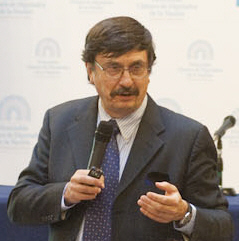
Monaco Ugo Luigi
 hugo.monaco@univr.it
 045 802 7903; Lab: 045 802 7907 - 045 802 7082



Study Plan
The Study Plan includes all modules, teaching and learning activities that each student will need to undertake during their time at the University.
Please select your Study Plan based on your enrollment year.
1° Year
| Modules | Credits | TAF | SSD |
|---|
2 courses to be chosen among the followingOne course to be chosen among the following:3 courses to be chosen among the followingOne course to be chosen among the following2° Year activated in the A.Y. 2016/2017
| Modules | Credits | TAF | SSD |
|---|
2 courses to be chosen among the following:| Modules | Credits | TAF | SSD |
|---|
2 courses to be chosen among the followingOne course to be chosen among the following:3 courses to be chosen among the followingOne course to be chosen among the following| Modules | Credits | TAF | SSD |
|---|
2 courses to be chosen among the following:Legend | Type of training activity (TTA)
TAF (Type of Educational Activity) All courses and activities are classified into different types of educational activities, indicated by a letter.
Computational genomics (2015/2016)
Teaching code
4S003667
Teacher
Coordinator
Credits
6
Language
English
Scientific Disciplinary Sector (SSD)
BIO/18 - GENETICS
Period
II semestre dal Mar 1, 2016 al Jun 10, 2016.
Learning outcomes
The advent of the new sequencing technology (Next Generation Sequencing, NGS), capable of producing million of DNA sequences in a single run at a relative low cost, had a great impact on the ability to study genome complexity at genomic, transcriptomic and epigenetic level and provided interesting opportunities for the development of bioinfomatic resources for data analyses and management.
The course will provide a general overview of the main computational methods that can be applied in genomic studies, mainly focused on the human genome. The course will include an overview on the main next generation sequencing technologies and several applications where these new technologies can be applied, as genome sequencing, genome resequencing for the identification of variants, transcriptomic analysis for the identification of differentially expressed genes.
Program
Introduction to next generation sequencing technologies (NGS)
Bioinformatics file format for data storage (FASTQ, BAM, VCF …)
Overview of genome assembly methods
Genome resequencing
Overview of NGS sequence alignment algorithms
identification of variants
identification of structural variation
Methods for variant prioritization and association to genetic disease
Transcriptomic analysis
Introduction to RNA-seq (sequencing the transcriptome with NGS)
RNA-seq alignment methods
Trascript reconstruction and quantification
Differential expression analysis
The course includes also practical exercise in the informatics laboratory about linux and bash, and analysis and management of NGS data.
Examination Methods
Written with open questions.
Type D and Type F activities
Modules not yet included
Career prospects
Module/Programme news
News for students
There you will find information, resources and services useful during your time at the University (Student’s exam record, your study plan on ESSE3, Distance Learning courses, university email account, office forms, administrative procedures, etc.). You can log into MyUnivr with your GIA login details: only in this way will you be able to receive notification of all the notices from your teachers and your secretariat via email and soon also via the Univr app.
Graduation
Deadlines and administrative fulfilments
For deadlines, administrative fulfilments and notices on graduation sessions, please refer to the Graduation Sessions - Science and Engineering service.
Need to activate a thesis internship
For thesis-related internships, it is not always necessary to activate an internship through the Internship Office. For further information, please consult the dedicated document, which can be found in the 'Documents' section of the Internships and work orientation - Science e Engineering service.
Final examination regulations
Students earn the Master’s degree in Molecular and Medical Biotechnology after successfully completing the final examination, for which students are required to write a dissertation in English, to be presented in front of a Graduation Committee. By writing the dissertation, students will have the opportunity to demonstrate the knowledge and skills acquired. The dissertation shall be an experimental research work on a specific topic, to be carried out in university research laboratories, or in public or private institutes recognised in the biotechnology sector.
The dissertation shall be written by the student under the guidance of a Supervisor. In order to be admitted to the final examination, the student must have acquired all CFU credits in the training activities included in the Study Plan, except those specifically awarded upon completion of the dissertation.
The Graduation Committee shall evaluate each candidate, based on their achievements throughout the entire degree programme, carefully assessing the degree of consistency between educational and professional objectives, as well as their ability for independent intellectual elaboration, critical thinking, communication skills and general cultural maturity, in relation to the objectives of the programme.
40 CFU are awarded upon completion of the Master’s degree dissertation, which can be presented either in English or in Italian. Master’s degree dissertations can be either internal (written at the University or Verona) or in collaboration with an external institution/body.
For each dissertation, a Dissertation Committee shall be established: this will include one Supervisor, one or more co-supervisors (optional), and two examiners. Any professors belonging to a department of the School of Science and Engineering or the School of Medicine and Surgery at the University of Verona may act as Supervisor. Researchers working in external research institutes, research grant holders, post-doctoral fellowship holders and PhD students may act as co-supervisors. The examiners, who must be professors of either the School of Natural Sciences and Engineering or the School of Medicine and Surgery, shall be appointed by the Graduation Committee at least 25 days before the final examination, once the student's eligibility to take the final examination has been verified.
The activities of the Dissertation Committee are not subject to official invitations and will take place by agreement between the persons concerned no later than 15 days before the graduation ceremony, at which time only the awarding of the Master’s degree will take place.
At the end of the examination, the Dissertation Committee will draw up a brief evaluation note giving a summary mark (from 0 to 8 points). This note shall be sent to the relevant Teaching and Student Services Unit, no later than the day before the graduation ceremony, for the subsequent formulation of the final grade by the Graduation Committee, which shall then award the degree.
Evaluation of the dissertation
Students will be given about 30 minutes to present their dissertation. The Dissertation Committee will evaluate the work based on the following criteria:
- level of in-depth analysis in relation to the most recent developments in the Molecular and Medical Biotechnologies areas;
- scientific and/or technological outcomes of the dissertation;
- student’s critical thinking;
- student’s experimental development;
- student’s ability to carry out independent work (this point will not be assessed by the examiners);
- value of the methodologies used;
- accuracy in planning and writing the dissertation;
- communication skills in presenting the dissertation.
Graduation mark
The graduation mark (based on a 110-point scale) is a whole value between 66/110 and 110/110 and is calculated by adding together the following elements (then rounding the result to the nearest whole number, e.g. 93.50 => 94; 86.49 => 86):
- 1) the average of the marks gained in the modules, weighted according to CFU, converted to a 110-point scale;
- 2) evaluation of the dissertation and the oral presentation during the final examination, based on the following methods:
- a) a maximum of 11 points will be awarded for the presentation and the dissertation. These will count as follows: 8 points awarded by the Dissertation Committee, which will evaluate the dissertation and presentation by assigning each of the points 1-8 listed above a coefficient between 0 and 1 (fractional coefficient with one decimal place);
- b) 3 points will be awarded by the Dissertation Committee by unanimous decision, based on the student’s curriculum vitae. Specifically, in order to award the final mark, the Committee will take into account the following: any cum laude honours obtained in the exams taken during the degree programme; participation in internships officially recognised by the University; elective modules; and the achievement of the degree in a time that is shorter than the normal duration of the degree programme. Students who are awarded less than 11 points for their dissertation may be awarded 2 extra points, if: - they have earned at least 12 CFU credits by taking part in international mobility programmes; - they graduate within the normal duration of the degree programme.
- c) the sum of the points resulting from (a) and (b).
If the resulting score is 110/110 or above, the Graduation Committee may decide to award cum laude honours, in which case the student must have:
- a minimum weighted average mark of 104/110 (without rounding up) or
- a minimum weighted average mark of 102/110 (without rounding up) and must have been awarded cum laude honours in at least 3 modules during the degree programme. Under the current legislation, cum laude honours are conferred by unanimous decision of the committee.
External dissertations
An external dissertation is a work carried out in collaboration with an institution/body other than the University of Verona. In this case, the topic of the dissertation must be agreed in advance with a Supervisor from the LM-9 degree programme. In addition, the student must indicate at least one co-supervisor belonging to the external institution/body, who will support the student during the work on the dissertation. The Supervisor and the co-supervisors must be indicated in the online graduation application. The scientific outcomes of the dissertation will be available to all parties involved. In particular, the contents and results of the dissertation are to be considered public.
List of theses and work experience proposals
| theses proposals | Research area |
|---|---|
| Studio delle proprietà di luminescenza di lantanidi in matrici proteiche | Synthetic Chemistry and Materials: Materials synthesis, structure-properties relations, functional and advanced materials, molecular architecture, organic chemistry - Colloid chemistry |
Attendance
As stated in the Teaching Regulations for the A.Y. 2022/2023, attendance is not mandatory. However, professors may require students to attend lectures for a minimum of hours in order to be able to take the module exam, in which case the methods that will be used to check attendance will be explained at the beginning of the module.
