Studying at the University of Verona
Here you can find information on the organisational aspects of the Programme, lecture timetables, learning activities and useful contact details for your time at the University, from enrolment to graduation.
Academic calendar
The academic calendar shows the deadlines and scheduled events that are relevant to students, teaching and technical-administrative staff of the University. Public holidays and University closures are also indicated. The academic year normally begins on 1 October each year and ends on 30 September of the following year.
Course calendar
The Academic Calendar sets out the degree programme lecture and exam timetables, as well as the relevant university closure dates..
| Period | From | To |
|---|---|---|
| primo semestre (lauree magistrali) | Oct 5, 2020 | Dec 23, 2020 |
| secondo semestre (lauree magistrali) | Mar 1, 2021 | Jun 1, 2021 |
| Session | From | To |
|---|---|---|
| sessione invernale | Jan 11, 2021 | Feb 12, 2021 |
| sessione estiva | Jun 7, 2021 | Jul 23, 2021 |
| sessione autunnale | Aug 23, 2021 | Sep 17, 2021 |
| Session | From | To |
|---|---|---|
| sessione autunnale (validità a.a. 2019/20) | Dec 9, 2020 | Dec 11, 2020 |
| sessione invernale (validità a.a. 2019/20) | Apr 7, 2021 | Apr 9, 2021 |
| sessione estiva (validità a.a. 2020/21) | Sep 6, 2021 | Sep 8, 2021 |
| Period | From | To |
|---|---|---|
| Vacanze di Natale | Dec 24, 2020 | Jan 6, 2021 |
| Vacanze di Pasqua | Apr 3, 2021 | Apr 6, 2021 |
| Vacanze estive | Aug 9, 2021 | Aug 15, 2021 |
Exam calendar
Exam dates and rounds are managed by the relevant Economics Teaching and Student Services Unit.
To view all the exam sessions available, please use the Exam dashboard on ESSE3.
If you forgot your login details or have problems logging in, please contact the relevant IT HelpDesk, or check the login details recovery web page.
Should you have any doubts or questions, please check the Enrollment FAQs
Academic staff

 mariacaterina.baruffi@univr.it

 045 802 8224


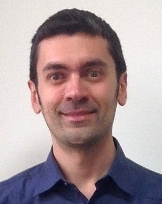

 laura.chiaramonte@univr.it
 mauro.cortese@univr.it




 cecilia.mancini@univr.it
 martina.menon@univr.it






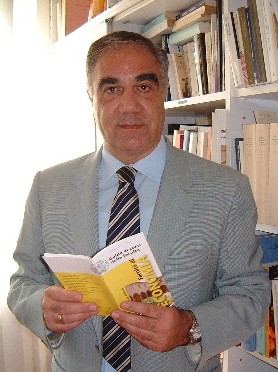



Vannucci Virginia
virginia.vannucci@univr.it

Study Plan
The Study Plan includes all modules, teaching and learning activities that each student will need to undertake during their time at the University.
Please select your Study Plan based on your enrollment year.
1° Year
| Modules | Credits | TAF | SSD |
|---|
2° Year activated in the A.Y. 2021/2022
| Modules | Credits | TAF | SSD |
|---|
| Modules | Credits | TAF | SSD |
|---|
| Modules | Credits | TAF | SSD |
|---|
| Modules | Credits | TAF | SSD |
|---|
Legend | Type of training activity (TTA)
TAF (Type of Educational Activity) All courses and activities are classified into different types of educational activities, indicated by a letter.
Type D and Type F activities
| years | Modules | TAF | Teacher |
|---|---|---|---|
| 1° 2° | Future matters | D |
Alessandro Bucciol
(Coordinator)
|
| 1° 2° | Future matters | D |
Alessandro Bucciol
(Coordinator)
|
| years | Modules | TAF | Teacher |
|---|---|---|---|
| 1° 2° | The fashion lab (1 ECTS) | D |
Maria Caterina Baruffi
(Coordinator)
|
| 1° 2° | The fashion lab (2 ECTS) | D |
Maria Caterina Baruffi
(Coordinator)
|
| 1° 2° | The fashion lab (3 ECTS) | D |
Maria Caterina Baruffi
(Coordinator)
|
| years | Modules | TAF | Teacher |
|---|---|---|---|
| 1° 2° | Design and Evaluation of Economic and Social Policies | D |
Federico Perali
(Coordinator)
|
| 1° 2° | Public debate and scientific writing - 2020/2021 | D |
Martina Menon
(Coordinator)
|
| 1° 2° | Wake up Italia - 2020/2021 | D |
Sergio Noto
(Coordinator)
|
Introduction to the Java Programming Language - 2020/21 (2020/2021)
Teaching code
4S009671
Teacher
Coordinator
Credits
2
Language
Italian
Scientific Disciplinary Sector (SSD)
NN - -
Period
Not yet assigned

Learning outcomes
Java is the most popular programming language. Learning Java represents an important asset in view of entering the job market and starting a career in the financial industry. This course provides the foundations of object-oriented programming using the Java programming language. During the lectures the auxiliary software package Eclipse IDE will be used and its main features will be presented. Financial examples using the finmath Java library will be provided. This course provides useful notions that can be helpful for the lectures Financial Risk Management and Computational Finance.
Program
Syllabus
- Elementary Java syntax, Operators and Control flow
- Classes and Objects
- Encapsulation
- Access Control
- Inheritance
- Polymorphisms
- Interfaces
- Basics on Inner/Nested Classes, Exception Handling and programming with Generics
- Some elements of functional programming in Java 8
| Author | Title | Publishing house | Year | ISBN | Notes |
|---|---|---|---|---|---|
| Baesens, B., Backiel, B. and Vanden Brouke, S. | Beginning Java Programming: The Object-Oriented Approach (Edizione 1) | Wrox Pr Inc | 2015 | 978-1-118-73949-5 | |
| Arnold, K., Gosling, J. and Holmes, D. | The Java Programming Language. (Edizione 4) | Addison-Wesley Longman | 2005 | ||
| Eckel, B. | Thinking in Java: The definitive introduction to object-oriented programming in the language of the world wide web (Edizione 4) | Prentice Hall International | 2006 |
Examination Methods
Project/practical programming test.
Career prospects
Module/Programme news
News for students
There you will find information, resources and services useful during your time at the University (Student’s exam record, your study plan on ESSE3, Distance Learning courses, university email account, office forms, administrative procedures, etc.). You can log into MyUnivr with your GIA login details: only in this way will you be able to receive notification of all the notices from your teachers and your secretariat via email and soon also via the Univr app.
Graduation
List of theses and work experience proposals
| theses proposals | Research area |
|---|---|
| Tesi di laurea magistrale - Tecniche e problemi aperti nel credit scoring | Statistics - Foundational and philosophical topics |
| Fattori ESG e valutazione d'azienda | Various topics |
| Il metodo Monte Carlo per la valutazione di opzioni americane | Various topics |
| Il Minimum Requirement for own funds and Eligible Liabilities (MREL) | Various topics |
| L'acquisto di azioni proprie | Various topics |
| Proposte Tesi A. Gnoatto | Various topics |
