Studying at the University of Verona
Here you can find information on the organisational aspects of the Programme, lecture timetables, learning activities and useful contact details for your time at the University, from enrolment to graduation.
Academic calendar
The academic calendar shows the deadlines and scheduled events that are relevant to students, teaching and technical-administrative staff of the University. Public holidays and University closures are also indicated. The academic year normally begins on 1 October each year and ends on 30 September of the following year.
Course calendar
The Academic Calendar sets out the degree programme lecture and exam timetables, as well as the relevant university closure dates..
| Period | From | To |
|---|---|---|
| I sem. | Oct 3, 2016 | Jan 31, 2017 |
| I sem.- 3° anno | Nov 2, 2016 | Jan 31, 2017 |
| II sem. | Mar 1, 2017 | Jun 9, 2017 |
| Session | From | To |
|---|---|---|
| Sessione invernale Appelli d'esame | Feb 1, 2017 | Feb 28, 2017 |
| Sessione estiva Appelli d'esame | Jun 12, 2017 | Jul 31, 2017 |
| Sessione autunnale Appelli d'esame | Sep 1, 2017 | Sep 29, 2017 |
| Session | From | To |
|---|---|---|
| Sessione estiva Appelli di Laurea | Jul 21, 2017 | Jul 21, 2017 |
| Sessione autunnale Appelli di laurea | Nov 24, 2017 | Nov 24, 2017 |
| Sessione invernale Appelli di laurea | Mar 23, 2018 | Mar 23, 2018 |
| Period | From | To |
|---|---|---|
| Festa di Ognissanti | Nov 1, 2016 | Nov 1, 2016 |
| Festa dell'Immacolata Concezione | Dec 8, 2016 | Dec 8, 2016 |
| Vacanze di Natale | Dec 23, 2016 | Jan 8, 2017 |
| Vacanze di Pasqua | Apr 14, 2017 | Apr 18, 2017 |
| Anniversario della Liberazione | Apr 25, 2017 | Apr 25, 2017 |
| Festa del Lavoro | May 1, 2017 | May 1, 2017 |
| Festa della Repubblica | Jun 2, 2017 | Jun 2, 2017 |
| Vacanze estive | Aug 8, 2017 | Aug 20, 2017 |
Exam calendar
Exam dates and rounds are managed by the relevant Science and Engineering Teaching and Student Services Unit.
To view all the exam sessions available, please use the Exam dashboard on ESSE3.
If you forgot your login details or have problems logging in, please contact the relevant IT HelpDesk, or check the login details recovery web page.
Should you have any doubts or questions, please check the Enrollment FAQs
Academic staff


Boselli Maurizio
 maurizio.boselli@univr.it
 3478344185


 malear@alice.it

 lorenzo.meneghini@univr.it

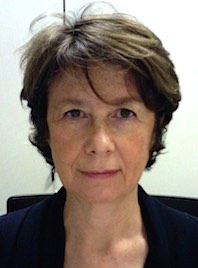
Sandri Marco
marco.sandri@univr.it
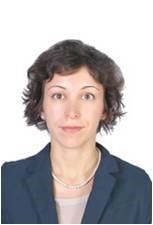

 lorenzo.tonina@univr.it
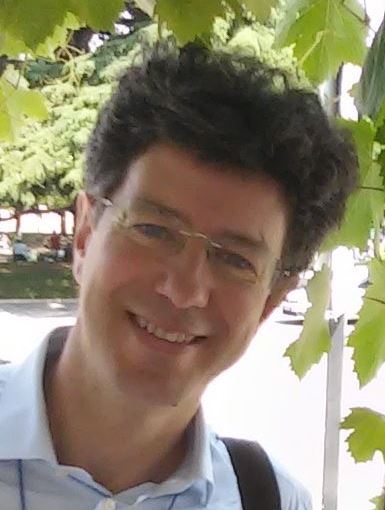

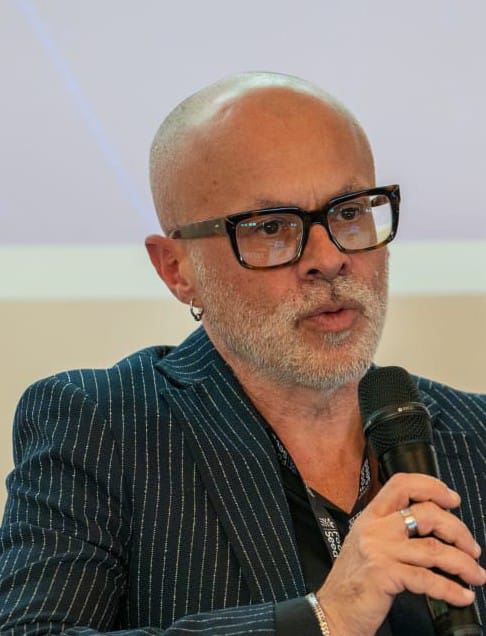



Study Plan
The Study Plan includes all modules, teaching and learning activities that each student will need to undertake during their time at the University.
Please select your Study Plan based on your enrollment year.
1° Year
| Modules | Credits | TAF | SSD |
|---|
2° Year activated in the A.Y. 2017/2018
| Modules | Credits | TAF | SSD |
|---|
3° Year activated in the A.Y. 2018/2019
| Modules | Credits | TAF | SSD |
|---|
| Modules | Credits | TAF | SSD |
|---|
| Modules | Credits | TAF | SSD |
|---|
| Modules | Credits | TAF | SSD |
|---|
Legend | Type of training activity (TTA)
TAF (Type of Educational Activity) All courses and activities are classified into different types of educational activities, indicated by a letter.
Grapevine Protection - ENTOMOLOGIA (2018/2019)
Teaching code
4S02740
Teacher
Credits
3
Language
Italian
Scientific Disciplinary Sector (SSD)
AGR/11 - GENERAL AND APPLIED ENTOMOLOGY
Period
II semestre dal Mar 4, 2019 al Jun 14, 2019.

To show the organization of the course that includes this module, follow this link: Course organization
Learning outcomes
The course aims to provide the basics on the biology of the main arthropods pests (insects and mites) of the grapevine, on their interactions with the crop and the related control methods. Particular attention will be given to the study of biotechnologies applied to the vineyard Integrated Pest Management (IPM), considering also the biological control.
At the end of the course, the student must demonstrate to be able to know and diagnose the arthropods pest (insects and mites) in the vineyard and to develop rational and eco-friendly control strategies.
Program
Arthropods: characteristics and classification. Elements of morphology, physiology and ethology of insect and mite pests in the vineyards. Nervous, digestive, respiratory, circulatory, excretory, reproductive, endocrine system of insects. Reproduction and development. Relationships between insects and other organisms. Transmission of pathogenic microorganisms and viruses.
Insects: biology, harmfulness, and control of the main pest species of economic interest in viticulture (eg moths, phylloxera, leafhoppers, scale insects, thrips). Minor phytophagous grapevine pests.
Acari: Notes on biology, ecology, and harmfulness of phytophagous mites in the vineyards.
Control methods: thresholds and intervention criteria. Biological and integrated control methods against the arthropod pests of the grapevine.
Insecticides: general information, legislation, methods of use. Impact of plant protection products on biocenosis: effects on non-target organisms, resistance, induced phytophagous. Complementary control methods: agronomic, physical. Legislative references. Biotechnologies applied to the grapevine protection: pheromones definition and applications, mass trapping, RNAi, sterile male technique.
Agroecology: use of hedgerows, green manure, permanent grass to increase functional biodiversity in the vineyard.
Knowledge and comprehension skills will be developed essentially through lectures, laboratory exercises and personal study on the university texts indicated and on the material presented in the lectures which will be retrievable in journals/texts present in the Library and/or uploaded on the e-learning platform of University.
Furthermore, during the whole academic year, the individual reception service managed by the teacher will be available (set by a specific appointment).
Attending students will receive at the first lesson the complete calendar of educational activities with the dates and topics covered in the lessons, and the indication of the possible suspension for academic reasons of the teacher.
| Author | Title | Publishing house | Year | ISBN | Notes |
|---|---|---|---|---|---|
| A. Lucchi | Note di Entomologia Viticola | Ed. Pisa University | 2016 |
Examination Methods
Assessment of learning outcomes will take place through oral examination in the form of questions for both attending and non-attending students. The objective of the test is to assess the student's ability in:
- recognize an insect/symptom (from live samples or from images) studied in class and to describe its cycle and control strategy;
- develop the topics covered in the course.
The depth and breadth of the knowledge acquired and the ability to connect knowledge in a systemic and critical form will also be evaluated.
The oral exam will potentially cover all the topics of the program. The final evaluation is expressed in thirtieths.
To determine the overall grade of the exam, the weighted average of the scores obtained in the two modules will be calculated.
Type D and Type F activities
Modules not yet included
Career prospects
Module/Programme news
News for students
There you will find information, resources and services useful during your time at the University (Student’s exam record, your study plan on ESSE3, Distance Learning courses, university email account, office forms, administrative procedures, etc.). You can log into MyUnivr with your GIA login details: only in this way will you be able to receive notification of all the notices from your teachers and your secretariat via email and also via the Univr app.
Graduation
Attendance modes and venues
As stated in the Didactic Regulations, attendance is compulsory for practical and laboratory exercises (see courses with laboratory in the annex), unless otherwise stipulated by the teaching board.
Attendance at lectures is strongly recommended.
Part-time enrolment is permitted. To find out more, please consult the Part-time enrolment possibilities page.
The course's teaching activities take place in Villa Lebrecht and Villa Eugenia, located in the San Floriano di Valpolicella campus, and may also take place in the other spaces of the Science and Engineering area, which is composed of the buildings of Ca‘ Vignal 1, Ca’ Vignal 2, Ca' Vignal 3 and Piramide, located in the Borgo Roma campus,
Lectures are held in the classrooms of Villa Lebrecht while practical exercises are carried out in the teaching laboratories dedicated to the various activities.
Overview of courses with laboratory.
The attached document specifies the courses, divided by year, that include exercise/laboratory CFUs: for this type of CFU only, attendance is compulsory in order to be admitted to the examination.
Documents
| Title | Info File |
|---|---|
 Prospetto laboratori /esercitazioni
|
pdf, it, 121 KB, 18/10/23 |
