Studying at the University of Verona
Here you can find information on the organisational aspects of the Programme, lecture timetables, learning activities and useful contact details for your time at the University, from enrolment to graduation.
Academic calendar
The academic calendar shows the deadlines and scheduled events that are relevant to students, teaching and technical-administrative staff of the University. Public holidays and University closures are also indicated. The academic year normally begins on 1 October each year and ends on 30 September of the following year.
Course calendar
The Academic Calendar sets out the degree programme lecture and exam timetables, as well as the relevant university closure dates..
| Period | From | To |
|---|---|---|
| Semester 1 | Oct 3, 2022 | Jan 27, 2023 |
| Semester 2 | Mar 6, 2023 | Jun 16, 2023 |
| Session | From | To |
|---|---|---|
| Sessione invernale d'esame | Jan 30, 2023 | Mar 3, 2023 |
| Sessione estiva d'esame | Jun 19, 2023 | Jul 31, 2023 |
| Sessione autunnale d'esame | Sep 4, 2023 | Sep 29, 2023 |
| Period | From | To |
|---|---|---|
| Ponte Festa di tutti i Santi | Oct 31, 2022 | Nov 1, 2022 |
| Ponte dell'Immacolata Concezione | Dec 8, 2022 | Dec 9, 2022 |
| Vacanze natalizie | Dec 23, 2022 | Jan 8, 2023 |
| Vacanze di Pasqua | Apr 7, 2023 | Apr 10, 2023 |
| Festa della Liberazione | Apr 24, 2023 | Apr 25, 2023 |
| Festa del lavoro | May 1, 2023 | May 1, 2023 |
| Festa del Santo Patrono | May 21, 2023 | May 21, 2023 |
| Festa della Repubblica | Jun 2, 2023 | Jun 2, 2023 |
| Chiusura estiva | Aug 14, 2023 | Aug 19, 2023 |
Exam calendar
Exam dates and rounds are managed by the relevant Science and Engineering Teaching and Student Services Unit.
To view all the exam sessions available, please use the Exam dashboard on ESSE3.
If you forgot your login details or have problems logging in, please contact the relevant IT HelpDesk, or check the login details recovery web page.
Should you have any doubts or questions, please check the Enrollment FAQs
Academic staff

 +39 045 802 7913

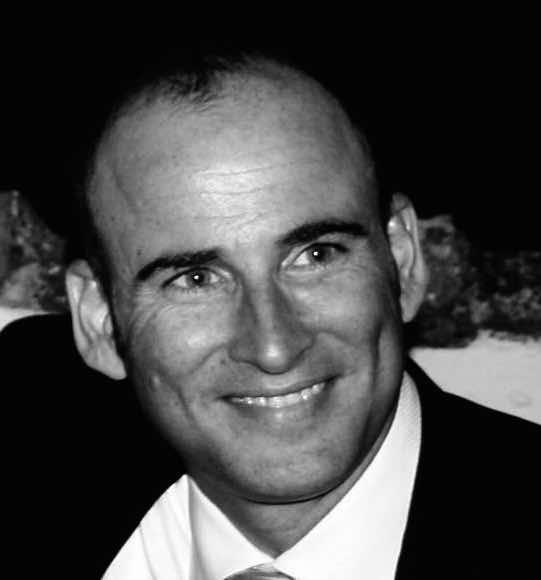
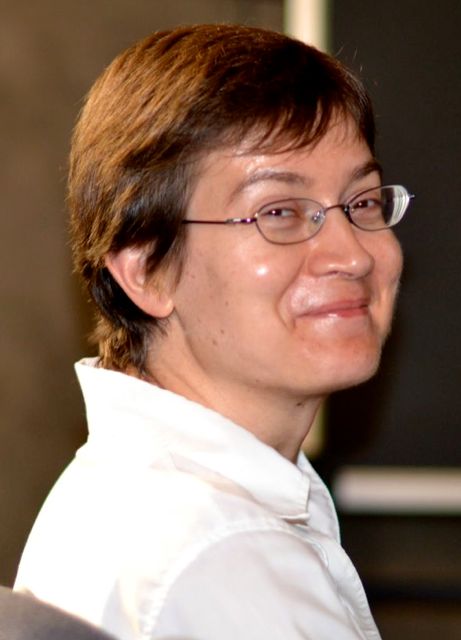

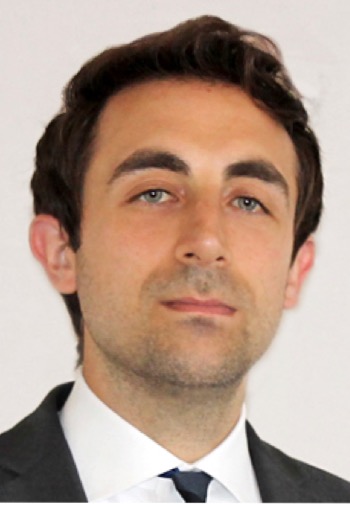
 bernardo.calabrese@univr.it
 ariel.caputo@univr.it



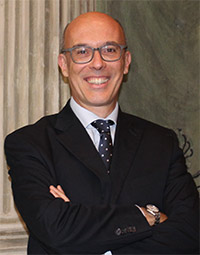


 mila.dallapreda@univr.it




 stefano.gatti@univr.it



 pasquale.mirtuono@univr.it






 diego.tilola@univr.it
 claudio.tomazzoli@univr.it

 rosamaria.vadala@univr.it

Study Plan
The Study Plan includes all modules, teaching and learning activities that each student will need to undertake during their time at the University.
Please select your Study Plan based on your enrollment year.
1° Year
| Modules | Credits | TAF | SSD |
|---|
| Modules | Credits | TAF | SSD |
|---|
| Modules | Credits | TAF | SSD |
|---|
1 module among the following2 modules among the following2 modules among the following2 modules among the followingLegend | Type of training activity (TTA)
TAF (Type of Educational Activity) All courses and activities are classified into different types of educational activities, indicated by a letter.
Visual Intelligence (2023/2024)
Teaching code
4S010686
Teacher
Coordinator
Credits
6
Language
English
Scientific Disciplinary Sector (SSD)
ING-INF/06 - ELECTRONIC AND INFORMATICS BIOENGINEERING
Period
Semester 1 dal Oct 2, 2023 al Jan 26, 2024.
Courses Single
Authorized

Learning objectives
The course aims at providing competence about analysis, modeling and interpretation of multidimensional signals and images with focus on artificial vision and machine learning aspects, targeting applications in the field of multimedia and interpretable machine learning. At the end of the course the students will be able to autonomously solve typical problems requiring multidimensional signal modeling, feature extraction, analysis and interpretation of the outcomes of machine learning algorithms in the field of multimedia and artificial vision.
Examination methods
To pass the exam, students must demonstrate:
- to have understood the principles underlying visual intelligence
- to be able to present arguments on the topics of the course in a precise and organic way without digressions
- to know how to apply the acquired knowledge to solve application problems presented in the form of exercises, questions and projects.
Prerequisites and basic notions
Fundamentals of signal and image processing
Program
The course aims at providing competence about analysis, modeling and interpretation of multidimensional signals and images with focus on artificial vision and machine learning aspects, targeting applications in the field of multimedia and interpretable machine learning. At the end of the course the students will be able to autonomously solve typical problems requiring multidimensional signal modeling, feature extraction, analysis and interpretation of the outcomes of machine learning algorithms in the field of multimedia and artificial vision with particular focus on convolutional neural networks.
Syllabus
The course consists of three blocks: modeling of the Human Visual System (HVS), multiresolution signal representation and analysis of deep learning algorithms with focus Convolutional Neural Networks (CNNs).
Part 1: Human Visual System (HVS) – 10 hours
Introduction to Visual Intelligence
Foudations of vision, stimulus encoding, representation and interpretation
HVS modeling: multiscale processing of the visual stimuli, Contrast Sensitivity Function (CSF), color vision and perception, Color Matching Functions (CMFs)
High-level modeling of the HVS: structural and functional connectivity and graph-based modeling
Part 2: Multiresolution analysis – 20 hours
Background
Mathematical tools
Fourier transform in 1D and 2D
Windowed Fourier Transform
Wavelets and multiresolution representations
Wavelets Bases
Families of Wavelet Transforms (WT) and their properties
Fast Discrete Wavelet Tranforms (DWT)
WT in two dimensions
Scattering transform
Part 3: Application to the analysis and interpretation of deep convolutional neural networks (CNNs)– 10 hours
Overview on CNNs
The issue of interpretability, main approaches
CNN, HVS and multiresolution: getting to a unified view
CNN interpretation based on multiresolution theory and HVS models
Examples of interpretable DL
LABORATORY
Laboratory sessions will consist in Matlab and Python exercises on the topics covered in the theory lessons.
Bibliography
Didactic methods
The lessons will be face to face. The recordings of previous years can be made available under request.
Learning assessment procedures
The exam will consist of a project and an interview on the topics covered in the course.
Evaluation criteria
To pass the exam, the student must demonstrate: - Understanding the fundamental theoretical aspects relating to the three parts of the course - Understanding the relationships between the topics covered and the differences and similarities at the modeling level - Having acquired skills theoretical and practical knowledge of multiresolution theory and its implications in the field of interpretability of deep machine learning models - Be able to transpose the skills acquired into solutions to concrete problems in a multidisciplinary environment.
Criteria for the composition of the final grade
The final grade will be determined by the outcome of the presentation of the project and the discussion
Exam language
Inglese
Type D and Type F activities
Type D learning activities are the student's choice, type F activities are additional knowledge useful for job placement (internships, transversal skills, project works, etc.). According to the Teaching Regulations of the Course, some activities can be chosen and entered independently in the booklet, others must be approved by a special committee to verify their consistency with the study plan. Type D or F learning activities can be covered by the following activities.
1. Modules taught at the University of Verona
Include the modules listed below and/or in the Course Catalogue (which can also be filtered by language of delivery via Advanced Search).
Booklet entry mode: if the teaching is included among those listed below, the student can enter it independently during the period in which the curriculum is open; otherwise, the student must make a request to the Secretariat, sending the form to carriere.scienze@ateneo.univr.it during the period indicated.
2. CLA certificate or language equivalency
In addition to those required by the curriculum/study plan, the following are recognized for those matriculated from A.Y. 2021/2022:
- English language: 3 CFUs are recognized for each level of proficiency above that required by the course of study (if not already recognized in the previous course of study).
- Other languages and Italian for foreigners: 3 CFUs are recognized for each proficiency level starting from A2 (if not already recognized in the previous study cycle).
These CFUs will be recognized, up to a maximum of 6 CFUs in total, of type F if the study plan allows it, or of type D. Additional elective credits for language knowledge may be recognized only if consistent with the student's educational project and if adequately justified.
Those enrolled until A.Y. 2020/2021 should consult the information found here.
Method of inclusion in the booklet: request the certificate or equivalency from CLA and send it to the Student Secretariat - Careers for the inclusion of the exam in the career, by email: carriere.scienze@ateneo.univr.it
3. Transversal skills
Discover the training paths promoted by the University's TALC - Teaching and learning center intended for students regularly enrolled in the academic year of course delivery https://talc.univr.it/it/competenze-trasversali
Mode of inclusion in the booklet: the teaching is not expected to be included in the curriculum. Only upon obtaining the Open Badge will the booklet CFUs be automatically validated. The registration of CFUs in career is not instantaneous, but there will be some technical time to wait.
4. CONTAMINATION LAB
The Contamination Lab Verona (CLab Verona) is an experiential course with modules on innovation and enterprise culture that offers the opportunity to work in teams with students from all areas to solve challenges set by companies and organisations.
Upon completion of a CLab, students will be entitled to receive 6 CFU (D- or F-type credits).
Find out more: https://www.univr.it/clabverona
PLEASE NOTE: In order to be admitted to any teaching activities, including those of your choice, you must be enrolled in the academic year in which the activities in question are offered. Students who are about to graduate in the December and April sessions are therefore advised NOT to undertake extracurricular activities in the new academic year in which they are not enrolled, as these graduation sessions are valid for students enrolled in the previous academic year. Therefore, students who undertake an activity in an academic year in which they are not enrolled will not be granted CFU credits.
5. Internship/internship period
In addition to the CFUs stipulated in the curriculum/study plan (check carefully what is indicated on the Teaching Regulations): here information on how to activate the internship.
Modules and other activities that can be entered independently in the booklet
| years | Modules | TAF | Teacher |
|---|---|---|---|
| 1° 2° | Introduction to Robotics for students of scientific courses. | D |
Paolo Fiorini
(Coordinator)
|
| 1° 2° | Matlab-Simulink programming | D |
Bogdan Mihai Maris
(Coordinator)
|
| 1° 2° | Rapid prototyping on Arduino | D |
Franco Fummi
(Coordinator)
|
| 1° 2° | Programming Challanges | D |
Romeo Rizzi
(Coordinator)
|
| years | Modules | TAF | Teacher |
|---|---|---|---|
| 1° 2° | Introduction to 3D printing | D |
Franco Fummi
(Coordinator)
|
| 1° 2° | Python programming language | D |
Carlo Combi
(Coordinator)
|
| 1° 2° | HW components design on FPGA | D |
Franco Fummi
(Coordinator)
|
| 1° 2° | Protection of intangible assets (SW and invention)between industrial law and copyright | D |
Roberto Giacobazzi
(Coordinator)
|
| years | Modules | TAF | Teacher |
|---|---|---|---|
| 1° 2° | Federated learning from zero to hero | D |
Gloria Menegaz
|
Career prospects
Module/Programme news
News for students
There you will find information, resources and services useful during your time at the University (Student’s exam record, your study plan on ESSE3, Distance Learning courses, university email account, office forms, administrative procedures, etc.). You can log into MyUnivr with your GIA login details: only in this way will you be able to receive notification of all the notices from your teachers and your secretariat via email and soon also via the Univr app.
Career management
Attendance
As stated in the Teaching Regulations for the A.Y. 2022/2023, attendance at the course of study is not mandatory.
Graduation
Deadlines and administrative fulfilments
For deadlines, administrative fulfilments and notices on graduation sessions, please refer to the Graduation Sessions - Science and Engineering service.
Need to activate a thesis internship
For thesis-related internships, it is not always necessary to activate an internship through the Internship Office. For further information, please consult the dedicated document, which can be found in the 'Documents' section of the Internships and work orientation - Science e Engineering service.
Final examination regulations
The teaching activities related to the preparation of the final exam for the achievement of the degree and its verification consist of the preparation and discussion of a written paper in English (dissertation) related to the in-depth study of a scientific theme addressed in the course of studies, i.e. related to the analysis and solution of a case study (theoretical and/or directly derived from a problem of an industrial nature) or related to a work of an experimental type, which can also be developed within an internship course carried out at research institutions, schools, laboratories, and companies, or by taking advantage of study stays in Italy and abroad, or the result of autonomous and original research work, with related aspects of mathematical formalization, computer design, business-oriented realization. These activities may be carried out under the guidance of a supervisor at a university facility, or even outside the University of Verona, both in Italy and abroad, as long as it is recognized and accepted for this purpose in accordance with the Didactic Regulations of the Master's Degree Course in Artificial Intelligence. The CFUs assigned to the final examination (evaluation of the thesis) are 18. The committee in charge of the evaluation of the final exam (dissertation in English) is called to express an assessment that takes into account the entire course of study, carefully evaluating the degree of coherence between educational and professional objectives, as well as the candidate's capacity for autonomous intellectual elaboration, critical sense, communication skills, and general cultural maturity, in relation to the objectives of the Master's Degree course in Artificial Intelligence, and particular, in relation to the themes characterizing the dissertation.
Students may take the final examination only after they have fulfilled all other educational obligations set forth in their study plan and fulfillments at the administrative offices in accordance with the deadlines indicated in the general study manifesto.
The final evaluation and proclamation will be made by the final exam committee appointed by the chairperson of the teaching committee and composed of a chairperson and at least four other commissioners chosen from the faculty of the University.
The material submitted for the final examination is evaluated by the Thesis Evaluation Committee, composed of three faculty members, including possibly the thesis advisor, and appointed by the chair of the teaching college. The Thesis Evaluation Committee formulates an evaluation of the work done and forwards it to the final examination committee, which will make the final judgment.
The teaching committee shall regulate the procedures of thesis evaluation committees, final examination committees, and the scoring of the final examination by special regulations passed by the teaching committee.
