Studying at the University of Verona
Here you can find information on the organisational aspects of the Programme, lecture timetables, learning activities and useful contact details for your time at the University, from enrolment to graduation.
Academic calendar
The academic calendar shows the deadlines and scheduled events that are relevant to students, teaching and technical-administrative staff of the University. Public holidays and University closures are also indicated. The academic year normally begins on 1 October each year and ends on 30 September of the following year.
Course calendar
The Academic Calendar sets out the degree programme lecture and exam timetables, as well as the relevant university closure dates..
| Period | From | To |
|---|---|---|
| Semestrino IA | Sep 28, 2015 | Nov 14, 2015 |
| Semestrino IB | Nov 16, 2015 | Jan 16, 2016 |
| Semestrino IIA | Feb 22, 2016 | Apr 16, 2016 |
| Semestrino IIB | Apr 18, 2016 | Jun 4, 2016 |
| Session | From | To |
|---|---|---|
| Sessione invernale | Jan 18, 2016 | Feb 20, 2016 |
| Sessione estiva | Jun 6, 2016 | Jul 30, 2016 |
| Sessione autunnale | Sep 1, 2016 | Sep 30, 2016 |
| Session | From | To |
|---|---|---|
| Sessione estiva | Jul 5, 2016 | Jul 6, 2016 |
| Sessione autunnale | Nov 22, 2016 | Nov 23, 2016 |
| Sessione invernale | Apr 3, 2017 | Apr 8, 2017 |
| Period | From | To |
|---|---|---|
| Festa di Ognissanti | Nov 1, 2015 | Nov 1, 2015 |
| Festa dell'Immacolata | Dec 8, 2015 | Dec 8, 2015 |
| Vacanze di Natale | Dec 23, 2015 | Jan 6, 2016 |
| Vancanze di Pasqua | Mar 24, 2016 | Mar 29, 2016 |
| Festa della Liberazione | Apr 25, 2016 | Apr 25, 2016 |
| Festa dei Lavoratori | May 1, 2016 | May 1, 2016 |
| Festa del S. Patrono S. Zeno | May 21, 2016 | May 21, 2016 |
| Festa della Repubblica | Jun 2, 2016 | Jun 2, 2016 |
| Vacanze estive | Aug 8, 2016 | Aug 15, 2016 |
Exam calendar
Exam dates and rounds are managed by the relevant Culture and Civilisation Teaching and Student Services Unit.
To view all the exam sessions available, please use the Exam dashboard on ESSE3.
If you forgot your login details or have problems logging in, please contact the relevant IT HelpDesk, or check the login details recovery web page.
Should you have any doubts or questions, please check the Enrollment FAQs
Academic staff
 angela.alaimo@univr.it

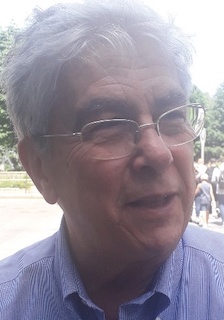
Avezzu' Guido
guido.avezzu@univr.it
augusto.barbi@univr.it


Bassetti Massimiliano
massimiliano.bassetti@univr.it
 045802 8376





 evita.calabrese@univr.it
Carnero Roberto
roberto.carnero@univr.it
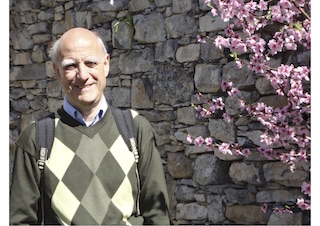 alberto.cavarzere@univr.it

Chiecchi Giuseppe
giuseppe.chiecchi@univr.it
+39 045802 8117










 federica.gonzato@univr.it
 elisa.lerco@univr.it
 francesco.lupi@univr.it

Mastrocinque Attilio
attilio.mastrocinque@univr.it
+39 045802 8386





 flavia.palma@univr.it

Pasini Roberto
pasini.roberto@univr.it
+39 045802 8121




Peresani Marco
 dino.piovan@univr.it


Pozzo Riccardo
riccardo.pozzo@univr.it
+390458028053







 alberto.scandola@univr.it

Tani Stefano
stefano.tani@univr.it
+39 045802 8110

 sonia.trovato@univr.it

 gianmaria.varanini@univr.it


Study Plan
The Study Plan includes all modules, teaching and learning activities that each student will need to undertake during their time at the University.
Please select your Study Plan based on your enrollment year.
1° Year
| Modules | Credits | TAF | SSD |
|---|
One course to be chosen among the followingForeign language B1 (CB Test)2° Year activated in the A.Y. 2016/2017
| Modules | Credits | TAF | SSD |
|---|
Latin literature (i)
One course to be chosen among the following2 course to be chosen among the following2 course to be chosen among the following3° Year activated in the A.Y. 2017/2018
| Modules | Credits | TAF | SSD |
|---|
One course to be chosen among the following3 course to be chosen among the following| Modules | Credits | TAF | SSD |
|---|
One course to be chosen among the followingForeign language B1 (CB Test)| Modules | Credits | TAF | SSD |
|---|
Latin literature (i)
One course to be chosen among the following2 course to be chosen among the following2 course to be chosen among the following| Modules | Credits | TAF | SSD |
|---|
One course to be chosen among the following3 course to be chosen among the following| Modules | Credits | TAF | SSD |
|---|
Legend | Type of training activity (TTA)
TAF (Type of Educational Activity) All courses and activities are classified into different types of educational activities, indicated by a letter.
Type D and Type F activities
Modules not yet included
Greek language (p) (2017/2018)
Teaching code
4S000913
Teacher
Coordinator
Credits
6
Language
Italian
Scientific Disciplinary Sector (SSD)
L-FIL-LET/02 - GREEK LANGUAGE AND LITERATURE
Period
First half of Semester 2 dal Feb 26, 2018 al Apr 21, 2018.
Learning outcomes
The course of Greek Language (p) aims to complete the overview of the poetical languages of ancient Greece provided by the course of Greek Language (i), and will therefore deal with:
1) elegy and epigram;
2) iambic poetry;
3) literary dialects in the Hellenistic Period.
1) diachronical study of archaic and hellenistic elegy and epigram, without forgetting the important contribution of the epigrams on stone;
2) diachronic study of archaic (Archilochus, Hipponax) and hellenistic (Callimachus) iambic poetry;
3) the focus will be on hexametric poetry (epos, epyllion, bucolic poetry) in the most preeminent authors.
We will carefully take into account the manuscript tradition of the aforementioned authors (especially the archaic ones), in order to underscore its impact on the linguistic facies of the texts.
EXPECTED RESULTS
The student will be able to analyse a vast array of texts spanning from the Archaic Age to the Hellenistic Period, both from the literary and the linguistic point of view (lexicon, phonology, morphology, ionic substratum and its variants), and in doing so (s)he will learn to pay due attention on the one hand to the authors' provenance and places of work, and to the Hellenistic experiments on the other; (s)he will be also able to assess the impact of the manuscript tradition on the facies of the texts; finally, (s)he will be able to expose the results achieved in an appropriate linguistic and argumentative form, both orally and in writing.
PREREQUISITES
Prerequisites are a good knowledge of ancient Greek, and of the main characteristics of the Greek dialects (ionic, attic, aeolic, doric) and of the Homeric language.
SCHEDULED LESSONS: Lectures (36 hours).
Every part of the course will start with a historical overview of the literary genres.
Linguistic analysis will be carried out employing a seminar approach, so as to foster interaction with and among students.
Erasmus students are required to get in touch with the teacher before the beginning of the course.
Program
1) elegy and iambography;
2) literary dialects in the Hellenistic Period.
Reference texts:
1) A.C. Cassio (a cura di), Storia delle lingue letterarie greche. Seconda edizione, Firenze, Le Monnier, 2016, chapter 8: «L'elegia e l'epigramma su pietra» (E. Passa), pp. 260-79; chapter 9: «Il giambo» (S. Kaczko), pp. 289-300.
2) A.C. Cassio (a cura di), ..., chapter 15: «Callimaco e la poesia alessandrina» (C. Vessella), pp. 434-37; chapter 17: «Teocrito» (C. Vessella), pp. 451-63.
Further educational material will be provided by the teacher.
| Author | Title | Publishing house | Year | ISBN | Notes |
|---|---|---|---|---|---|
| A.C. Cassio | Storia della lingua greca | Le Monnier, Firenze | 2016 |
Examination Methods
Oral examination including the evaluation of a paper to be delivered to the teacher at least one week before the examination date (see below).
The oral examination aims to evaluate the following points:
--- the student's awareness of the theoretical framework of Greek linguistics as applied to the literary genres;
--- the student's capacity to translate and comment the linguistic and literary characteristics of the texts analysed during the course;
--- the student's capacity to write a linguistic and literary comment on a text provided by the teacher (see below).
EXAMINATION STRUCTURE
The oral examination is composed of three moments, each corresponding to 10/30:
--- evaluation of a written linguistic and literary analysis of a text chosen by the teacher (the paper is scheduled to be delivered at least one week prior to examination date);
--- evaluation of the student's knowledge of the theoretical and historical problems related to the study of the Greek literary dialects;
--- translation and linguistic comment of one text from those studied during the course.
Career prospects
Module/Programme news
News for students
There you will find information, resources and services useful during your time at the University (Student’s exam record, your study plan on ESSE3, Distance Learning courses, university email account, office forms, administrative procedures, etc.). You can log into MyUnivr with your GIA login details: only in this way will you be able to receive notification of all the notices from your teachers and your secretariat via email and soon also via the Univr app.
Graduation
List of theses and work experience proposals
| theses proposals | Research area |
|---|---|
| tesi di Glottologia, Storia comparata, Linguistica storica | ENGLISH LANGUAGE - Grammar and Syntax – Grammatik und Syntax |
| tesi di Glottologia, Storia comparata, Linguistica storica | GERMANIC LANGUAGE - Dialectology - Dialektologie |
| tesi di Glottologia, Storia comparata, Linguistica storica | HUMANITIES & SOCIAL STUDIES - HUMANITIES & SOCIAL STUDIES |
| tesi di Glottologia, Storia comparata, Linguistica storica | Indo-European languages & literatures - Indo-European languages & literatures |
| tesi di Glottologia, Storia comparata, Linguistica storica | LINGUISTICS - LINGUISTICS |
| Stage | Research area |
|---|---|
| Lavorare in archivio | Various topics |
| L'iter del libro in biblioteca | Various topics |
Gestione carriere
Linguistic training CLA
Student mentoring
Requisiti classi di abilitazione insegnamento
Requisiti necessari per accedere alle classi di abilitazione per l'insegnamento.
vedi allegato pdf
Inoltre, per informazioni sui 24 CFU nelle discipline antropo-psico-pedagogiche e nelle metodologie e tecnologie didattiche, si veda -> LINK
Documents
| Title | Info File |
|---|---|
 Classi insegnamento con LM-14
|
pdf, it, 307 KB, 30/11/21 |
