Studying at the University of Verona
Here you can find information on the organisational aspects of the Programme, lecture timetables, learning activities and useful contact details for your time at the University, from enrolment to graduation.
Academic calendar
The academic calendar shows the deadlines and scheduled events that are relevant to students, teaching and technical-administrative staff of the University. Public holidays and University closures are also indicated. The academic year normally begins on 1 October each year and ends on 30 September of the following year.
Course calendar
The Academic Calendar sets out the degree programme lecture and exam timetables, as well as the relevant university closure dates..
| Period | From | To |
|---|---|---|
| Presentazione corsi di laurea | Oct 1, 2012 | Oct 1, 2012 |
| I semestre | Oct 2, 2012 | Jan 12, 2013 |
| II semestre | Feb 25, 2013 | May 31, 2013 |
| Session | From | To |
|---|---|---|
| Sessione esami invernale | Jan 14, 2013 | Feb 23, 2013 |
| Sessione esami estiva | Jun 3, 2013 | Jul 27, 2013 |
| Sessione esami autunnale | Sep 2, 2013 | Sep 30, 2013 |
| Session | From | To |
|---|---|---|
| Sessione lauree autunnale | Nov 22, 2012 | Nov 24, 2012 |
| Sessione lauree invernale | Mar 25, 2013 | Mar 27, 2013 |
| Sessione lauree estiva | Jul 10, 2013 | Jul 13, 2013 |
| Period | From | To |
|---|---|---|
| Festa di Ognissanti | Nov 1, 2012 | Nov 1, 2012 |
| Festa dell'Immacolata Concezione | Dec 8, 2012 | Dec 8, 2012 |
| Vacanze di Natale | Dec 24, 2012 | Jan 6, 2013 |
| Vacanze di Pasqua | Mar 29, 2013 | Apr 2, 2013 |
| Festa della Liberazione | Apr 25, 2013 | Apr 25, 2013 |
| Festa del Lavoro | May 1, 2013 | May 1, 2013 |
| Festa del Santo Patrono di Verona - San Zeno | May 21, 2013 | May 21, 2013 |
| Festa della Repubblica | Jun 2, 2013 | Jun 2, 2013 |
Exam calendar
Exam dates and rounds are managed by the relevant Foreign Languages and Literatures Teaching and Student Services Unit.
To view all the exam sessions available, please use the Exam dashboard on ESSE3.
If you forgot your login details or have problems logging in, please contact the relevant IT HelpDesk, or check the login details recovery web page.
Should you have any doubts or questions, please check the Enrollment FAQs
Academic staff



Busch Bernard Walter





 cinzia.delotto@univr.it





Ligas Pierluigi
pierluigi.ligas@univr.it
 +39 045 802 8408

Locher Elmar
elmar.locher@univr.it
+39 045802 8311


 silvia.monti@univr.it
carmen.navarro@univr.it
silvia.monti@univr.it
carmen.navarro@univr.it


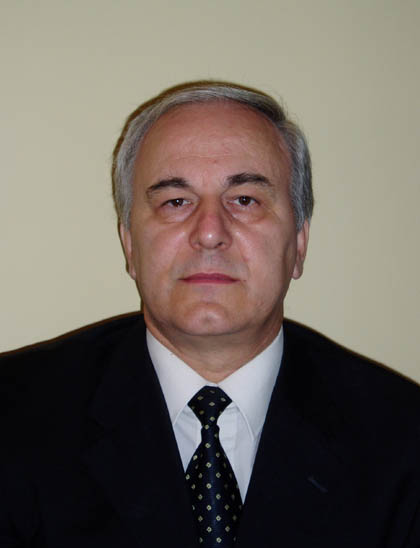


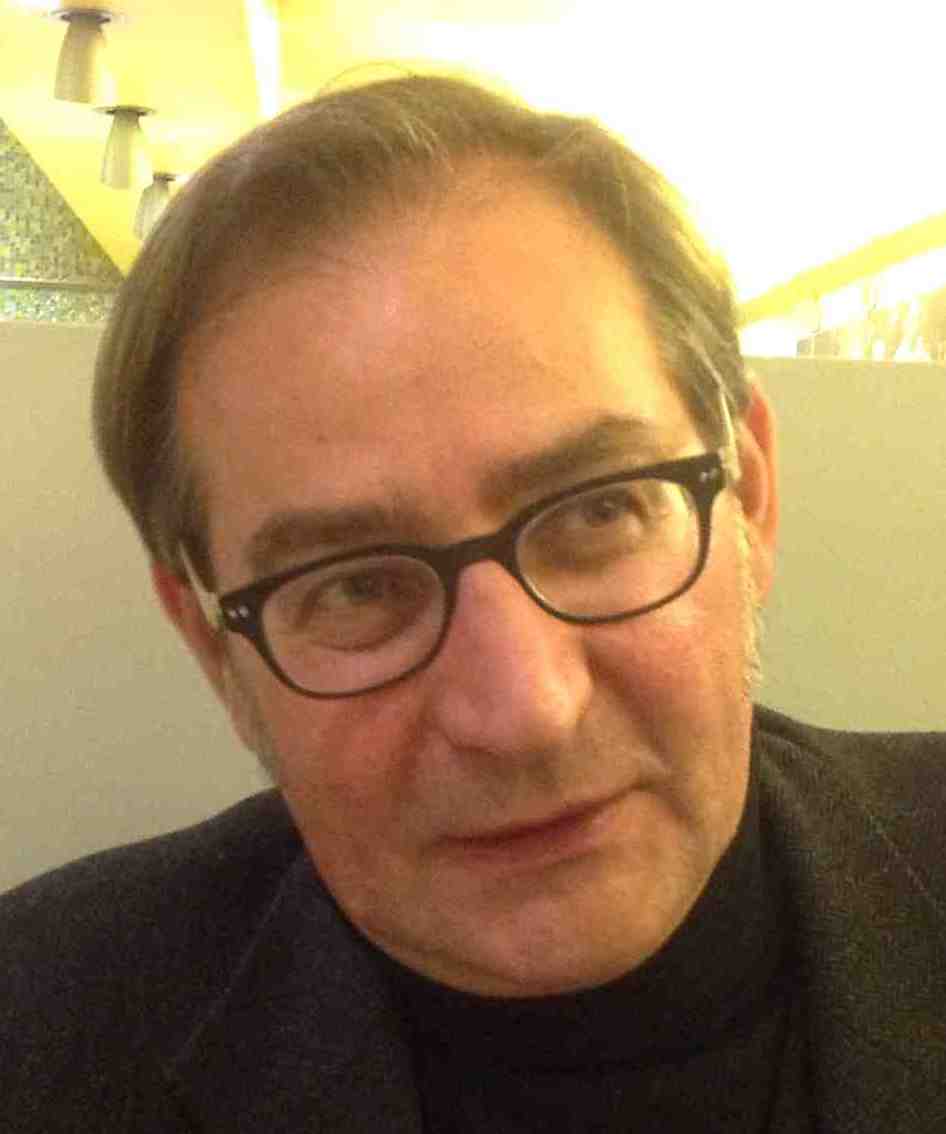
Zaccarello Michelangelo
michelangelo.zaccarello@univr.it
+39 045 802 8330


Study Plan
The Study Plan includes all modules, teaching and learning activities that each student will need to undertake during their time at the University.
Please select your Study Plan based on your enrollment year.
1° Year
| Modules | Credits | TAF | SSD |
|---|
Prima letteratura straniera anno ISeconda letteratura straniera anno IPrima lingua straniera anno ISeconda lingua straniera anno IInformation Technology
2° Year activated in the A.Y. 2013/2014
| Modules | Credits | TAF | SSD |
|---|
Prima letteratura straniera anno IISeconda letteratura straniera anno IIPrima lingua straniera anno IISeconda lingua straniera anno II3° Year activated in the A.Y. 2014/2015
| Modules | Credits | TAF | SSD |
|---|
Una filologia a sceltaPrima lingua straniera anno IIISeconda lingua straniera anno III| Modules | Credits | TAF | SSD |
|---|
Prima letteratura straniera anno ISeconda letteratura straniera anno IPrima lingua straniera anno ISeconda lingua straniera anno IInformation Technology
| Modules | Credits | TAF | SSD |
|---|
Prima letteratura straniera anno IISeconda letteratura straniera anno IIPrima lingua straniera anno IISeconda lingua straniera anno II| Modules | Credits | TAF | SSD |
|---|
Una filologia a sceltaPrima lingua straniera anno IIISeconda lingua straniera anno III| Modules | Credits | TAF | SSD |
|---|
Legend | Type of training activity (TTA)
TAF (Type of Educational Activity) All courses and activities are classified into different types of educational activities, indicated by a letter.
English Literature I (2012/2013)
Teaching code
4S00844
Teacher
Coordinator
Credits
9
Language
Italian
Scientific Disciplinary Sector (SSD)
L-LIN/10 - ENGLISH LITERATURE
Period
II semestre dal Feb 25, 2013 al May 31, 2013.
Learning outcomes
The course aims at making the students informed about authors and genre modes which are held to be representative of the English literature and culture belonging to the periodization scheduled for the first-year course syllabus, by making them familiar with tools necessary to critically approach literary texts and genres in their contexts.
Program
SYLLABUS
The short-story genre, between Joyce and Kureishi. After devoting a section of introductory classes to the formal/narratological aspects of fiction, this module will guide the students though a close reading of the modes of the chosen short stories, starting from the modernist period, widely acknowledged as the heyday of this borderline genre that, while enjoying its own rules and conventions, has proved itself to be ideal for experimentation, thus attracting pioneering critical approaches.
BIBLIOGRAFIA/BIBLIOGRAPHY
Testi primari/Primary sources
J. JOYCE, Dubliners (1914, qualsiasi edizione integrale), in particolare: “The Sisters”, “Araby”, “Eveline”, “A Little Cloud”, “Clay”, “A Painful Case”.
V. WOOLF, “The Mark on the Wall”, “Kew Gardens”, “The Evening Party”, “An Unwritten Novel”, “Monday or Tewsday”.
K. MANSFIELD, “Prelude”, “Je ne Parle pas Français”, “Bliss”, “Miss Brill”, “Her First Ball”, At the Bay”, “The Garden Party”, “The Fly”.
J. FRAME, “The Lagoon”, “The Reservoir”, “Keel and Kool”, “”The Day of the Sheep”, “The Teacup”, Ian Godfrey”, “A Relative of the Famous”, “The Terrible Screaming”.
H. KUREISHI, da Love in a Blue Time (1997, Faber and Faber), “We’re not Jews”, “My Son the Fanatic”, “Lately”, “The Flies”.
Inoltre, gli studenti dovranno aver letto i seguenti racconti:
E.A. POE, “The Tell-Tale Heart”
A. Cechov, “L’uomo nell’astuccio” (in originale o in trad. italiana)
G. FLAUBERT, “Un coeur simple” (in originale o in trad. italiana)
Testi secondary/Secondary sources
-C.E. MAY, da The New Short Story Theories, Ohio UP, 1994: E.A. Poe, “Poe on Short Fiction” (pp.59-72); B.M. Èjxenbaum, “O. Henry and the Theory of the Short Story” (pp.81-90); M.L. PRATT, “The Short Story. The Long and the Short of it” (pp.91-113); A. Chekhov, “The Short Story” (pp.195-198); C.E. May, “Chekhov and the Modern Short Story” (pp.199-217); J. Cortàzar, “Some Aspects of the Short Story” (pp.245-267); N. Gordimer, “The Flash of Fireflies” (pp.263-267).
-A. HUNTER , The Cambridge Introduction to the Short Story in English, Cambridge UP, 2007, Part I (“The Nineteenth Century”) e Part II (“The Modernist Short Story”);
-S. ZINATO, “Screaming Silence: Language and Fear in Janet Frame’s Short Fiction”, pp.181-194 in A. Righetti (a cura di), Theory and Practice of the Short Story: Australia, New Zealand, The South Pacific, collana “Saggi e Testi”, Università di Verona, 2006;
-B. BUCHANAN, Hanif Kureishi, Palgrave, Macmillan, 2007 (le parti che verranno indicate a lezione)
Manuali/Handbooks
Il manuale di riferimento consigliato per il contesto storico-letterario (dal tardo Vittorianesimo al XX secolo), è:
A. Sanders, The Short Oxford History of English Literature, Clarendon Press, 2004
Per quanto attiene agli aspetti formali dei testi oggetto d’analisi si consigliano i seguenti testi di riferimento, del tutto facoltativi:
A. Marchese, L’officina del racconto: semiotica della narratività, Mondadori,
1983; A. Marchese, Dizionario di retorica e stilistica, Mondadori,1981; B. Mortara Garavelli, Manuale di retorica, Bompiani, 1999
Altre fonti in generale, del tutto facoltative, sulla short story in inglese che possono essere utilmente consultate sono:
C. Hanson (ed.), Re-reading the Short Story, 1989 e C. May, The Short Story. The Reality of Artifice, Routledge, 2002 (Ch.1: “Overview”).
BIBLIOGRAFIA SUPPLETIVA PER GLI STUDENTI NON-FREQUENTANTI
Gli studenti non-frequentanti sono tenuti ad integrare la suddetta bibliografia con i seguenti testi:
S. CHATMAN, Story and Discourse. Narrative structure in fiction and film, Cornell U.P., 1978, ch.3: 108-134; ch.4: 173-186; ch.5: 197-215 ;
D. HEAD, The Modernist Short Story. A Study in Theory and Practice, Cambridge UP, 2009, ch.s 1,2,3,4;
G. LEONARD, “Dubliners”, in D. Attridge (ed.), The Cambridge Companion to James Joyce, Cambridge UP, 2006;
K.C. KALETA, Hanif Kureishi. Postcolonial Storyteller, University of Texas Press, 1998 (pagine sulla narrativa breve).
Il corso sarà tenuto in italiano e in inglese
Examination Methods
Oral exam, possibly preceded by an optional written test at the end of the course.
Type D and Type F activities
To discover all the teaching activities accredited by the foreign teaching college click here
Career prospects
Module/Programme news
News for students
There you will find information, resources and services useful during your time at the University (Student’s exam record, your study plan on ESSE3, Distance Learning courses, university email account, office forms, administrative procedures, etc.). You can log into MyUnivr with your GIA login details: only in this way will you be able to receive notification of all the notices from your teachers and your secretariat via email and soon also via the Univr app.
Student login and resources
Assegnazione tutore
Attività accreditate D/F
Calendario didattico dettagliato
Cambio lingua curriculare
Competenze informatiche
Competenze linguistiche (prima e seconda lingua)
Competenze linguistiche in triennale (terza lingua CFU F)
Compilazione del piano didattico
Corso di Lingua portoghese
Erasmus+ e altre esperienze all'estero
Linguistic training CLA
Graduation
List of theses and work experience proposals
| Stage | Research area |
|---|---|
| PROGETTO MAMBRINO Stage per bibliografia | Various topics |
Stage e tirocini
Nel piano didattico della laurea triennale in Lingue e culture per l’editoria (L11 ED) è previsto un tirocinio/stage obbligatorio (CFU 6).
Le attività di stage sono finalizzate a far acquisire allo studente una conoscenza diretta in settori di particolare interesse per l’inserimento nel mondo del lavoro e per l’acquisizione di abilità professionali specifiche.
Le attività di stage sono svolte sotto la diretta responsabilità di un singolo docente presso studi professionali, enti della pubblica amministrazione, aziende accreditate dall’Ateneo veronese.
I crediti maturati in seguito ad attività di stage saranno attribuiti secondo quanto disposto nel dettaglio dal “Regolamento d’Ateneo per il riconoscimento dei crediti maturati negli stage universitari” vigente.
- Tutte le informazioni in merito agli stage per futuri studenti sono disponibili alla pagina Stage e tirocini.
- Tutte le informazioni in merito agli stage per studenti iscritti sono pubblicate in MyUnivr - come fare per - stage e tirocini.
- Tutte le informazioni in merito agli stage per le aziende sono disponili alla pagina Stage e tirocini per azienze.
Ulteriori informazioni al seguente link https://www.univr.it/it/i-nostri-servizi/gestione-carriere-studenti-lingue-e-letterature-straniere/stage-e-tirocini-lingue-e-letterature-straniere
