Studying at the University of Verona
Here you can find information on the organisational aspects of the Programme, lecture timetables, learning activities and useful contact details for your time at the University, from enrolment to graduation.
Academic calendar
The academic calendar shows the deadlines and scheduled events that are relevant to students, teaching and technical-administrative staff of the University. Public holidays and University closures are also indicated. The academic year normally begins on 1 October each year and ends on 30 September of the following year.
Course calendar
The Academic Calendar sets out the degree programme lecture and exam timetables, as well as the relevant university closure dates..
| Period | From | To |
|---|---|---|
| CuCi 1 A | Sep 23, 2024 | Oct 31, 2024 |
| CuCi 1 B | Nov 11, 2024 | Dec 21, 2024 |
| CuCi 2 A | Feb 17, 2025 | Mar 29, 2025 |
| CuCi 2 B | Apr 7, 2025 | May 31, 2025 |
| Session | From | To |
|---|---|---|
| Sessione invernale | Jan 7, 2025 | Feb 15, 2025 |
| Sessione estiva | Jun 3, 2025 | Jul 26, 2025 |
| Sessione autunnale | Aug 25, 2025 | Sep 20, 2025 |
| Session | From | To |
|---|---|---|
| Sessione straordinaria a.a. 2023/24 | Mar 31, 2025 | Apr 5, 2025 |
| Sessione estiva | Jul 7, 2025 | Jul 12, 2025 |
| Sessione autunnale | Nov 3, 2025 | Nov 8, 2025 |
| Sessione straordinaria a.a. 2024/25 | Mar 27, 2026 | Apr 2, 2026 |
| Period | From | To |
|---|---|---|
| Chiusura palazzi | Nov 2, 2024 | Nov 2, 2024 |
| Vacanze di Natale | Dec 23, 2024 | Jan 6, 2025 |
| Vacanze di Pasqua | Apr 19, 2025 | Apr 21, 2025 |
| Festa della Liberazione | Apr 25, 2025 | Apr 25, 2025 |
| Festa dei lavoratori | May 1, 2025 | May 1, 2025 |
| Festa del Santo Patrono | May 21, 2025 | May 21, 2025 |
| Vacanze estive | Aug 11, 2025 | Aug 16, 2025 |
Exam calendar
Exam dates and rounds are managed by the relevant Culture and Civilisation Teaching and Student Services Unit.
To view all the exam sessions available, please use the Exam dashboard on ESSE3.
If you forgot your login details or have problems logging in, please contact the relevant IT HelpDesk, or check the login details recovery web page.
Should you have any doubts or questions, please check the Enrollment FAQs
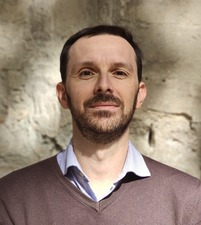
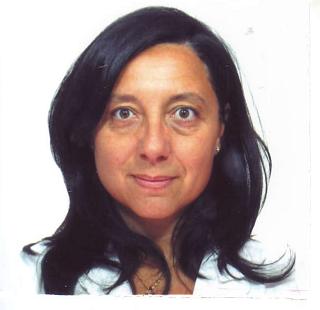
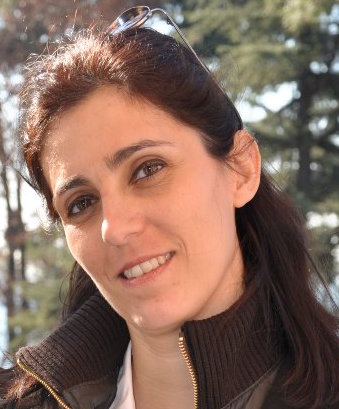
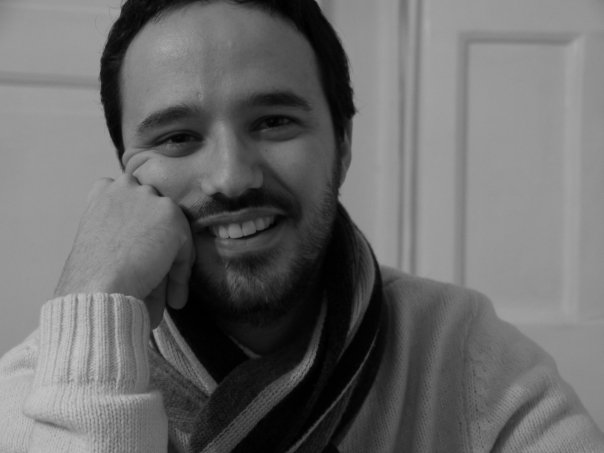
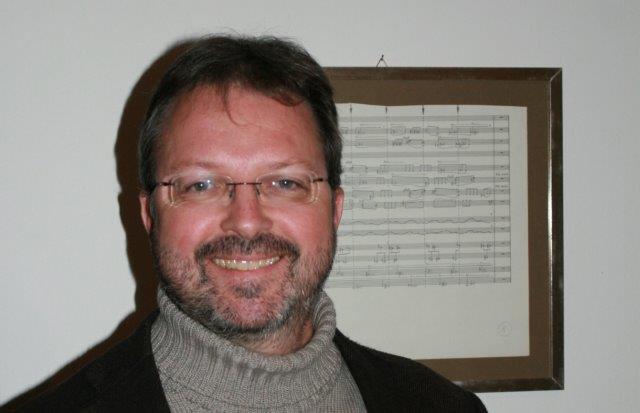
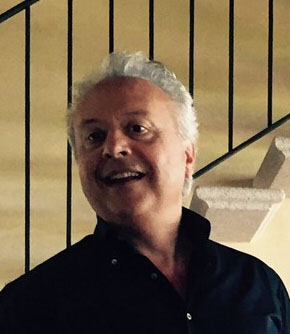
Academic staff
 0458028376



 riccardo.bertolazzi@univr.it
 luca.bochicchio@univr.it


 evita.calabrese@univr.it

 monica.cristini@univr.it
















 alberto.scandola@univr.it






Study Plan
The Study Plan includes all modules, teaching and learning activities that each student will need to undertake during their time at the University.
Please select your Study Plan based on your enrollment year.
1° Year
| Modules | Credits | TAF | SSD |
|---|
1 module to be chosen among the following2 modules among the following1 module between the following2° Year It will be activated in the A.Y. 2025/2026
| Modules | Credits | TAF | SSD |
|---|
1 module to be chosen among the following2 modules among the following
1 module to be chosen among the following
| Modules | Credits | TAF | SSD |
|---|
1 module to be chosen among the following2 modules among the following1 module between the following| Modules | Credits | TAF | SSD |
|---|
1 module to be chosen among the following2 modules among the following
1 module to be chosen among the following
| Modules | Credits | TAF | SSD |
|---|
Legend | Type of training activity (TTA)
TAF (Type of Educational Activity) All courses and activities are classified into different types of educational activities, indicated by a letter.
Latin literature (m) (2024/2025)
Teaching code
4S02268
Teacher
Coordinator
Credits
6
Language
Italian
Scientific Disciplinary Sector (SSD)
L-FIL-LET/04 - LATIN LANGUAGE AND LITERATURE
Period
CuCi 1 A, CuCi 1 B
Courses Single
Authorized

Learning objectives
The course aims to provide an advanced approach to Latin literature, related to a sample of chosen texts. Lessons will focus on the main critical approaches to the study of Latin literature, with theoretical analyses, as well on readings of the chosen texts, with reference to their textual, linguistic, stylistic, dramaturgical and thematic features. Prerequisites Knowledge of the historical development of Latin literature and of literary genres. Advanced phonetical, morphological, syntactical and lexical knowledge of Latin language. Expected learning outcomes At the end of the course the student - knows the essential characteristics of the texts in question; - is able to provide a close translation and a linguistic analysis of the texts; - develops autonomous ability to understand and interpret the texts and their formal features; - improves communication skills, reflecting on the linguistic, dramaturgical and cultural codes of communication, through the translation of the text; - is stimulated to develop autonomous ability to reflect on the features of the different Latin literary genres.
Prerequisites and basic notions
Knowledge of the historical development of Latin literature and of the main characteristics of literary genres. Good phonetic, morphological, syntactic and lexical knowledge of the Latin language.
Program
The course is devoted to the study of Latin oratory through the reading and commentary of Cicero's Pro Archia.
The course aims to set the text in the context of Cicero's oratorical production, also with reference to the birth and development of this literary genre from its origins up to Cicero.
The course also includes a general part dedicated to the study of the various genres of Latin prose, which will be studied on the collection of essays edited by F. Montanari, La prosa latina.
The study of chapters III-VIII of the textbook by A. Traina - G. Bernardi Perini, Propedeutica al latino universitario is also required.
Bibliography
Didactic methods
The lessons will be accompanied, where possible, by seminar-type activities, functional to the active involvement and development of the students' critical autonomy, aimed at opening spaces for discussion, comparison and ongoing experimentation of the methodologies acquired.
Learning assessment procedures
The examination consists of an interview designed to test the degree of
- ability to place Cicero's text in the broader context of Latin oratory
- autonomous ability to understand, translate and interpret the text of Pro Archia in the programme from a literary, rhetorical and philological point of view;
- ability to expound the content of the essays on the syllabus with propriety of language and discuss with autonomous judgement.
Students who intend to take the exam as a single course are invited to contact the teacher before enrolling in the course to assess the presence of the prerequisites and the consequent possibility of supplementary readings.
N.B. Students who intend to compete for the teaching certificate in classes A-11 (Literary Disciplines and Latin) and A-13 (Literary Disciplines, Latin and Greek) must acquire at least 24 CFUs in the L-FIL-LET/04 area. For these students, it is mandatory to pass the written test of translation from Latin, prior to the registration of the exam that allows them to reach 24 CFU in the field L-FIL-LET/04. This written test is preparatory to the aforementioned exam and therefore does not result in credit. Students are requested to bring to the oral examination the certificate of passing the written test or a printout of the three-year and master's degree booklets.
Therefore, those who have not yet earned a total of 18 CFUs in the area of L-FIL-LET/04 (calculating the entire university career held until then) are not obliged to take the Latin written test; those who have already earned 18 CFUs (again calculating all Latin exams recorded in the entire university career) must take the Latin written test before the exam that will allow them to earn 24 CFUs in the area.
As of Academic Year 2019/20, LM39-Linguistics students are required to have 18 CFUs in the area of L-FIL-LET/04 in order to enter the teaching qualification in Class A11. Therefore, it is mandatory for LM39 students to pass the aforementioned Latin translation test prior to the registration of any L-FIL-LET/04 exam to arrive at the total of 18 CFUs in L-FIL-LET/04 that are a requirement for access to teaching in class A-11.
Therefore, students enrolled in this master's degree should only take the written Latin exam if they have already taken two oral Latin exams in their entire undergraduate career and have already earned 12 total CFUs.
Students interested in taking the exam as a SINGLE COURSE should contact the teacher before registering for the course to assess the presence of prerequisites and the consequent possibility of supplementary readings. In case the passing of this exam allows to accumulate, together with the exams already passed in the previous university career, a total of 24 CFUs in the field L-FIL-LET/04, the passing of a written test of translation from Latin is preliminarily required. This written test, which is compulsory for those who earn the 24 credits in the field required for access to teaching in the current ministerial classes A-11 (formerly A/51) and A-13 (formerly A/52), is preparatory to the aforementioned exam and therefore does not give rise to credit. As of Academic Year 2019/20 for LM39-Linguistics students, it is mandatory to pass the aforementioned test prior to the registration of any L-FIL-LET/04 exam to arrive at the total of 18 credits in the field required for access to teaching in the current ministerial class A-11 (formerly A/51).
Evaluation criteria
The evaluation of the exam will be conducted according to the following criteria:
1) in-depth knowledge of the scheduled bibliography
2) clarity and completeness of the presentation
3) correctness in the Italian translation of the texts in the programme
4) ability to analyze and comment on the texts in the programme.
Criteria for the composition of the final grade
The final grade is expressed out of thirty (min.18 to pass the exam) and is composed as follows: 60% ability to translate and comment on the Latin texts in the program 40% knowledge of secondary bibliography
Exam language
italiano
Type D and Type F activities
| years | Modules | TAF | Teacher |
|---|---|---|---|
| 1° 2° | The Bible at the Crossroads of Cultures: Reading Approaches | F |
Mariaclara Rossi
(Coordinator)
|
| 1° 2° | Books and writings of the Greek world | F |
Paolo Scattolin
(Coordinator)
|
| years | Modules | TAF | Teacher |
|---|---|---|---|
| 1° 2° | The Bible at the Crossroads of Cultures: Reading Approaches | F |
Mariaclara Rossi
(Coordinator)
|
| 1° 2° | Books and writings of the Greek world | F |
Paolo Scattolin
(Coordinator)
|
| years | Modules | TAF | Teacher |
|---|---|---|---|
| 1° 2° | Bible and Art Seminar: Biblical Iconographic Cycles (IV-XVI century) | F |
Tiziana Franco
(Coordinator)
|
| years | Modules | TAF | Teacher |
|---|---|---|---|
| 1° 2° | Bible and Art Seminar: Biblical Iconographic Cycles (IV-XVI century) | F |
Tiziana Franco
(Coordinator)
|
| years | Modules | TAF | Teacher |
|---|---|---|---|
| 1° 2° | International conference 'Theater festivals in the Twentieth century: intersections, dialogues and encounters (1950-1990)' | F |
Simona Brunetti
(Coordinator)
|
Career prospects
Module/Programme news
News for students
There you will find information, resources and services useful during your time at the University (Student’s exam record, your study plan on ESSE3, Distance Learning courses, university email account, office forms, administrative procedures, etc.). You can log into MyUnivr with your GIA login details: only in this way will you be able to receive notification of all the notices from your teachers and your secretariat via email and also via the Univr app.
Graduation
List of thesis proposals
| theses proposals | Research area |
|---|---|
| tesi di Glottologia, Storia comparata, Linguistica storica | ENGLISH LANGUAGE - Grammar and Syntax – Grammatik und Syntax |
| tesi di Glottologia, Storia comparata, Linguistica storica | GERMANIC LANGUAGE - Dialectology - Dialektologie |
| tesi di Glottologia, Storia comparata, Linguistica storica | HUMANITIES & SOCIAL STUDIES - HUMANITIES & SOCIAL STUDIES |
| tesi di Glottologia, Storia comparata, Linguistica storica | Indo-European languages & literatures - Indo-European languages & literatures |
| tesi di Glottologia, Storia comparata, Linguistica storica | LINGUISTICS - LINGUISTICS |
Gestione carriere
Linguistic training CLA
Double Degree
The University of Verona, through a network of agreements with foreign universities, offers international courses that enable students to gain a Double/Joint degree at the time of graduation. Indeed, students enrolled in a Double/Joint degree programme will be able to obtain both the degree of the University of Verona and the degree issued by the Partner University abroad - where they are expected to attend part of the programme -, in the time it normally takes to gain a common Master’s degree. The institutions concerned shall ensure that both degrees are recognised in the two countries.
Places on these programmes are limited, and admissions and any applicable grants are subject to applicants being selected in a specific Call for applications.
The latest Call for applications for Double/Joint Degrees at the University of Verona is available now!
Student mentoring
Requisiti classi di abilitazione insegnamento
Requisiti necessari per accedere alle classi di abilitazione per l'insegnamento.
vedi allegato pdf
Inoltre, per informazioni sui 24 CFU nelle discipline antropo-psico-pedagogiche e nelle metodologie e tecnologie didattiche, si veda -> LINK
Documents
| Title | Info File |
|---|---|
 Classi insegnamento con LM-14
|
pdf, it, 307 KB, 30/11/21 |
