Studying at the University of Verona
Here you can find information on the organisational aspects of the Programme, lecture timetables, learning activities and useful contact details for your time at the University, from enrolment to graduation.
Academic calendar
The academic calendar shows the deadlines and scheduled events that are relevant to students, teaching and technical-administrative staff of the University. Public holidays and University closures are also indicated. The academic year normally begins on 1 October each year and ends on 30 September of the following year.
Course calendar
The Academic Calendar sets out the degree programme lecture and exam timetables, as well as the relevant university closure dates..
| Period | From | To |
|---|---|---|
| 1 A | Sep 26, 2022 | Nov 5, 2022 |
| 1 B | Nov 14, 2022 | Dec 22, 2022 |
| 2 A | Feb 13, 2023 | Apr 6, 2023 |
| 2 B | Apr 12, 2023 | May 27, 2023 |
| Session | From | To |
|---|---|---|
| Sessione invernale | Jan 9, 2023 | Feb 11, 2023 |
| Sessione estiva | Jun 5, 2023 | Jul 29, 2023 |
| Sessione autunnale | Aug 28, 2023 | Sep 23, 2023 |
| Session | From | To |
|---|---|---|
| Sessione straordinaria (a.a. 2021/22) | Mar 31, 2023 | Apr 6, 2023 |
| Sessione estiva | Jul 10, 2023 | Jul 15, 2023 |
| Sessione autunnale | Nov 6, 2023 | Nov 11, 2023 |
| Sessione straordinaria | Apr 2, 2024 | Apr 8, 2024 |
| Period | From | To |
|---|---|---|
| Chiusura edifici | Oct 31, 2022 | Oct 31, 2022 |
| Festa di Ognissanti | Nov 1, 2022 | Nov 1, 2022 |
| Festa dell'Immacolata | Dec 8, 2022 | Dec 8, 2022 |
| Chiusura edifici | Dec 9, 2022 | Dec 10, 2022 |
| Vacanze di Natale | Dec 23, 2022 | Jan 7, 2023 |
| Vacanze di Pasqua | Apr 7, 2023 | Apr 10, 2023 |
| Festa della Liberazione | Apr 25, 2023 | Apr 25, 2023 |
| Festa del lavoro | May 1, 2023 | May 1, 2023 |
| Festa del Santo Patrono | May 21, 2023 | May 21, 2023 |
| Festa della Repubblica | Jun 2, 2023 | Jun 2, 2023 |
| Chiusura estiva | Aug 13, 2023 | Aug 19, 2023 |
Exam calendar
Exam dates and rounds are managed by the relevant Culture and Civilisation Teaching and Student Services Unit.
To view all the exam sessions available, please use the Exam dashboard on ESSE3.
If you forgot your login details or have problems logging in, please contact the relevant IT HelpDesk, or check the login details recovery web page.
Should you have any doubts or questions, please check the Enrollment FAQs
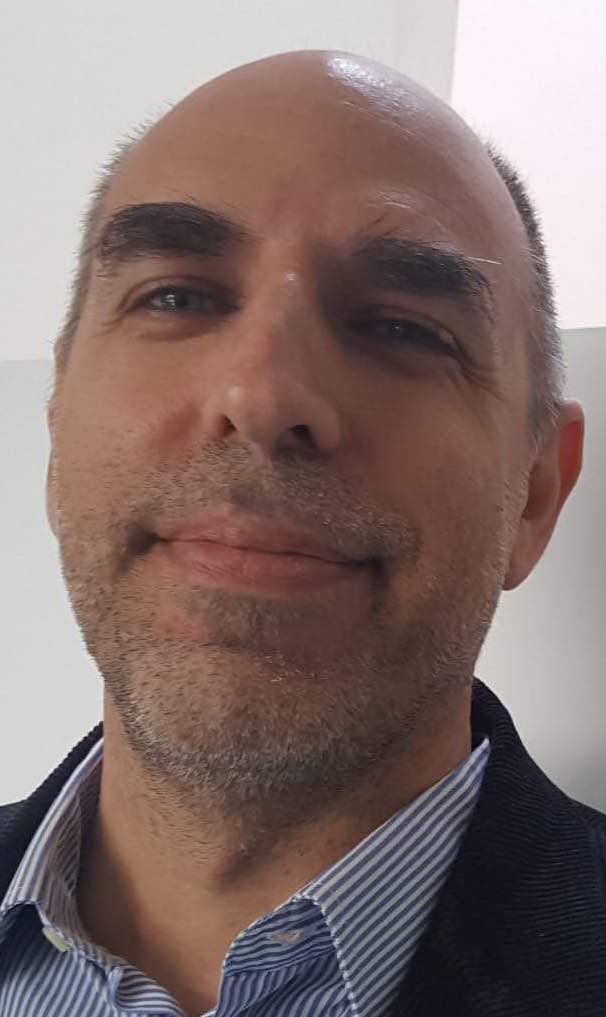
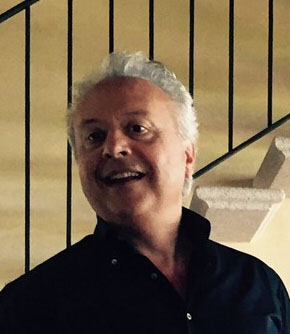
Academic staff

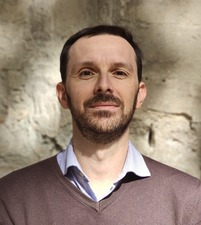

 luca.bochicchio@univr.it


 monica.cristini@univr.it


 dario.donetti@univr.it
 elisa.lerco@univr.it





 pieralberto.porcedducilione@univr.it; pierre_pordd@yahoo.it
 045 8028732

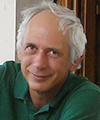
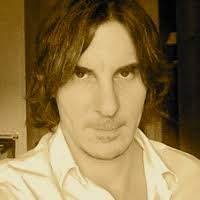 alberto.scandola@univr.it

Study Plan
The Study Plan includes all modules, teaching and learning activities that each student will need to undertake during their time at the University.
Please select your Study Plan based on your enrollment year.
1° Year
| Modules | Credits | TAF | SSD |
|---|
1 module among the following1 module among the following2° Year activated in the A.Y. 2023/2024
| Modules | Credits | TAF | SSD |
|---|
4 modules among the following| Modules | Credits | TAF | SSD |
|---|
1 module among the following1 module among the following| Modules | Credits | TAF | SSD |
|---|
4 modules among the following| Modules | Credits | TAF | SSD |
|---|
Legend | Type of training activity (TTA)
TAF (Type of Educational Activity) All courses and activities are classified into different types of educational activities, indicated by a letter.
Anthropology of Cultural Heritage (2023/2024)
Teaching code
4S010529
Teacher
Coordinator
Credits
6
Also offered in courses:
- Cultural Anthropology of the course Master’s degree in Historical Studies (interuniversity)
Language
Italian
Scientific Disciplinary Sector (SSD)
M-DEA/01 - DEMOLOGY, ETHNOLOGY AND ANTHROPOLOGY
Period
CuCi 2 B dal Apr 9, 2024 al May 31, 2024.
Courses Single
Authorized

Learning objectives
The approval of the UNESCO Convention on intangible cultural heritage (2003) has led to a broadening of the understanding of cultural heritage. The primary objective of the course is to bring an anthropological perspective to aspects of the material and intangible heritage of communities and their contexts. Through various teaching methods (lectures, discussions, meetings with experts), that favor the seminar-type approach, the course aims to bring students to a critical understanding of some of the themes and concepts of the discipline so as to approach with a relativistic gaze the different practices and productions of human societies and reflect on how historically the ‘others’ were built and narrated (first part) and how these representations have influenced – and continue to do so – the perception of their material and intangible heritage inside and outside museums (monographic part). Students are expected to actively participate in class discussions and to engage in a personal research project. At the end of the course the student is expected to: 1. have acquired knowledge of the categories and language used in anthropology to investigate patrimonial processes related to tangible and intangible assets; 2. be capable of making use of the acquired tools to critically approach such processes.
Prerequisites and basic notions
some knowledge of key concepts of cultural Anthropology
Program
The course is divided into two parts. After introducing some relevant topics of the discipline, the status of ethnographic objects, in and out of the museum institution will be considered.
Bibliography
Didactic methods
Various different teaching methods:
a) lectures
b) discussions
c) meetings with experts
Learning assessment procedures
Final oral exam.
For those attending classes: class participation, in-class presentation and final report.
For those NOT attending classes: Final oral exam. The student is asked questions about the course readings and about the central issues and thematic aspects addressed. The student should bring with her/him the texts which s/he has studied.
Evaluation criteria
Erasmus and international students may study the texts and take the final exam in English or French. If interested, they need to discuss the choice of the new reading materials with me during Office hours.
Criteria for the composition of the final grade
The final evaluation is based on 30/30.
Exam language
Italiano
Type D and Type F activities
| years | Modules | TAF | Teacher | |
|---|---|---|---|---|
| 2° | Music in History | F |
Vincenzo Borghetti
(Coordinator)
|
|
| 1° 2° | FAI Activities | F |
Edoardo Bianchi
(Coordinator)
|
|
| 1° 2° | Worlds of Fashion: Themes and Actors | F |
Alessandra Zamperini
(Coordinator)
|
|
| years | Modules | TAF | Teacher | |
|---|---|---|---|---|
| 2° | Music in History | F |
Vincenzo Borghetti
(Coordinator)
|
|
| 1° 2° | FAI Activities | F |
Edoardo Bianchi
(Coordinator)
|
|
| 1° 2° | Worlds of Fashion: Themes and Actors | F |
Alessandra Zamperini
(Coordinator)
|
|
| years | Modules | TAF | Teacher | |
|---|---|---|---|---|
| 1° | That scandalous can: Piero Manzoni’s Artist’s Shit (1961). International conference | F |
Luca Bochicchio
(Coordinator)
|
|
| 1° | Sigecweb computer system introduction course | F |
Ada Gabucci
(Coordinator)
|
|
| 1° | Graphic and photographic documentation of the archaeological artefacts: from traditional drawings to digital sources | F |
Diana Sergeeva Dobreva
(Coordinator)
|
|
| 1° | Workshop on the History of Manuscript Illumination | F |
Margherita Zibordi
(Coordinator)
|
|
| 1° | La collezione AGI Verona in Santa Marta e altri sedi universitarie a Verona | F |
Valerio Terraroli
(Coordinator)
|
|
| 1° | Works on display, 2023. Alessandro Turchi known as Orbetto, painter on copper and blackboard: the Madonna and Child with Saints Peter the Martyr, Zeno and Tuscany. | F |
Giorgio Fossaluzza
(Coordinator)
|
|
| 1° | Web for Cultural Heritage | F |
Piergiovanna Grossi
(Coordinator)
|
|
| 1° 2° | FAI Activities | F |
Edoardo Bianchi
(Coordinator)
|
|
| years | Modules | TAF | Teacher | |
|---|---|---|---|---|
| 1° | Sigecweb computer system introduction course | F |
Ada Gabucci
(Coordinator)
|
|
| 1° | Graphic and photographic documentation of the archaeological artefacts: from traditional drawings to digital sources | F |
Diana Sergeeva Dobreva
(Coordinator)
|
|
| 1° | Workshop on the History of Manuscript Illumination | F |
Margherita Zibordi
(Coordinator)
|
|
| 1° | La collezione AGI Verona in Santa Marta e altri sedi universitarie a Verona | F |
Valerio Terraroli
(Coordinator)
|
|
| 1° | Web for Cultural Heritage | F |
Piergiovanna Grossi
(Coordinator)
|
|
| 1° 2° | FAI Activities | F |
Edoardo Bianchi
(Coordinator)
|
|
| years | Modules | TAF | Teacher | |
|---|---|---|---|---|
| 1° | Conference Civici Museum Verona | F |
Tiziana Franco
(Coordinator)
|
|
| 1° | Future's Festival | F |
Alessandra Zangrandi
(Coordinator)
|
|
| 1° 2° | cultural Thursday ISSR Verona | F |
Tiziana Franco
(Coordinator)
|
|
| 1° 2° | The house of Erizzo and the image of aristrocracy in Venice | F |
Alessandra Zamperini
(Coordinator)
|
|
Career prospects
Module/Programme news
News for students
There you will find information, resources and services useful during your time at the University (Student’s exam record, your study plan on ESSE3, Distance Learning courses, university email account, office forms, administrative procedures, etc.). You can log into MyUnivr with your GIA login details: only in this way will you be able to receive notification of all the notices from your teachers and your secretariat via email and soon also via the Univr app.
Double degree
The University of Verona, through a network of agreements with foreign universities, offers international courses that enable students to gain a Double/Joint degree at the time of graduation. Indeed, students enrolled in a Double/Joint degree programme will be able to obtain both the degree of the University of Verona and the degree issued by the Partner University abroad - where they are expected to attend part of the programme -, in the time it normally takes to gain a common Master’s degree. The institutions concerned shall ensure that both degrees are recognised in the two countries.
Places on these programmes are limited, and admissions and any applicable grants are subject to applicants being selected in a specific Call for applications.
The latest Call for applications for Double/Joint Degrees at the University of Verona is available now!
Student login and resources
Prova finale
Alla prova finale per il conseguimento della laurea magistrale in Storia delle arti sono assegnati 24 cfu. La prova finale consiste nella preparazione e nella discussione di una tesi di laurea magistrale, di non meno di 120 pagine scritte, elaborata in modo originale dallo studente sotto la guida di un docente relatore; è prevista la figura del correlatore. L'argomento della prova finale deve riguardare uno degli insegnamenti del piano di studi. I laureati devono saper dimostrare con il lavoro di tesi di aver applicato le loro conoscenze, di possedere capacità di comprensione e abilità nella risoluzione di problemi e nell'affrontare tematiche nuove in modo autonomo e in un contesto di ricerca e di progettazione originale. La discussione della prova finale ha luogo davanti a una Commissione composta secondo le relative norme del Regolamento didattico di Ateneo. Per la prova finale è previsto un massimo di 7 punti. Per l'attribuzione del punteggio la commissione si attiene ai seguenti criteri: 1) originalità dell'elaborato; 2) efficacia e coerenza nelle argomentazioni; 3) qualità della scrittura; 4) capacità dello studente di illustrare e discutere adeguatamente il suo lavoro davanti alla commissione. La votazione è espressa in centodecimi, a cui la Commissione può aggiungere, in casi di eccellenza, la distinzione della lode.
Adempimenti amministrativi e scadenze domanda di laurea
Calendari discussione e proclamazione di laurea
