Studying at the University of Verona
Here you can find information on the organisational aspects of the Programme, lecture timetables, learning activities and useful contact details for your time at the University, from enrolment to graduation.
Academic calendar
The academic calendar shows the deadlines and scheduled events that are relevant to students, teaching and technical-administrative staff of the University. Public holidays and University closures are also indicated. The academic year normally begins on 1 October each year and ends on 30 September of the following year.
Course calendar
The Academic Calendar sets out the degree programme lecture and exam timetables, as well as the relevant university closure dates..
| Period | From | To |
|---|---|---|
| Primo semestre | Oct 4, 2021 | Jan 28, 2022 |
| Secondo semestre | Mar 7, 2022 | Jun 10, 2022 |
| Session | From | To |
|---|---|---|
| Sessione invernale d'esame | Jan 31, 2022 | Mar 4, 2022 |
| Sessione estiva d'esame | Jun 13, 2022 | Jul 29, 2022 |
| Sessione autunnale d'esame | Sep 1, 2022 | Sep 30, 2022 |
| Session | From | To |
|---|---|---|
| Sessione Estiva | Jul 12, 2022 | Jul 12, 2022 |
| Sessione Autunnale | Oct 18, 2022 | Oct 18, 2022 |
| Sessione Autunnale Dicembre | Dec 6, 2022 | Dec 6, 2022 |
| Sessione Invernale | Mar 13, 2023 | Mar 13, 2023 |
| Period | From | To |
|---|---|---|
| Festa di Tutti i Santi | Nov 1, 2021 | Nov 1, 2021 |
| Festa dell'Immacolata Concezione | Dec 8, 2021 | Dec 8, 2021 |
| Festività natalizie | Dec 24, 2021 | Jan 2, 2022 |
| Festa dell'Epifania | Jan 6, 2022 | Jan 7, 2022 |
| Festività pasquali | Apr 15, 2022 | Apr 19, 2022 |
| Festa della Liberazione | Apr 25, 2022 | Apr 25, 2022 |
| Festa di San Zeno - S. Patrono di Verona | May 21, 2022 | May 21, 2022 |
| Festa della Repubblica | Jun 2, 2022 | Jun 2, 2022 |
| Chiusura estiva | Aug 15, 2022 | Aug 20, 2022 |
Exam calendar
Exam dates and rounds are managed by the relevant Science and Engineering Teaching and Student Services Unit.
To view all the exam sessions available, please use the Exam dashboard on ESSE3.
If you forgot your login details or have problems logging in, please contact the relevant IT HelpDesk, or check the login details recovery web page.
Should you have any doubts or questions, please check the Enrollment FAQs
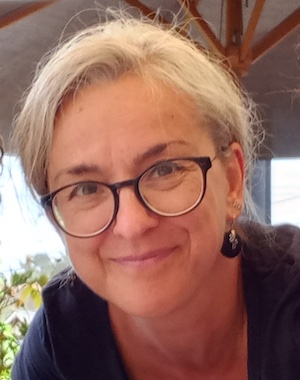
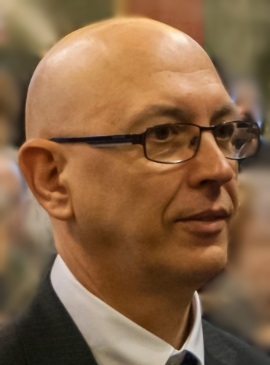
Academic staff

 045 802 7911






 vittoria.cozza@univr.it










 michele.ginesi@univr.it






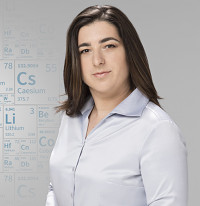 chiara.nardon@univr.it







 claudio.tomazzoli@univr.it

 franco.zivcovich@univr.it
Study Plan
The Study Plan includes all modules, teaching and learning activities that each student will need to undertake during their time at the University.
Please select your Study Plan based on your enrollment year.
1° Year
| Modules | Credits | TAF | SSD |
|---|
Mathematical analysis
2° Year activated in the A.Y. 2022/2023
| Modules | Credits | TAF | SSD |
|---|
1 module among the following3° Year activated in the A.Y. 2023/2024
| Modules | Credits | TAF | SSD |
|---|
1 module among the following| Modules | Credits | TAF | SSD |
|---|
Mathematical analysis
| Modules | Credits | TAF | SSD |
|---|
1 module among the following| Modules | Credits | TAF | SSD |
|---|
1 module among the following| Modules | Credits | TAF | SSD |
|---|
Legend | Type of training activity (TTA)
TAF (Type of Educational Activity) All courses and activities are classified into different types of educational activities, indicated by a letter.
Elements of physiology (2022/2023)
Teaching code
4S02719
Teacher
Coordinator
Credits
6
Language
Italian
Scientific Disciplinary Sector (SSD)
BIO/09 - PHYSIOLOGY
Period
Semester 2 dal Mar 6, 2023 al Jun 16, 2023.

Learning objectives
The aim of this course is to provide to the students the physiological bases to understand: a) the bio-physical properties of the plasma membrane and the principles of cell excitability, nerve conduction and synaptic transmission; b) how the nervous system acquires and processes sensory information and how it plans and executes the movement; c) the functional organization of cardiovascular, res-piratory, renal, and endocrine system. At the end of the course, the students will have to demonstrate knowledge of the basics of the func-tioning of the human body and the ability to use this knowledge in bioinformatics
Prerequisites and basic notions
There are no special prerequisites, although a basic knowledge of Biology and Anatomy will be useful.
Program
• Introduction to human physiology and definition of homeostasis.
• Biophysics of cell membranes: resting membrane potential, equilibrium potential, and action potential.
• Anatomical and functional organization of the nervous system.
• Electrical and chemical synapses. Inhibitory and excitatory synapses.
• Sensation and sensory processing: somatic, visual, auditory and chemosensory systems.
• Movement and its control: muscle, motor units, movement planning and control.
• Autonomous nervous system and physiological bases of the cardiovascular, respiratory, urinary and digestive system.
• General features of the endocrine system and description of the main functions of hormones.
Bibliography
Didactic methods
Teaching will be in presence.
Learning assessment procedures
There will be an oral examination, to assess the proficiency acquired with respect to the topics in the course programme.
Evaluation criteria
The evaluation will take into consideration the skill in expressing the knowledge acquired with properties of language, as well as the logical ability and critical reasoning applied to the described physiological phenomena.
Criteria for the composition of the final grade
The overall grade will be expressed in thirtieths.
Exam language
Italiano English (if necessary)
Type D and Type F activities
Le attività formative di tipologia D sono a scelta dello studente, quelle di tipologia F sono ulteriori conoscenze utili all’inserimento nel mondo del lavoro (tirocini, competenze trasversali, project works, ecc.). In base al Regolamento Didattico del Corso, alcune attività possono essere scelte e inserite autonomamente a libretto, altre devono essere approvate da apposita commissione per verificarne la coerenza con il piano di studio. Le attività formative di tipologia D o F possono essere ricoperte dalle seguenti attività.
1. Insegnamenti impartiti presso l'Università di Verona
Comprendono gli insegnamenti sotto riportati e/o nel Catalogo degli insegnamenti (che può essere filtrato anche per lingua di erogazione tramite la Ricerca avanzata).
Modalità di inserimento a libretto: se l'insegnamento è compreso tra quelli sottoelencati, lo studente può inserirlo autonomamente durante il periodo in cui il piano di studi è aperto; in caso contrario, lo studente deve fare richiesta alla Segreteria, inviando a carriere.scienze@ateneo.univr.it il modulo nel periodo indicato.
2. Attestato o equipollenza linguistica CLA
Oltre a quelle richieste dal piano di studi, per gli immatricolati dall'A.A. 2021/2022 vengono riconosciute:
- Lingua inglese: vengono riconosciuti 3 CFU per ogni livello di competenza superiore a quello richiesto dal corso di studio (se non già riconosciuto nel ciclo di studi precedente).
- Altre lingue e italiano per stranieri: vengono riconosciuti 3 CFU per ogni livello di competenza a partire da A2 (se non già riconosciuto nel ciclo di studi precedente).
Tali cfu saranno riconosciuti, fino ad un massimo di 6 cfu complessivi, di tipologia F se il piano didattico lo consente, oppure di tipologia D. Ulteriori crediti a scelta per conoscenze linguistiche potranno essere riconosciuti solo se coerenti con il progetto formativo dello studente e se adeguatamente motivati.
Gli immatricolati fino all'A.A. 2020/2021 devono consultare le informazioni che si trovano qui.
Modalità di inserimento a libretto: richiedere l’attestato o l'equipollenza al CLA e inviarlo alla Segreteria Studenti - Carriere per l’inserimento dell’esame in carriera, tramite mail: carriere.scienze@ateneo.univr.it
3. Competenze trasversali
Scopri i percorsi formativi promossi dal TALC - Teaching and learning center dell'Ateneo, destinati agli studenti regolarmente iscritti all'anno accademico di erogazione del corso https://talc.univr.it/it/competenze-trasversali
Modalità di inserimento a libretto: non è previsto l'inserimento dell'insegnamento nel piano di studi. Solo in seguito all'ottenimento dell'Open Badge verranno automaticamente convalidati i CFU a libretto. La registrazione dei CFU in carriera non è istantanea, ma ci saranno da attendere dei tempi tecnici.
4. Periodo di stage/tirocinio
Oltre ai CFU previsti dal piano di studi (verificare attentamente quanto indicato sul Regolamento Didattico): qui informazioni su come attivare lo stage.
Insegnamenti e altre attività che si possono inserire autonomamente a libretto
| years | Modules | TAF | Teacher |
|---|---|---|---|
| 2° 3° | The fashion lab (1 ECTS) | D |
Caterina Fratea
(Coordinator)
|
| years | Modules | TAF | Teacher |
|---|---|---|---|
| 2° 3° | Introduction to Robotics for students of scientific courses. | D |
Paolo Fiorini
(Coordinator)
|
| 2° 3° | Matlab-Simulink programming | D |
Bogdan Mihai Maris
(Coordinator)
|
| years | Modules | TAF | Teacher |
|---|---|---|---|
| 2° 3° | The fashion lab (1 ECTS) | D |
Caterina Fratea
(Coordinator)
|
| years | Modules | TAF | Teacher |
|---|---|---|---|
| 2° 3° | Introduction to Robotics for students of scientific courses. | D |
Paolo Fiorini
(Coordinator)
|
| 2° 3° | Introduction to 3D printing | D |
Franco Fummi
(Coordinator)
|
| 2° 3° | LaTeX Language | D |
Enrico Gregorio
(Coordinator)
|
| 2° 3° | HW components design on FPGA | D |
Franco Fummi
(Coordinator)
|
| 2° 3° | Rapid prototyping on Arduino | D |
Franco Fummi
(Coordinator)
|
| 2° 3° | Protection of intangible assets (SW and invention)between industrial law and copyright | D |
Roberto Giacobazzi
(Coordinator)
|
| years | Modules | TAF | Teacher | |
|---|---|---|---|---|
| 1° | Subject requirements: mathematics | D |
Franco Zivcovich
|
|
| 2° 3° | Python programming language | D |
Giulio Mazzi
(Coordinator)
|
|
Career prospects
Module/Programme news
News for students
There you will find information, resources and services useful during your time at the University (Student’s exam record, your study plan on ESSE3, Distance Learning courses, university email account, office forms, administrative procedures, etc.). You can log into MyUnivr with your GIA login details: only in this way will you be able to receive notification of all the notices from your teachers and your secretariat via email and soon also via the Univr app.
Graduation
List of theses and work experience proposals
| Stage | Research area |
|---|---|
| Correlated mutations | Various topics |
Attendance
As stated in the Teaching Regulations for the A.Y. 2022/2023, attendance at the course of study is not mandatory.
