Studying at the University of Verona
Here you can find information on the organisational aspects of the Programme, lecture timetables, learning activities and useful contact details for your time at the University, from enrolment to graduation.
Academic calendar
The academic calendar shows the deadlines and scheduled events that are relevant to students, teaching and technical-administrative staff of the University. Public holidays and University closures are also indicated. The academic year normally begins on 1 October each year and ends on 30 September of the following year.
Course calendar
The Academic Calendar sets out the degree programme lecture and exam timetables, as well as the relevant university closure dates..
| Period | From | To |
|---|---|---|
| Sem. I Trento | Sep 17, 2018 | Dec 21, 2018 |
| Sem. 1A | Sep 24, 2018 | Nov 10, 2018 |
| Sem. 1B | Nov 19, 2018 | Jan 12, 2019 |
| Sem. II Trento | Feb 11, 2019 | May 31, 2019 |
| Sem. 2A | Feb 18, 2019 | Mar 30, 2019 |
| Sem. 2B | Apr 8, 2019 | Jun 1, 2019 |
| Session | From | To |
|---|---|---|
| Sessione d'esame straordinaria invernale Trento | Dec 3, 2018 | Dec 21, 2018 |
| Sessione d'esame invernale Trento | Jan 7, 2019 | Feb 9, 2019 |
| Sessione d'esame invernale | Jan 14, 2019 | Feb 16, 2019 |
| Sessione d'esame estiva (gli esami sono sospesi durante la sessione di laurea) | Jun 3, 2019 | Jul 27, 2019 |
| Sessione d'esame autunnale Trento | Aug 19, 2019 | Sep 14, 2019 |
| Sessione d'esame autunnale | Aug 26, 2019 | Sep 21, 2019 |
| Session | From | To |
|---|---|---|
| Sessione di laurea estiva | Jul 8, 2019 | Jul 13, 2019 |
| Sessione di laurea autunnale | Nov 4, 2019 | Nov 9, 2019 |
| Sessione di laurea invernale | Mar 30, 2020 | Apr 4, 2020 |
| Period | From | To |
|---|---|---|
| Festa di Ognissanti | Nov 1, 2018 | Nov 1, 2018 |
| Sospensione dell'attività didattica | Nov 2, 2018 | Nov 3, 2018 |
| Festa dell’Immacolata | Dec 8, 2018 | Dec 8, 2018 |
| Vacanze di Natale | Dec 24, 2018 | Jan 5, 2019 |
| Vacanze di Pasqua | Apr 19, 2019 | Apr 23, 2019 |
| Sospensione attività didattica | Apr 24, 2019 | Apr 27, 2019 |
| Festa della liberazione | Apr 25, 2019 | Apr 25, 2019 |
| Festa del lavoro | May 1, 2019 | May 1, 2019 |
| Festa del Santo Patrono | May 21, 2019 | May 21, 2019 |
| Festa della Repubblica | Jun 2, 2019 | Jun 2, 2019 |
| Vacanze Estive | Aug 12, 2019 | Aug 17, 2019 |
Exam calendar
Exam dates and rounds are managed by the relevant Culture and Civilisation Teaching and Student Services Unit.
To view all the exam sessions available, please use the Exam dashboard on ESSE3.
If you forgot your login details or have problems logging in, please contact the relevant IT HelpDesk, or check the login details recovery web page.
Should you have any doubts or questions, please check the Enrollment FAQs
Academic staff



Bassetti Massimiliano
 massimiliano.bassetti@univr.it
 045802 8376

 giovanni.ciappelli@univr.it




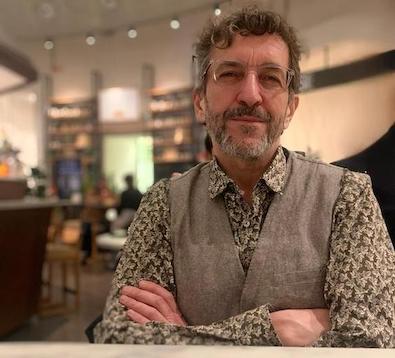




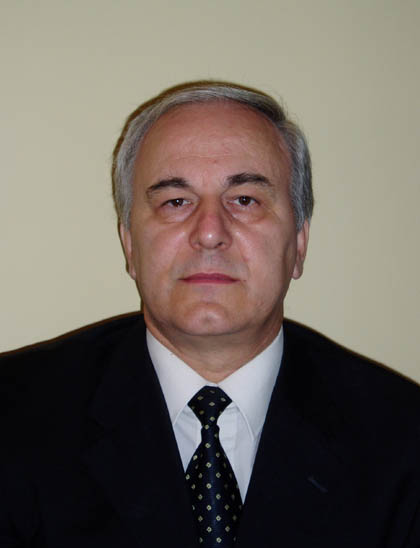



 gianmaria.varanini@univr.it
Study Plan
The Study Plan includes all modules, teaching and learning activities that each student will need to undertake during their time at the University.
Please select your Study Plan based on your enrollment year.
1° Year
| Modules | Credits | TAF | SSD |
|---|
Medieval History, History of Christianity and Churches
Early Modern History I - LM (Historical Anthropology)
Contemporary History I - LM
1 course to be chosen among the following1 course to be chosen among the followingHistory of Political Institutions II
History of Political Thought
1 course to be chosen among the followingHistory of Science and Technology - LM
1 course to be chosen among the followingMedieval Latin Literature II
Digital tools for historical research
2° Year activated in the A.Y. 2019/2020
| Modules | Credits | TAF | SSD |
|---|
| Modules | Credits | TAF | SSD |
|---|
Medieval History, History of Christianity and Churches
Early Modern History I - LM (Historical Anthropology)
Contemporary History I - LM
1 course to be chosen among the following1 course to be chosen among the followingHistory of Political Institutions II
History of Political Thought
1 course to be chosen among the followingHistory of Science and Technology - LM
1 course to be chosen among the followingMedieval Latin Literature II
Digital tools for historical research
| Modules | Credits | TAF | SSD |
|---|
Legend | Type of training activity (TTA)
TAF (Type of Educational Activity) All courses and activities are classified into different types of educational activities, indicated by a letter.
Paleography II - LM (2018/2019)
Teaching code
4S003211
Credits
12
Coordinator
Language
Italian
Also offered in courses:
- Paleography II - LM [Sede TN] of the course Master's degree in Arts (interuniversity)
The teaching is organized as follows:
Learning outcomes
To acquire in-depth knowledge on moments and aspects of the history of Latin writing (in their origins and socio-cultural repercussions) through the analysis and commentary of specific and significant 'specimina' charts, and provide students with methodological and critical tools necessary to conduct an autonomous research work.
Type D and Type F activities
Modules not yet included
Career prospects
Module/Programme news
News for students
There you will find information, resources and services useful during your time at the University (Student’s exam record, your study plan on ESSE3, Distance Learning courses, university email account, office forms, administrative procedures, etc.). You can log into MyUnivr with your GIA login details: only in this way will you be able to receive notification of all the notices from your teachers and your secretariat via email and soon also via the Univr app.
Linguistic training CLA
Double degree
The University of Verona, through a network of agreements with foreign universities, offers international courses that enable students to gain a Double/Joint degree at the time of graduation. Indeed, students enrolled in a Double/Joint degree programme will be able to obtain both the degree of the University of Verona and the degree issued by the Partner University abroad - where they are expected to attend part of the programme -, in the time it normally takes to gain a common Master’s degree. The institutions concerned shall ensure that both degrees are recognised in the two countries.
Places on these programmes are limited, and admissions and any applicable grants are subject to applicants being selected in a specific Call for applications.
The latest Call for applications for Double/Joint Degrees at the University of Verona is available now!
Graduation
List of theses and work experience proposals
| theses proposals | Research area |
|---|---|
| Ambiti di tesi | Art & Architecture - Art & Architecture |
Student mentoring
Student login and resources
Manifesto degli studi
Manifesto degli studi del CdLM interateneo in Scienze storiche
Documents
| Title | Info File |
|---|---|
 Manifesto Scienze storiche a.a. 2023-24 - 1° anno
|
pdf, it, 466 KB, 26/02/24 |
|
Manifesto Scienze storiche a.a. 2023-24 - 2° anno
|
pdf, it, 456 KB, 26/02/24 |
