Studying at the University of Verona
Here you can find information on the organisational aspects of the Programme, lecture timetables, learning activities and useful contact details for your time at the University, from enrolment to graduation.
Academic calendar
The academic calendar shows the deadlines and scheduled events that are relevant to students, teaching and technical-administrative staff of the University. Public holidays and University closures are also indicated. The academic year normally begins on 1 October each year and ends on 30 September of the following year.
Course calendar
The Academic Calendar sets out the degree programme lecture and exam timetables, as well as the relevant university closure dates..
| Period | From | To |
|---|---|---|
| 1° periodo di lezioni | Oct 3, 2016 | Dec 16, 2016 |
| Periodo riservato ad eventuali recuperi di lezioni - dicembre 2016 | Dec 17, 2016 | Dec 20, 2016 |
| 2° periodo di lezioni - febbraio/aprile 2017 | Feb 10, 2017 | Apr 10, 2017 |
| 2° periodo di lezioni - aprile/maggio 2017 | Apr 19, 2017 | May 9, 2017 |
| Periodo riservato ad eventuali recuperi di lezioni - maggio 2017 | May 10, 2017 | May 11, 2017 |
| Session | From | To |
|---|---|---|
| Sessione straordinaria 16/17 - studenti f.c. - dicembre 2016 | Dec 21, 2016 | Dec 23, 2016 |
| 1° appello - Sessione invernale 16/17 | Jan 10, 2017 | Jan 19, 2017 |
| 2° appello - Sessione invernale 16/17 | Jan 30, 2017 | Feb 8, 2017 |
| Sessione straordinaria 16/17 - studenti f.c. - aprile 2017 | Apr 11, 2017 | Apr 13, 2017 |
| 1° appello - Sessione estiva 16/17 | May 12, 2017 | May 22, 2017 |
| 2° appello - Sessione estiva 16/17 | Jun 8, 2017 | Jun 17, 2017 |
| 3° appello - Sessione estiva 16/17 | Jul 6, 2017 | Jul 15, 2017 |
| 1° appello - Sessione autunnale 16/17 | Aug 28, 2017 | Sep 6, 2017 |
| 2° appello - Sessione autunnale 16/17 | Sep 21, 2017 | Sep 30, 2017 |
| Session | From | To |
|---|---|---|
| Termine presentazione tesi di laurea - ottobre 2016 | Sep 23, 2016 | Sep 23, 2016 |
| Sessione autunnale - 15/16 | Oct 24, 2016 | Oct 25, 2016 |
| Termine presentazione tesi di laurea - febbraio 2017 | Jan 10, 2017 | Jan 10, 2017 |
| Sessione invernale - 15/16 | Feb 9, 2017 | Feb 9, 2017 |
| Termine presentazione tesi di laurea - marzo 2017 | Feb 24, 2017 | Feb 24, 2017 |
| Sessione invernale - marzo 2017 | Mar 29, 2017 | Mar 31, 2017 |
| Termine presentazione tesi di laurea - giugno 2017 | May 23, 2017 | May 23, 2017 |
| Sesssione estiva - 16/17 | Jun 26, 2017 | Jun 27, 2017 |
| Period | From | To |
|---|---|---|
| Festa di Ognissanti | Nov 1, 2016 | Nov 1, 2016 |
| Festa dell'Immacolata Concezione | Dec 8, 2016 | Dec 8, 2016 |
| Vacanze di Natale | Dec 24, 2016 | Jan 6, 2017 |
| Vacanze di Pasqua | Apr 14, 2017 | Apr 18, 2017 |
| Festa della Liberazione | Apr 25, 2017 | Apr 25, 2017 |
| Festa dei Lavoratori | May 1, 2017 | May 1, 2017 |
| Festa del Santo Patrono - San Zeno | May 21, 2017 | May 21, 2017 |
| Festa della Repubblica | Jun 2, 2017 | Jun 2, 2017 |
Exam calendar
Exam dates and rounds are managed by the relevant Law Teaching and Student Services Unit.
To view all the exam sessions available, please use the Exam dashboard on ESSE3.
If you forgot your login details or have problems logging in, please contact the relevant IT HelpDesk, or check the login details recovery web page.
Should you have any doubts or questions, please check the Enrollment FAQs
Academic staff

 mariacaterina.baruffi@univr.it


 andrea.carlevaris@univr.it




Dalla Massara Tommaso
tommaso.dallamassara@univr.it
 +39 045 8028810




 roberto.flor@univr.it
 giorgia.guerra@univr.it



 rita.maggi@univr.it
 martina.menon@univr.it













 lorenzo.salvatore@univr.it
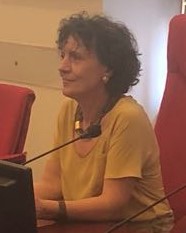
Strano Silvana
silvana.stranoligato@univr.it
+39 045 8028856

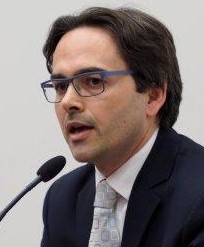
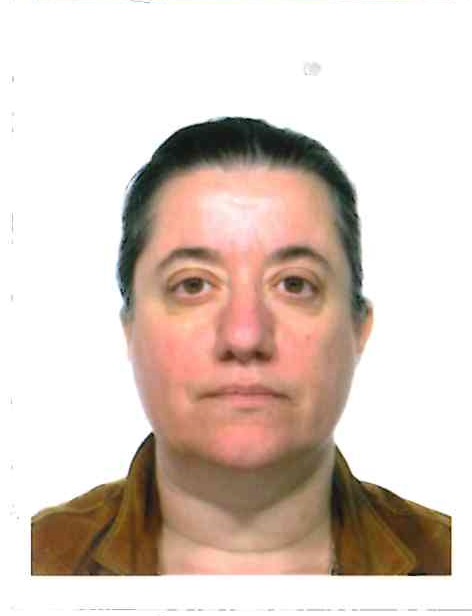
 claudio.tomazzoli@univr.it

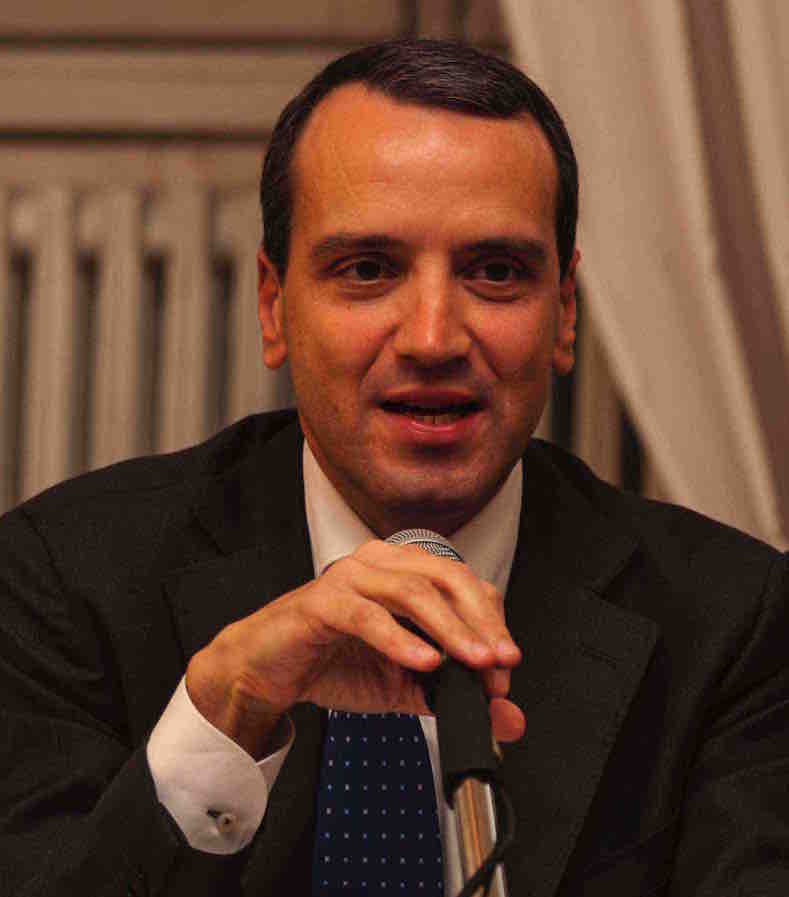

Study Plan
The Study Plan includes all modules, teaching and learning activities that each student will need to undertake during their time at the University.
Please select your Study Plan based on your enrollment year.
1° Year
| Modules | Credits | TAF | SSD |
|---|
Principles of economics
Roman Law Institutions
History of Medieval and Modern Law
2° Year activated in the A.Y. 2017/2018
| Modules | Credits | TAF | SSD |
|---|
A course to be chosen among the followingA course to be chosen among the following3° Year activated in the A.Y. 2018/2019
| Modules | Credits | TAF | SSD |
|---|
Foreign language4° Year activated in the A.Y. 2019/2020
| Modules | Credits | TAF | SSD |
|---|
A course to be chosen among the following5° Year activated in the A.Y. 2020/2021
| Modules | Credits | TAF | SSD |
|---|
Five courses to be chosen among the following| Modules | Credits | TAF | SSD |
|---|
Principles of economics
Roman Law Institutions
History of Medieval and Modern Law
| Modules | Credits | TAF | SSD |
|---|
A course to be chosen among the followingA course to be chosen among the following| Modules | Credits | TAF | SSD |
|---|
Foreign language| Modules | Credits | TAF | SSD |
|---|
A course to be chosen among the following| Modules | Credits | TAF | SSD |
|---|
Five courses to be chosen among the followingLegend | Type of training activity (TTA)
TAF (Type of Educational Activity) All courses and activities are classified into different types of educational activities, indicated by a letter.
Canon Law (2020/2021)
Teaching code
4S001384
Teacher
Coordinator
Credits
6
Language
Italian
Scientific Disciplinary Sector (SSD)
IUS/11 - ECCLESIASTICAL AND CANON LAW
Period
2° periodo di lezioni - aprile/maggio 2021, 2° periodo di lezioni - febbraio/marzo 2021

Learning outcomes
The course aims to provide essential tools learning and analysis about the two-thousand years old juridical order of the Catholic Church. Despite its strong originality in comparison to the world of the secular laws, the law of the Church has played a significant role in the creation and the development of the european legal culture; many institutions and many solutions of the juridical problems adopted by the States laws are derived from the canonical models.
At the end of the course the student will be able to:
- to know and understand the fundamental principles, institutes and essential rules according to which the Catholic Church is juridically organized;
- to evaluate essential profiles of comparison between the Church's order and secular juridical systems, both in historical evolution and in current law.
Program
The course aims at explaining thoroughly canon law’s sources of divine right and sources of human right, fundamental rights of the faithful and government structures of the universal Church and of the particular Churches. A special importance will be given to canon law on marriage, wich obtains civile power in the Concordat between Italy and the Holy See.
• Sources of Canon law: divine right and human right
• The canonical condition of the christian faithful: clerics, lay faithful, religious.
• The power of governance and the hierarchical constitution of the Church
• The ecclesiastical office
• Government of the universal Church. The Roman Pontiff and the College of Bishops.
• Government of the particular Churches. The diocese. The parish
• The temporal goods of the Church.
• The penal regulation in ecclesiastical law.
• The marriage. Cases to declare the nullity of marriage.
DIDACTIC METHODS
The teaching consists in:
• lectures on the course topics
• analysis of materials placed on e-earning platform and discussed during lectures, in order to foster a critical approach by students
• conferences by Italian and foreign experts, so as to provide students with different approaches to the subject
During the academic year the teacher receives students at the times indicated in web pages.
As long as the COVID emergency lasts, the receipt takes place exclusively online. Students are therefore advised to always anticipate the appointment by e-mail.
In addition to the indicated time, further remote appointments can be agreed with the teacher by e-mail.
| Author | Title | Publishing house | Year | ISBN | Notes |
|---|---|---|---|---|---|
| ARROBA CONDE M. J. - RIONDINO M. | Introduzione al diritto canonico | Le Monnier Università | 2015 | 9788800746243 | |
| DALLA TORRE G. | Lezioni di diritto canonico (Edizione 5) | Giappichelli | 2018 | 9788892114548 |
Examination Methods
Knowledge and skills provided will be verified with an final examination on the whole program.
Grades will be expressed in /30 taking into account knowledge of the subject, accuracy in response, quality of the legal reasoning and use of the correct legal terminology.
Students attending classes can prepare for the examination on lecture notes.
Type D and Type F activities
Le attività che consentono l’acquisizione dei crediti riservati alle attività formative a libera scelta dello studente (TAF D) sono le seguenti:
• Un insegnamento previsto nell’elenco delle attività formative (TAF D) allegato al piano didattico del corso di laurea Magistrale in Giurisprudenza;
• Un insegnamento attivato nei Corsi di studi afferenti al Collegio di Giurisprudenza;
• Un laboratorio didattico attivato nei Corsi di studi afferenti al Collegio di Giurisprudenza;
• Un laboratorio didattico attivato nei Corsi di studi afferenti al Dipartimento di Scienze Giuridiche;
• Un insegnamento previsto dall’Offerta Formativa di Ateneo, non impartito nell’ambito dei corsi di studi afferenti al Collegio di Giurisprudenza: il riconoscimento dei crediti acquisiti sarà subordinato alla preventiva presentazione di coerenti programmi formativi valutati dalla Commissione istruttoria per la didattica e approvati dal Collegio didattico.
• Attività formative organizzate dai singoli docenti del Collegio di Giurisprudenza o del Dipartimento di Scienze Giuridiche: previa approvazione del Collegio ad esse verrà attribuito, dopo un’apposita verifica, un credito per ogni 6 ore di frequenza obbligatoria;
• Attività formative che implicano la partecipazione a convegni o seminari organizzati sotto il “logo” del Dipartimento di Scienze Giuridiche o dell’Ateneo: devono essere preventivamente approvate dal Collegio di Giurisprudenza indicando un docente di riferimento del Collegio di Giurisprudenza ovvero del Dipartimento di Scienze Giuridiche. Un credito per ogni giornata di convegno o di seminario si acquisisce dopo apposita verifica che dimostri l’avvenuta fruizione culturale del tema del convegno o del seminario.
Le attività che consentono l’acquisizione dei crediti riservati alle ulteriori attività formative (TAF F) sono le seguenti:
• Informatica (3 cfu)
Al link https://www.univr.it/it/i-nostri-servizi/segreterie-studenti/giurisprudenza#categdoc_7103 la modulistica per l'inserimento di attività non selezionabili in autonomia dallo studente in sede di compilazione del piano degli studi.
| years | Modules | TAF | Teacher |
|---|---|---|---|
| 4° 5° | Civil enforcement law | D |
Alberto Maria Tedoldi
(Coordinator)
|
| 4° 5° | Family Law | D |
Alessandra Cordiano
(Coordinator)
|
| 4° 5° | Ecclesiastical law | D |
Giuseppe Comotti
(Coordinator)
|
| 4° 5° | Economics, financial statement and control of Italian healthcare and social care organizations | D |
Paolo Roffia
(Coordinator)
|
| 4° 5° | Safety and social security | D |
Sylvain Giovanni Nadalet
|
| years | Modules | TAF | Teacher |
|---|---|---|---|
| 4° 5° | Banking law | D |
Giovanni Meruzzi
(Coordinator)
|
| 4° 5° | Safe and security law | D |
Marco Peruzzi
|
| 4° 5° | CRISIS AND INSOLVENCY PROCEEDINGS LAW | D |
Alberto Maria Tedoldi
(Coordinator)
|
| 4° 5° | Company Economics | D |
Paolo Roffia
(Coordinator)
|
| 4° 5° | Economics and economic problems of the art market | D |
Cristina Spiller
(Coordinator)
|
| 4° 5° | International criminal law | D |
Lorenzo Picotti
(Coordinator)
|
| 4° 5° | Juvenile Law | D |
Silvana Strano
(Coordinator)
|
| 4° 5° | Legal Medicine | D |
Domenico De Leo
(Coordinator)
|
| 4° 5° | Sociology of law | D |
Daniele Velo Dalbrenta
(Coordinator)
|
| years | Modules | TAF | Teacher |
|---|---|---|---|
| 4° 5° | Banking law | D |
Giovanni Meruzzi
(Coordinator)
|
| 4° 5° | Safe and security law | D |
Marco Peruzzi
|
| 4° 5° | CRISIS AND INSOLVENCY PROCEEDINGS LAW | D |
Alberto Maria Tedoldi
(Coordinator)
|
| 4° 5° | Company Economics | D |
Paolo Roffia
(Coordinator)
|
| 4° 5° | Economics and economic problems of the art market | D |
Cristina Spiller
(Coordinator)
|
| 4° 5° | International criminal law | D |
Lorenzo Picotti
(Coordinator)
|
| 4° 5° | Juvenile Law | D |
Silvana Strano
(Coordinator)
|
| 4° 5° | Legal Medicine | D |
Domenico De Leo
(Coordinator)
|
| 4° 5° | Sociology of law | D |
Daniele Velo Dalbrenta
(Coordinator)
|
Career prospects
Module/Programme news
News for students
There you will find information, resources and services useful during your time at the University (Student’s exam record, your study plan on ESSE3, Distance Learning courses, university email account, office forms, administrative procedures, etc.). You can log into MyUnivr with your GIA login details: only in this way will you be able to receive notification of all the notices from your teachers and your secretariat via email and soon also via the Univr app.
Language skills
Graduation
Internships
Internships are aimed at enabling students to gain direct knowledge of the world of work and to acquire specific professional skills.
Internships are carried out under the responsibility of an individual lecturer, and can be carried out in professional firms, public administration bodies and companies recognised by the University of Verona.
Any CFU credits gained by doing internships will be recognised and recorded by the University in accordance with the relevant University regulations in force (Regolamento d’Ateneo per il riconoscimento dei crediti maturati negli stage universitari).
For further information on internships, please go to: https://www.univr.it/it/i-nostri-servizi/stage-e-tirocini.
