Studying at the University of Verona
Here you can find information on the organisational aspects of the Programme, lecture timetables, learning activities and useful contact details for your time at the University, from enrolment to graduation.
Academic calendar
The academic calendar shows the deadlines and scheduled events that are relevant to students, teaching and technical-administrative staff of the University. Public holidays and University closures are also indicated. The academic year normally begins on 1 October each year and ends on 30 September of the following year.
Course calendar
The Academic Calendar sets out the degree programme lecture and exam timetables, as well as the relevant university closure dates..
| Period | From | To |
|---|---|---|
| Sem. 1A | Sep 27, 2021 | Nov 6, 2021 |
| Sem. 1B | Nov 15, 2021 | Jan 12, 2022 |
| Sem. 2A | Feb 14, 2022 | Mar 26, 2022 |
| Sem. 2B | Apr 4, 2022 | Jun 4, 2022 |
| Session | From | To |
|---|---|---|
| Sessione Invernale | Jan 10, 2022 | Feb 12, 2022 |
| Sessione estiva | Jun 6, 2022 | Jul 23, 2022 |
| Sessione autunnale | Aug 29, 2022 | Sep 24, 2022 |
| Session | From | To |
|---|---|---|
| Sessione estiva | Jul 11, 2022 | Jul 16, 2022 |
| Sessione autunnale | Nov 7, 2022 | Nov 12, 2022 |
| Period | From | To |
|---|---|---|
| FESTIVITA' OGNISSANTI | Nov 1, 2021 | Nov 1, 2021 |
| Festa dell'Immacolata | Dec 8, 2021 | Dec 8, 2021 |
| Vacanze di Natale | Dec 25, 2021 | Jan 6, 2022 |
| VACANZE DI PASQUA | Apr 15, 2022 | Apr 19, 2022 |
| Festa della Liberazione | Apr 25, 2022 | Apr 25, 2022 |
| FESTA DEL LAVORO | May 1, 2022 | May 1, 2022 |
| Festività Santo Patrono di Verona | May 21, 2022 | May 21, 2022 |
| Festa della Repubblica | Jun 2, 2022 | Jun 2, 2022 |
| Vacanze estive | Aug 8, 2022 | Aug 15, 2022 |
Exam calendar
Exam dates and rounds are managed by the relevant Humanistic Studies Teaching and Student Services Unit.
To view all the exam sessions available, please use the Exam dashboard on ESSE3.
If you forgot your login details or have problems logging in, please contact the relevant IT HelpDesk, or check the login details recovery web page.
Should you have any doubts or questions, please check the Enrollment FAQs
Academic staff








 evita.calabrese@univr.it
 andrea.cavalletti@univr.it




 elena.desilvestri@univr.it




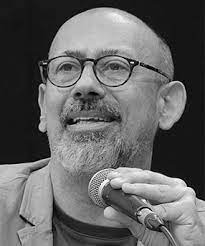

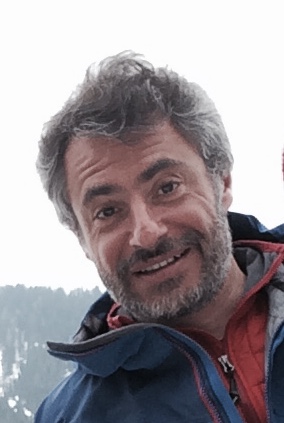 giacomo.mormino@univr.it

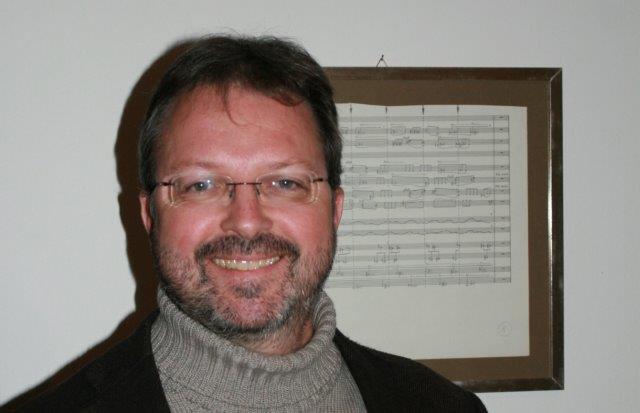

 sofia.piacentin@univr.it

 pieralberto.porcedducilione@univr.it; pierre_pordd@yahoo.it
 045 8028732










 nicola.turrini@univr.it


 mariarenata.zanchin@univr.it
Study Plan
The Study Plan includes all modules, teaching and learning activities that each student will need to undertake during their time at the University.
Please select your Study Plan based on your enrollment year.
1° Year
| Modules | Credits | TAF | SSD |
|---|
Foreign language CB TestOTHER ACTIVITIES2° Year activated in the A.Y. 2022/2023
| Modules | Credits | TAF | SSD |
|---|
1 MODULE TO BE CHOSEN AMONG THE FOLLOWING3 MODULES TO BE CHOSEN AMONG THE FOLLOWING1 MODULE TO BE CHOSEN AMONG THE FOLLOWING3° Year activated in the A.Y. 2023/2024
| Modules | Credits | TAF | SSD |
|---|
1 MODULE TO BE CHOSEN AMONG THE FOLLOWING3 MODULES TO BE CHOSEN AMONG THE FOLLOWING| Modules | Credits | TAF | SSD |
|---|
Foreign language CB TestOTHER ACTIVITIES| Modules | Credits | TAF | SSD |
|---|
1 MODULE TO BE CHOSEN AMONG THE FOLLOWING3 MODULES TO BE CHOSEN AMONG THE FOLLOWING1 MODULE TO BE CHOSEN AMONG THE FOLLOWING| Modules | Credits | TAF | SSD |
|---|
1 MODULE TO BE CHOSEN AMONG THE FOLLOWING3 MODULES TO BE CHOSEN AMONG THE FOLLOWING| Modules | Credits | TAF | SSD |
|---|
2 MODULES TO BE CHOSEN AMONG THE FOLLOWING3 MODULES TO BE CHOSEN AMONG THE FOLLOWINGLegend | Type of training activity (TTA)
TAF (Type of Educational Activity) All courses and activities are classified into different types of educational activities, indicated by a letter.
Type D and Type F activities
Una quota dei crediti corrispondenti all’attività formativa dell’intero triennio, determinata dal presente Regolamento in 12 CFU, è riservata alla scelta autonoma da parte della/o studente. Questa scelta può essere orientata sia verso corsi/esami non seguiti/sostenuti in precedenza, sia verso iterazioni di corsi/esami, sia ancora verso altre attività (tutorati, ulteriori competenze linguistiche, partecipazione a convegni o seminari), purché tutte preventivamente approvate dal Collegio Didattico e/o dalla Commissione Didattica del Dipartimento. Tra i 12 crediti dovrà comunque essere presente almeno un esame con voto. In conformità al dettato del D.M. 270/04 e alla luce delle raccomandazioni espresse dal D.M. 26 luglio 2007, capo 3 lettera n), la scelta, che non può essere predeterminata (fatto salvo quanto indicato per le iterazioni), deve comunque essere ispirata a coerenza col piano formativo della/del singola/o studente.
In caso di attività formative non rientranti nelle categorie previste, si dovrà fare richiesta di valutazione al Collegio Didattico di Filosofia fornendo adeguate motivazioni.
Altre informazioni sono reperibili nella Guida per i crediti liberi che è possibile trovare quì
COMPETENZE TRASVERSALI
Scopri i percorsi formativi promossi dal Teaching and learning centre dell'Ateneo, destinati agli studenti iscritti ai corsi di laurea, volti alla promozione delle competenze trasversali:
https://talc.univr.it/it/competenze-trasversali
| years | Modules | TAF | Teacher |
|---|---|---|---|
| 1° 2° 3° | What paradigms beyond the pandemic? | D |
Paola Dal Toso
(Coordinator)
|
| 1° 2° 3° | The contagion and the cure. The world after the virus | D |
Carlo Chiurco
(Coordinator)
|
| 1° 2° 3° | The ethics and aesthetics of the image | D |
Gianluca Solla
(Coordinator)
|
| years | Modules | TAF | Teacher |
|---|---|---|---|
| 1° 2° 3° | What paradigms beyond the pandemic? | D |
Paola Dal Toso
(Coordinator)
|
| 1° 2° 3° | The contagion and the cure. The world after the virus | D |
Carlo Chiurco
(Coordinator)
|
| 1° 2° 3° | Laboratorio “Calendario di Memoria Civile – Giornata della Memoria” | D |
Olivia Guaraldo
(Coordinator)
|
| 1° 2° 3° | Eros and Polis ”and“ In the name of Tiresias: Subjectivation, transit, sexuation | D |
Federico Leoni
(Coordinator)
|
| years | Modules | TAF | Teacher |
|---|---|---|---|
| 1° 2° 3° | Introduction to robotics for humanities students | D |
Paolo Fiorini
(Coordinator)
|
| years | Modules | TAF | Teacher |
|---|---|---|---|
| 1° 2° 3° | "Common world. 2022 Arendt Seminars | D |
Ilaria Possenti
(Coordinator)
|
| 1° 2° 3° | Restorative Justice | D |
Cristina Lonardi
(Coordinator)
|
| 1° 2° 3° | Group Psychology and the Analysis of the Ego, a hundred years later: social bond and new forms of subjectivation. | D |
Matteo Bonazzi
(Coordinator)
|
| 1° 2° 3° | The contagion and the cure. The world after the virus | D |
Carlo Chiurco
(Coordinator)
|
| 1° 2° 3° | Gnoseology and Metaphysics Workshop | D |
Davide Poggi
(Coordinator)
|
| 1° 2° 3° | Eros and Polis ”and“ In the name of Tiresias: Subjectivation, transit, sexuation | D |
Federico Leoni
(Coordinator)
|
| years | Modules | TAF | Teacher |
|---|---|---|---|
| 1° 2° 3° | "Common world. 2022 Arendt Seminars | D |
Ilaria Possenti
(Coordinator)
|
| 1° 2° 3° | Partecipated justice and reforms. The settlement of conflicts with people and for people | D |
Cristina Lonardi
(Coordinator)
|
| 1° 2° 3° | Gnoseology and Metaphysics Workshop | D |
Davide Poggi
(Coordinator)
|
| 1° 2° 3° | Eros and Polis ”and“ In the name of Tiresias: Subjectivation, transit, sexuation | D |
Federico Leoni
(Coordinator)
|
Ontology (2023/2024)
Teaching code
4S007322
Teacher
Coordinator
Credits
6
Language
Italian
Scientific Disciplinary Sector (SSD)
M-FIL/01 - THEORETICAL PHILOSOPHY
Period
Sem. 2B dal Apr 9, 2024 al May 31, 2024.
Courses Single
Authorized

Learning objectives
Ontology
The course of Ontology aims to equip students with the main landmarks and conceptual tools of the philosophical questioning on being.
In addition to the knowledge of the history of Western philosophical thought and its main conceptual lines, particular attention will be given to the knowledge of modern and contemporary philosophical debate. The course aims to develop the following skills:
- ability to understand philosophical texts;
- ability to use an appropriate philosophical terminology;
- ability to compare peculiar aspects of the thought of the past with themes and / or authors of our time;
- ability to communicate philosophical topics with specialists and non-specialists;
- ability to to continue their studies at a MA level.
Prerequisites and basic notions
No prerequisites: just the basic knowledge of the history of philosophy
Program
In the "System of gnoseology and morals" (1930) Giuseppe Zamboni presents his own "pure elementary gnoseology", a theory of knowledge from which he derives an ontology that fits into the more general position of critical realism.
The course focuses precisely on this theory of knowledge, on the gnoseological method and on its fruitfulness in order to understand the main voices in the history of modern and contemporary philosophy and to deal with the actual debate concerning the realism.
REFERENCE TEXTS
The texts required are as follows:
• Giuseppe Zamboni, Sistema di Gnoseologia e di morale, a cura di F.L. Marcolungo, Verona, QuiEdit, 2019, pp. 244.
The reference texts are the same for both attending students and those who can not attend lectures.
Additional texts and teaching materials will also be communicated on the e-learning platform of the University website.
Bibliography
Didactic methods
The teaching methods consist of traditional lectures (face-to-face and online streaming) axed on the reading and the comment on Zamboni's "Sistema di gnoseologia e di morale", with the aim of transmitting: 1) the key concepts of both ontology and philosophy of knowledge or gnoseology; 2) the critical means that are useful for understanding (and for dealing with) the problematic issues involved the critical realism.
Each lesson will be recorded and (together with the materials examined during the course) uploaded on the e-learning platform of the University (as mp3 files, or file video via Panopto), with the aim of easing the study for both attending students and those who can not attend lectures.
During the academic year, an individual consultation service is also available (at the teacher's study, by e-mail, or via Zoom) at the times indicated on the web pages (and readily updated), or agreed with the teacher (especially in the case of telematic meetings).
At the first lesson, students will receive the full calendar of teaching activities, together with the dates and classroom (real or virtual) in which the lessons will take place and a synoptic presentation of the topics of the course.
Any suspension of lectures for academic reasons will be readily communicated in the classroom, on the web site, and on the e-learning platform forum.
Learning assessment procedures
The assessment of the learning outcomes of both the key concepts and the issues which concern the themes and the texts examined will be done by means of an oral examination (face-to-face or via Zoom) concerning the programme carried out during the course.
The examination is the same for both attending students and non-attending ones.
Evaluation criteria
The final examination consists of questions to test the critical and argumentative abilities of the students, the textual exegesis, the conceptual clarity, and the acquisition of an adequate philosophical vocabulary.
Criteria for the composition of the final grade
The grades are expressed in thirtieths (and in special cases the mention of praise is also granted).
Exam language
Italiano
Career prospects
Module/Programme news
News for students
There you will find information, resources and services useful during your time at the University (Student’s exam record, your study plan on ESSE3, Distance Learning courses, university email account, office forms, administrative procedures, etc.). You can log into MyUnivr with your GIA login details: only in this way will you be able to receive notification of all the notices from your teachers and your secretariat via email and soon also via the Univr app.
Student mentoring
Linguistic training CLA
Gestione carriere
Practical information for students
Documents
| Title | Info File |
|---|---|
 1 - Guida per lo studente - AGGIORNAMENTO 2022
|
pdf, it, 325 KB, 02/05/23 |
|
2 - Guida per lo studente - AGGIORNAMENTO 2020
|
pdf, it, 212 KB, 02/05/23 |
|
3 - Guida per lo studente - AGGIORNAMENTO 2013
|
pdf, it, 131 KB, 02/05/23 |
Graduation
Documents
| Title | Info File |
|---|---|
|
Adempimenti amministrativi domanda di laurea Aprile 2024 - a.a. 2022/2023
|
pdf, it, 99 KB, 13/10/23 |
|
Adempimenti amministrativi domanda di laurea Luglio 2024-a.a. 2023/2024
|
pdf, it, 101 KB, 10/04/24 |
