Studying at the University of Verona
Here you can find information on the organisational aspects of the Programme, lecture timetables, learning activities and useful contact details for your time at the University, from enrolment to graduation.
Academic calendar
The academic calendar shows the deadlines and scheduled events that are relevant to students, teaching and technical-administrative staff of the University. Public holidays and University closures are also indicated. The academic year normally begins on 1 October each year and ends on 30 September of the following year.
Course calendar
The Academic Calendar sets out the degree programme lecture and exam timetables, as well as the relevant university closure dates..
| Period | From | To |
|---|---|---|
| CuCi IA | Sep 21, 2020 | Oct 31, 2020 |
| CuCi IB | Nov 9, 2020 | Jan 9, 2021 |
| CuCi IIA | Feb 15, 2021 | Apr 1, 2021 |
| CuCi IIB | Apr 14, 2021 | May 29, 2021 |
| Session | From | To |
|---|---|---|
| sessione d'esame invernale CuCi | Jan 11, 2021 | Feb 13, 2021 |
| sessione d'esame estiva CuCi | Jun 7, 2021 | Jul 24, 2021 |
| sessione d'esame autunnale CuCi | Aug 23, 2021 | Sep 18, 2021 |
| Session | From | To |
|---|---|---|
| sessione di laurea invernale 19-20 | Apr 7, 2021 | Apr 13, 2021 |
| sessione di laurea estiva 20-21 | Jul 5, 2021 | Jul 10, 2021 |
| Sessione autunnale di laurea a.a. 2020/21 | Nov 8, 2021 | Nov 13, 2021 |
| Sessione straordinaria di laurea a.a. 2020/21 | Mar 28, 2022 | Apr 2, 2022 |
| Period | From | To |
|---|---|---|
| Festa di Ognissanti | Nov 1, 2020 | Nov 1, 2020 |
| Chiusura Ateneo ponte Immacolata | Dec 7, 2020 | Dec 7, 2020 |
| Festa dell'Immacolata | Dec 8, 2020 | Dec 8, 2020 |
| Vacanze di Natale | Dec 24, 2020 | Jan 6, 2021 |
| Vacanze di Pasqua | Apr 2, 2021 | Apr 6, 2021 |
| Festa della liberazione | Apr 25, 2021 | Apr 25, 2021 |
| Festa del lavoro | May 1, 2021 | May 1, 2021 |
| Festa del Santo Patrono | May 21, 2021 | May 21, 2021 |
| Sospensione delle lezioni | May 22, 2021 | May 22, 2021 |
| Festa della Repubblica | Jun 2, 2021 | Jun 2, 2021 |
| Vacanze estive | Aug 9, 2021 | Aug 15, 2021 |
Exam calendar
Exam dates and rounds are managed by the relevant Culture and Civilisation Teaching and Student Services Unit.
To view all the exam sessions available, please use the Exam dashboard on ESSE3.
If you forgot your login details or have problems logging in, please contact the relevant IT HelpDesk, or check the login details recovery web page.
Should you have any doubts or questions, please check the Enrollment FAQs
Academic staff



Bassetti Massimiliano
 massimiliano.bassetti@univr.it
 045802 8376

 riccardo.bertolazzi@univr.it




 stefania.cretella@univr.it

 dario.donetti@univr.it


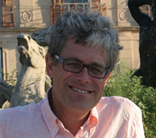 vincenzo.giannotti@univr.it

 piergiovanna.grossi@univr.it

 elisa.lerco@univr.it
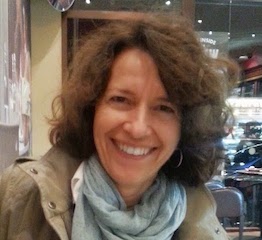

 francesco.lupi@univr.it
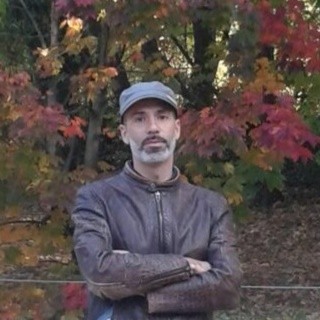
Mastrocinque Attilio
attilio.mastrocinque@univr.it
+39 045802 8386
marco.menato@univr.it




 alberto.scandola@univr.it
 cecilia.sideri@univr.it
 carlo.vannini@accademiabelleartiverona.it

Study Plan
The Study Plan includes all modules, teaching and learning activities that each student will need to undertake during their time at the University.
Please select your Study Plan based on your enrollment year.
1° Year
| Modules | Credits | TAF | SSD |
|---|
1 module to be chosen among the following2° Year activated in the A.Y. 2021/2022
| Modules | Credits | TAF | SSD |
|---|
1 module to be chosen among the following2 modules to be chosen among the following3 modules to be chosen among the following3° Year activated in the A.Y. 2022/2023
| Modules | Credits | TAF | SSD |
|---|
1 module to be chosen among the following1 module to be chosen among the following3 modules to be chosen among the following| Modules | Credits | TAF | SSD |
|---|
1 module to be chosen among the following| Modules | Credits | TAF | SSD |
|---|
1 module to be chosen among the following2 modules to be chosen among the following3 modules to be chosen among the following| Modules | Credits | TAF | SSD |
|---|
1 module to be chosen among the following1 module to be chosen among the following3 modules to be chosen among the following| Modules | Credits | TAF | SSD |
|---|
Legend | Type of training activity (TTA)
TAF (Type of Educational Activity) All courses and activities are classified into different types of educational activities, indicated by a letter.
Type D and Type F activities
| years | Modules | TAF | Teacher |
|---|---|---|---|
| 1° 2° 3° | Castelvecchio Lectures (City Art Museums) | F |
Alessandra Zamperini
(Coordinator)
|
| 1° 2° 3° | C.T.G. Lectures | F |
Alessandra Zamperini
(Coordinator)
|
| 1° 2° 3° | Giornata mondiale della poesia | F |
Arnaldo Soldani
(Coordinator)
|
| 1° 2° 3° | Giovedì' culturali dell'ISSR I ciclo | F |
Tiziana Franco
(Coordinator)
|
| 1° 2° 3° | The Unesco World Heritage Sites | F |
Silvana Bianchi
(Coordinator)
|
| 1° 2° 3° | Il testo en abyme: rappresentazioni della scrittura nell’Europa romantica - Convegno internazionale del CRIER - 5-6 novembre 2020 | F |
Corrado Viola
(Coordinator)
|
| 1° 2° 3° | Orientaday | F |
Tiziana Franco
(Coordinator)
|
| years | Modules | TAF | Teacher |
|---|---|---|---|
| 1° 2° 3° | Castelvecchio Lectures (City Art Museums) | F |
Alessandra Zamperini
(Coordinator)
|
| 1° 2° 3° | Convegno su carlo gozzi nel terzo centenario della nascita | F |
Nicola Pasqualicchio
(Coordinator)
|
| 1° 2° 3° | C.T.G. Lectures | F |
Alessandra Zamperini
(Coordinator)
|
| 1° 2° 3° | Giovedì' culturali dell'ISSR I ciclo | F |
Tiziana Franco
(Coordinator)
|
| 1° 2° 3° | How to write your dissertation | F |
Alessandro Arcangeli
(Coordinator)
|
| years | Modules | TAF | Teacher | |
|---|---|---|---|---|
| 1° | Introduction to the study of decorative arts | F |
Valerio Terraroli
(Coordinator)
|
|
| 1° 2° 3° | Attivita' FAI | F | Not yet assigned | |
| 1° 2° 3° | Practical exercises for the recognition of works of art | - |
Enrico Dal Pozzolo
(Coordinator)
|
|
Medieval History (i) (2021/2022)
Teaching code
4S01294
Teacher
Coordinator
Credits
6
Language
Italian
Scientific Disciplinary Sector (SSD)
M-STO/01 - MEDIEVAL HISTORY
Period
1 B dal Nov 15, 2021 al Jan 12, 2022.

Learning outcomes
The introductory course of Medieval History pursues the objective - shared with other teachings of the historical area - to enable the student to critically evaluate a historical testimony, placing it in the spatial and temporal coordinates of the European Middle Ages. The aim of the advanced course of Medieval History is to guide the student to the critical analysis of historical sources and to develop his / her capacity to analyze a historical problem in its complexity. Overall, the two courses - introductory and advanced - aim to provide students with the necessary skills to orient themselves independently in a problem of medieval history. In the introductory course, therefore, the teacher underlines some aspects that will be then deepened and recalled in the progress course. During the advanced course, a direct analysis of medieval sources and documents is foreseen (translated into Italian).
Program
After a short introduction, during which general concepts like Middle Ages, historical sources, and typologies of sources will be discussed, the course will synthetically analyse the following topics:
- Late Antiquity and the diffusion of Christianity (the growth of new religious communities that became a fundamental element in the Roman Empire and at the same time a tool of government)
- Western Europe in the early Middle Ages and his regna (the end of the Western Roman Empire, migrations, the birth of new political kingdoms based on ethnic distinctions)
- the Byzantine and Islamic Mediterranean (the progressive rupture of the unity of the Mediterranean See under the Arabic expansion and the role of Byzantium)
- Carolingian Europe (Lombard Italy, the Frankish expansion, Charlemagne and the roots of contemporary Europe)
- the seigniorial order (post-Carolingian Europe, the “feudal society”, the control over work and security in the cities and in the countryside)
- Church reforms (the ideological and political conflicts related to the growth of papal prestige and of the Communal autonomy)
- Empire and Papacy in the Late Middle Ages (conflicts related to different concepts and practice of power between political and spiritual authority)
- political institutions of the Late Middle Ages (political experimentations in order to give equilibrium to representation and participation within society)
- society and culture in the Middle Ages (the various aspects related to knowledge, its access and its administration)
- Religious experiences in the Middle Ages (principal religious movements that led to reforms and to very different experiences) - the economies of the Middle Ages (the organisation of work and commerce, with a long lasting perspective)
In the last section of the course the outstanding figure of Charlemagne will be shortly taken into exam, starting with the analysis of the book in the program. The Veronese context will also be analysed through the study of some original sources that will be introduced, commented and translated by the lecturer. These last lectures will also be followed by two didactical excursions to which students are asked to take part. The taking part to these activities will be positively evaluated during the final exam.
Students attending the lectures will receive at the beginning of the course a complete calendar of the didactical activities, with date and subjects of every single lecture. During the academic year the lecturer will receive students during the office hours, published on the web page and in the announcements place; students are recommended to fix via e-mail an appointment with the lecturer.
READINGS FOR ALL STUDENTS:
All students, attending the lectures or not, will be asked to study the introductory book: G. Sergi, L’idea di medioevo. Fra storia e senso comune, Rome, Donzelli, 2005.
All students must learn the Medieval History through a manual, to be chosen among the following titles: G. Vitolo, Medioevo. I caratteri originali di un’età di transizione, Milano, Sansoni, 2000; L. Provero, M. Vallerani, Storia medievale, Firenze, Lemonnier, 2016; Introduzione alla storia medievale, a cura di G. Albertoni, S.M. Collavini, T. Lazzari, Bologna, il Mulino, 2020 (second edition); A. Zorzi, Manuale di storia medievale, Novara, Utet, 2021 (second edition). Students with good school knowledge can choose the more complex: R. Bordone, G. Sergi, Dieci secoli di medioevo, Torino, Einaudi, 2009.
Students attending lectures, and the one inscribed to the course, will receive didactical material related to the lectures on the e-learning platform; these materials are considered part of the exam program.
Students not attending lectures can receive help by the lecturer in order to define the program and to study the manual. All students not attending lectures will be asked to choose an additional book among the following titles: P. Brown, Il riscatto dell’anima. Aldilà e ricchezza nel primo cristianesimo occidentale, Torino, Einaudi, 2015; T. Lazzari, Le donne nell’alto Medioevo, Milano-Torino, Bruno Mondadori, 2010; S. Gasparri, Voci dai secoli oscuri. Un percorso nelle fonti dell’alto medioevo, Roma, Carocci, 2017; M. Costambeys, M. Innes, S. Maclean, The Carolingian World, Cambridge, Cambridge University Press, 2011; A.A. Settia, Castelli medievali, Bologna, il Mulino, 2017; J.M.H. Smith, L’Europa dopo Roma. Una nuova storia culturale 500-1000, Bologna, il Mulino, 2008; C. Wickham, Sonnambuli verso un nuovo mondo. L’affermazione dei comuni italiani nel XII secolo, Roma, Viella, 2017; G. Milani, I comuni italiani. Secoli XII-XIV, Bari, Laterza, 2005; P. Grillo, Le guerre del Barbarossa. I comuni contro l’imperatore, Roma-Bari, Laterza, 2014; J.C. Maire Vigueur, E. Faini, Il sistema politico dei comuni italiani (secoli XII-XIV), Milano-Torino, B. Mondadori, 2010; A. Zorzi, Le signorie cittadine in Italia (secoli XIII-XV), Milano-Torino, B. Mondadori, 2010; P. Freedman, Il gusto delle spezie nel Medioevo, Bologna, Il Mulino, 2009; C. Wickham, L’Europa nel Medioevo, Roma, Carocci, 2020; N. D’Acunto, La lotta per le investiture. Una rivoluzione medievale (998-1122), Roma, Carocci, 2020; L. Provero, Contadini e potere nel Medioevo, Roma, Carocci, 2020; G. Melville, Le comunità religiose nel Medioevo. Storia e modelli di vita, a cura di N. D’Acunto, Brescia, Morcelliana, 2020; B. Zeller, C. West, F. Tinti, M. Stoffella, N. Schroeder, C. van Rhijn, S. Patzold, T. Kohl, W. Davies, M. Czock, Neighbours and Strangers. Local societies in early medieval Europe, Manchester, Manchester University Press, 2020. The choice of the additional text can be made autonomously; differently it can be discussed with the lecturer during office hours or per e-mail.
Didactical methods:
frontal lectures on main subjects will be followed by discussions with students; on some subjects texts and sources will be read and analysed, followed by a discussion on their content.
Bibliography
Examination Methods
EVALUATION METHODS AND CRITERIA
The target of the final oral exam is to verify the achievement level of the final aim of this course. The oral exam will be divided into two parts: in the first part students will be asked to answer to general questions on the main topics of the Middle Ages, on the topics discussed during lectures or on topics acquired through books that might substitute the missed lectures. If the first part will be successfully concluded, in the second part questions will be asked on the books chosen by students.
Further information
The attendance of lectures is welcomed. Students not attending lectures will be asked to write an e-mail or to meet the lecturer before exams in order to avoid misunderstandings and/or to choose the topic of their paper.
Career prospects
Module/Programme news
News for students
There you will find information, resources and services useful during your time at the University (Student’s exam record, your study plan on ESSE3, Distance Learning courses, university email account, office forms, administrative procedures, etc.). You can log into MyUnivr with your GIA login details: only in this way will you be able to receive notification of all the notices from your teachers and your secretariat via email and soon also via the Univr app.
Graduation
List of theses and work experience proposals
| theses proposals | Research area |
|---|---|
| Ambiti di tesi | Art & Architecture - Art & Architecture |
| Stage | Research area |
|---|---|
| Lavorare in archivio | Various topics |
