Studying at the University of Verona
Here you can find information on the organisational aspects of the Programme, lecture timetables, learning activities and useful contact details for your time at the University, from enrolment to graduation.
Academic calendar
The academic calendar shows the deadlines and scheduled events that are relevant to students, teaching and technical-administrative staff of the University. Public holidays and University closures are also indicated. The academic year normally begins on 1 October each year and ends on 30 September of the following year.
Course calendar
The Academic Calendar sets out the degree programme lecture and exam timetables, as well as the relevant university closure dates..
| Period | From | To |
|---|---|---|
| CuCi IA | Sep 21, 2020 | Oct 31, 2020 |
| CuCi IB | Nov 9, 2020 | Jan 9, 2021 |
| CuCi IIA | Feb 15, 2021 | Apr 1, 2021 |
| CuCi IIB | Apr 14, 2021 | May 29, 2021 |
| Session | From | To |
|---|---|---|
| sessione d'esame invernale CuCi | Jan 11, 2021 | Feb 13, 2021 |
| sessione d'esame estiva CuCi | Jun 7, 2021 | Jul 24, 2021 |
| sessione d'esame autunnale CuCi | Aug 23, 2021 | Sep 18, 2021 |
| Session | From | To |
|---|---|---|
| sessione di laurea invernale 19-20 | Apr 7, 2021 | Apr 13, 2021 |
| sessione di laurea estiva 20-21 | Jul 5, 2021 | Jul 10, 2021 |
| Sessione autunnale di laurea a.a. 2020/21 | Nov 8, 2021 | Nov 13, 2021 |
| Sessione straordinaria di laurea a.a. 2020/21 | Mar 28, 2022 | Apr 2, 2022 |
| Period | From | To |
|---|---|---|
| Festa di Ognissanti | Nov 1, 2020 | Nov 1, 2020 |
| Chiusura Ateneo ponte Immacolata | Dec 7, 2020 | Dec 7, 2020 |
| Festa dell'Immacolata | Dec 8, 2020 | Dec 8, 2020 |
| Vacanze di Natale | Dec 24, 2020 | Jan 6, 2021 |
| Vacanze di Pasqua | Apr 2, 2021 | Apr 6, 2021 |
| Festa della liberazione | Apr 25, 2021 | Apr 25, 2021 |
| Festa del lavoro | May 1, 2021 | May 1, 2021 |
| Festa del Santo Patrono | May 21, 2021 | May 21, 2021 |
| Sospensione delle lezioni | May 22, 2021 | May 22, 2021 |
| Festa della Repubblica | Jun 2, 2021 | Jun 2, 2021 |
| Vacanze estive | Aug 9, 2021 | Aug 15, 2021 |
Exam calendar
Exam dates and rounds are managed by the relevant Culture and Civilisation Teaching and Student Services Unit.
To view all the exam sessions available, please use the Exam dashboard on ESSE3.
If you forgot your login details or have problems logging in, please contact the relevant IT HelpDesk, or check the login details recovery web page.
Should you have any doubts or questions, please check the Enrollment FAQs
Academic staff



Bassetti Massimiliano
 massimiliano.bassetti@univr.it
 045802 8376

 giovanni.bernardini@univr.it
 riccardo.bertolazzi@univr.it

 luca.bochicchio@univr.it







 stefania.cretella@univr.it




 dario.donetti@univr.it






 vincenzo.giannotti@univr.it

 piergiovanna.grossi@univr.it



 francesco.lupi@univr.it


Mastrocinque Attilio
attilio.mastrocinque@univr.it
+39 045802 8386
marco.menato@univr.it

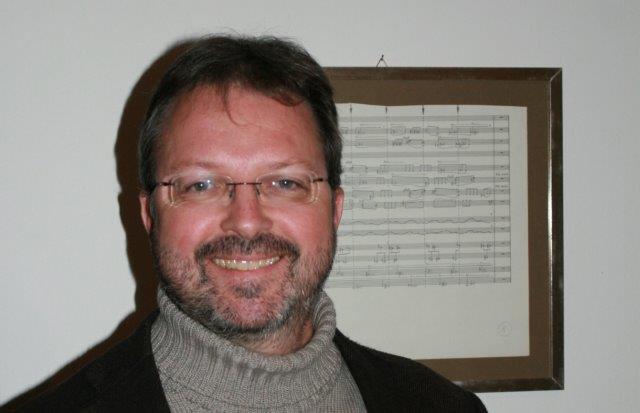






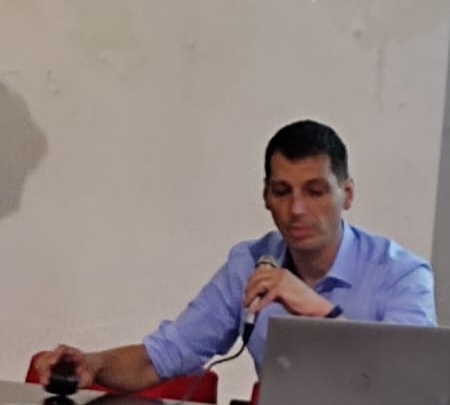
 alberto.scandola@univr.it


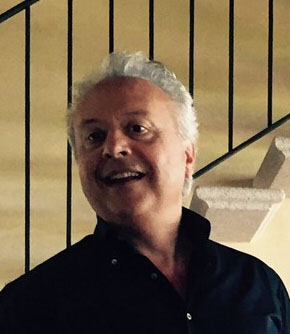
 carlo.vannini@accademiabelleartiverona.it



Study Plan
The Study Plan includes all modules, teaching and learning activities that each student will need to undertake during their time at the University.
Please select your Study Plan based on your enrollment year.
1° Year
| Modules | Credits | TAF | SSD |
|---|
1 module to be chosen among the following2° Year activated in the A.Y. 2021/2022
| Modules | Credits | TAF | SSD |
|---|
1 module to be chosen among the following2 modules to be chosen among the following3 modules to be chosen among the following3° Year activated in the A.Y. 2022/2023
| Modules | Credits | TAF | SSD |
|---|
1 module to be chosen among the following1 module to be chosen among the following3 modules to be chosen among the following| Modules | Credits | TAF | SSD |
|---|
1 module to be chosen among the following| Modules | Credits | TAF | SSD |
|---|
1 module to be chosen among the following2 modules to be chosen among the following3 modules to be chosen among the following| Modules | Credits | TAF | SSD |
|---|
1 module to be chosen among the following1 module to be chosen among the following3 modules to be chosen among the following| Modules | Credits | TAF | SSD |
|---|
Legend | Type of training activity (TTA)
TAF (Type of Educational Activity) All courses and activities are classified into different types of educational activities, indicated by a letter.
Type D and Type F activities
| years | Modules | TAF | Teacher |
|---|---|---|---|
| 1° 2° 3° | Castelvecchio Lectures (City Art Museums) | F |
Alessandra Zamperini
(Coordinator)
|
| 1° 2° 3° | C.T.G. Lectures | F |
Alessandra Zamperini
(Coordinator)
|
| 1° 2° 3° | Giornata mondiale della poesia | F |
Arnaldo Soldani
(Coordinator)
|
| 1° 2° 3° | Giovedì' culturali dell'ISSR I ciclo | F |
Tiziana Franco
(Coordinator)
|
| 1° 2° 3° | The Unesco World Heritage Sites | F |
Silvana Bianchi
(Coordinator)
|
| 1° 2° 3° | Il testo en abyme: rappresentazioni della scrittura nell’Europa romantica - Convegno internazionale del CRIER - 5-6 novembre 2020 | F |
Corrado Viola
(Coordinator)
|
| 1° 2° 3° | Orientaday | F |
Tiziana Franco
(Coordinator)
|
| years | Modules | TAF | Teacher |
|---|---|---|---|
| 1° 2° 3° | Castelvecchio Lectures (City Art Museums) | F |
Alessandra Zamperini
(Coordinator)
|
| 1° 2° 3° | Convegno su carlo gozzi nel terzo centenario della nascita | F |
Nicola Pasqualicchio
(Coordinator)
|
| 1° 2° 3° | C.T.G. Lectures | F |
Alessandra Zamperini
(Coordinator)
|
| 1° 2° 3° | Giovedì' culturali dell'ISSR I ciclo | F |
Tiziana Franco
(Coordinator)
|
| 1° 2° 3° | How to write your dissertation | F |
Alessandro Arcangeli
(Coordinator)
|
| years | Modules | TAF | Teacher | |
|---|---|---|---|---|
| 1° | Introduction to the study of decorative arts | F |
Valerio Terraroli
(Coordinator)
|
|
| 1° 2° 3° | Attivita' FAI | F | Not yet assigned | |
| 1° 2° 3° | Practical exercises for the recognition of works of art | - |
Enrico Dal Pozzolo
(Coordinator)
|
|
History of Medieval Architecture (i) (2022/2023)
Teaching code
4S01975
Teacher
Coordinator
Credits
6
Language
Italian
Scientific Disciplinary Sector (SSD)
L-ART/01 - HISTORY OF MEDIEVAL ART
Period
1 A dal Sep 26, 2022 al Nov 5, 2022.

Learning objectives
The course of History of medieval architecture (i) aims to: train the student on the evolutionary lines related to western architecture of the 4th-12th century; analyze the internal dynamics of the medieval building, from the conception to the conclusion; consider the main figures related to the architectural commission, such as the sponsor, the architect, the workers.
The learning outcomes are to guarantee the acquisition of correct reading and evaluation skills of medieval architectural forms through a specific and precise vocabulary, as well as to facilitate the knowledge of the icnographic and decorative models of the Latin West. At the end of the course, the student will be able to: understand and analyze a medieval monument; recognize the cultural environment in which a specific monument was built; apply the models of reading and interpretation of architectural forms; be able to communicate the history of the monument with an adequate vocabulary.
Prerequisites and basic notions
It is recommended to have already done the History of Medieval Art exam, or at least to have attended the course.
At the beginning of the course, however, some basic concepts concerning the architectural solutions adopted in the Middle Ages will be explored.
Program
>Topics
The course is divided into several parts, aimed to examine specific topics related to the comprehension of building phenomena, especially in the Western world. The topics covered will be:
- periodization, that is, the chronology of the main moments of evolution of architectural languages;
- medieval buildings according to their function;
- the plans, elevations and parts of medieval buildings;
- the function of the church areas;
- the medieval building site and its particularities (the architect, the workers, the materials);
- evolutionary aspects, from the early Christian beginnings to the early Middle Ages;
>Bibliography
Detailed bibliographic information will be provided before the course begin.
Bibliographic material will be available at:
30 e lode
via Timavo 16
Verona
(045-8007862; 30eoltre@gmail.com).
Bibliography
Didactic methods
The course mainly consists in lectures in the classroom.
The course is divided into three main sections: in the introductory part, it explains technical contents that are indispensable for the interpretation of the medieval architecture examined. The second part deals with the diachronic evolution of medieval architecture. Seminar study trips to architecturally significant medieval monuments are then planned. During these visits, students are asked to actively participate in the analysis of the monument.
Learning assessment procedures
The final evaluation takes the form of an oral examination.
No distinction is made between attending and non-attending students, who must in any case integrate the study material with some readings.
The duration of the examination is directly proportional to the student's performance and in any case consists of a minimum of 10 minutes and a maximum of 40 minutes of discussion with the teacher.
Evaluation criteria
The examination will focus on the topics discussed in lessons and the notions acquired through the course-specific bibliography.
In addition, it also evaluates the ability to organize knowledge, to identify the constituent elements of the case studies, to draw connections with the history of the period in which a specific architecture was built, and the ability to use technical vocabulary correctly.
The evaluation will be expressed in thirtieths.
Criteria for the composition of the final grade
The evaluation will be expressed in thirtieths.
Exam language
Italiano
Career prospects
Module/Programme news
News for students
There you will find information, resources and services useful during your time at the University (Student’s exam record, your study plan on ESSE3, Distance Learning courses, university email account, office forms, administrative procedures, etc.). You can log into MyUnivr with your GIA login details: only in this way will you be able to receive notification of all the notices from your teachers and your secretariat via email and also via the Univr app.
Graduation
List of thesis proposals
| theses proposals | Research area |
|---|---|
| Ambiti di tesi | Art & Architecture - Art & Architecture |
