Studying at the University of Verona
Here you can find information on the organisational aspects of the Programme, lecture timetables, learning activities and useful contact details for your time at the University, from enrolment to graduation.
Academic calendar
The academic calendar shows the deadlines and scheduled events that are relevant to students, teaching and technical-administrative staff of the University. Public holidays and University closures are also indicated. The academic year normally begins on 1 October each year and ends on 30 September of the following year.
Course calendar
The Academic Calendar sets out the degree programme lecture and exam timetables, as well as the relevant university closure dates..
| Period | From | To |
|---|---|---|
| 1 A | Sep 26, 2022 | Nov 5, 2022 |
| 1 B | Nov 14, 2022 | Dec 22, 2022 |
| 2 A | Feb 13, 2023 | Apr 6, 2023 |
| 2 B | Apr 12, 2023 | May 27, 2023 |
| Session | From | To |
|---|---|---|
| Sessione invernale | Jan 9, 2023 | Feb 11, 2023 |
| Sessione estiva | Jun 5, 2023 | Jul 29, 2023 |
| Sessione autunnale | Aug 28, 2023 | Sep 23, 2023 |
| Session | From | To |
|---|---|---|
| Sessione straordinaria (a.a. 2021/22) | Mar 31, 2023 | Apr 6, 2023 |
| Sessione estiva | Jul 10, 2023 | Jul 15, 2023 |
| Sessione autunnale | Nov 6, 2023 | Nov 11, 2023 |
| Sessione straordinaria | Apr 2, 2024 | Apr 8, 2024 |
| Period | From | To |
|---|---|---|
| Chiusura edifici | Oct 31, 2022 | Oct 31, 2022 |
| Festa di Ognissanti | Nov 1, 2022 | Nov 1, 2022 |
| Festa dell'Immacolata | Dec 8, 2022 | Dec 8, 2022 |
| Chiusura edifici | Dec 9, 2022 | Dec 10, 2022 |
| Vacanze di Natale | Dec 23, 2022 | Jan 7, 2023 |
| Vacanze di Pasqua | Apr 7, 2023 | Apr 10, 2023 |
| Festa della Liberazione | Apr 25, 2023 | Apr 25, 2023 |
| Festa del lavoro | May 1, 2023 | May 1, 2023 |
| Festa del Santo Patrono | May 21, 2023 | May 21, 2023 |
| Festa della Repubblica | Jun 2, 2023 | Jun 2, 2023 |
| Chiusura estiva | Aug 13, 2023 | Aug 19, 2023 |
Exam calendar
Exam dates and rounds are managed by the relevant Culture and Civilisation Teaching and Student Services Unit.
To view all the exam sessions available, please use the Exam dashboard on ESSE3.
If you forgot your login details or have problems logging in, please contact the relevant IT HelpDesk, or check the login details recovery web page.
Should you have any doubts or questions, please check the Enrollment FAQs
Academic staff
 +39 045802 8409
 giovanni.bernardini@univr.it

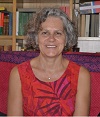




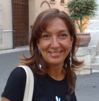
 giacomo.buoncompagni@univr.it

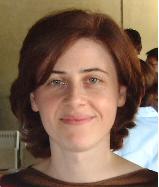
 francesca.cecconi@univr.it



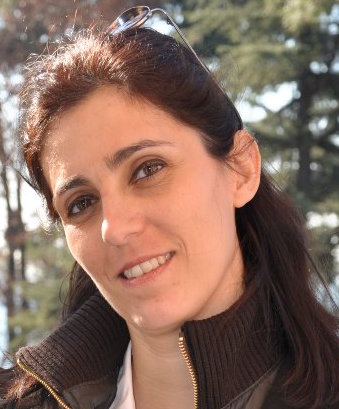



 michele.pasqua@univr.it

 giovanna.rech@univr.it


 alberto.scandola@univr.it

Study Plan
The Study Plan includes all modules, teaching and learning activities that each student will need to undertake during their time at the University.
Please select your Study Plan based on your enrollment year.
1° Year
| Modules | Credits | TAF | SSD |
|---|
1 module between the following1 module among the following2° Year activated in the A.Y. 2023/2024
| Modules | Credits | TAF | SSD |
|---|
1 module among the following1 module among the following| Modules | Credits | TAF | SSD |
|---|
1 module between the following1 module among the following| Modules | Credits | TAF | SSD |
|---|
1 module among the following1 module among the following| Modules | Credits | TAF | SSD |
|---|
Legend | Type of training activity (TTA)
TAF (Type of Educational Activity) All courses and activities are classified into different types of educational activities, indicated by a letter.
Type D and Type F activities
COMPETENZE TRASVERSALI
| years | Modules | TAF | Teacher |
|---|---|---|---|
| 1° 2° | FAI Activities | F |
Edoardo Bianchi
(Coordinator)
|
| 1° 2° | Series of conferences Don Nicola Mazza University College | F |
Alessandra Zangrandi
(Coordinator)
|
| 1° 2° | Business English for everybody | F |
Serena Dal Maso
(Coordinator)
|
| 1° 2° | Russian for everybody | F |
Serena Dal Maso
(Coordinator)
|
| 1° 2° | Worlds of Fashion: Themes and Actors | F |
Alessandra Zamperini
(Coordinator)
|
| years | Modules | TAF | Teacher |
|---|---|---|---|
| 1° 2° | FAI Activities | F |
Edoardo Bianchi
(Coordinator)
|
| 1° 2° | Series of conferences Don Nicola Mazza University College | F |
Alessandra Zangrandi
(Coordinator)
|
| 1° 2° | Conference PRIN "Ippolito Nievo tra i Mille" | F |
Alessandra Zangrandi
(Coordinator)
|
| 1° 2° | Business English for everybody | F |
Serena Dal Maso
(Coordinator)
|
| 1° 2° | Russian for everybody | F |
Serena Dal Maso
(Coordinator)
|
| 1° 2° | From Romeo and Juliet to Juliet and Romeo: between Law and Passion”: Colloquium on Riccardo Zandonai | F |
Silvia Bigliazzi
(Coordinator)
|
| 1° 2° | Worlds of Fashion: Themes and Actors | F |
Alessandra Zamperini
(Coordinator)
|
| 1° 2° | Squadristi in celluloid. The march on Rome between documentary and fiction | F |
Denis Lotti
(Coordinator)
|
| 1° 2° | Università e DSA - Metodi e strategie per affrontare lo studio e il percorso universitario | F |
Simona Brunetti
(Coordinator)
|
| years | Modules | TAF | Teacher |
|---|---|---|---|
| 1° 2° | Gnoseology and Metaphysics Workshop | F |
Davide Poggi
(Coordinator)
|
| years | Modules | TAF | Teacher |
|---|---|---|---|
| 1° 2° | FAI Activities | F |
Edoardo Bianchi
(Coordinator)
|
| 1° 2° | Fine della "globalizzazione"? Dialoghi sul mondo che cambia | F |
Giovanni Bernardini
(Coordinator)
|
| 1° 2° | Introduction to robotics for humanities students | F |
Paolo Fiorini
(Coordinator)
|
| 1° 2° | Workshop on digital publishing | F |
Andrea Bongiorni
(Coordinator)
|
| 1° 2° | Laboratorio di scrittura critica per lo spettacolo | F |
Simona Brunetti
(Coordinator)
|
| 1° 2° | Opera Workshop | F |
Nicola Pasqualicchio
(Coordinator)
|
| 1° 2° | "Shake Shakespeare Up!" workshop | F |
Silvia Bigliazzi
(Coordinator)
|
| 1° 2° | Theatre with wheels | F | Not yet assigned |
| years | Modules | TAF | Teacher |
|---|---|---|---|
| 1° 2° | Gnoseology and Metaphysics Workshop | F |
Davide Poggi
(Coordinator)
|
| years | Modules | TAF | Teacher |
|---|---|---|---|
| 1° 2° | Future's Festival | F |
Alessandra Zangrandi
(Coordinator)
|
| 1° 2° | Laboratory of radio languages | F |
Simona Brunetti
(Coordinator)
|
English for journalism and publishing (2022/2023)
Teaching code
4S010491
Teacher
Coordinator
Credits
6
Language
Italian
Scientific Disciplinary Sector (SSD)
L-LIN/12 - LANGUAGE AND TRANSLATION - ENGLISH
Period
2 A, 2 B

Learning objectives
The course aims to provide students with knowledge and skills in English for journalistic purposes. At the end of the course, students will be able to produce journalistic pieces online and offline, with special reference to news reports, features, commentaries, and reviews, as well as texts aimed at radio journalism. TV journalism and multimodal journalism will also be dealt with. At the end of the course students will have acquired the necessary skills to keep on updating and improving their competence in the field of journalism.
Prerequisites and basic notions
C1 proficiency level in English
Program
- History of journalism: the basics
- From monomodal to multimodal/multisemiotic journalism
- News reporting
- Features
- Commentaries and editorials
- Subediting
- Broadcast journalism
- Interviewing
- Freelancing
- Loaded language in journalism
- Journalistic jargon
Since this course requires active participation, non-attenders are strongly advised to choose a different course.
Bibliography
Didactic methods
Lessons in class and practical sessions
Learning assessment procedures
Oral exam.
Students will be questioned on the texts analysed during the lessons and on the journalistic pieces they have written during the course. The questions will focus on the following topics:
- History of journalism: the basics
- From monomodal to multimodal/multisemiotic journalism
- News reporting
- Features
- Commentaries and editorials
- Subediting
- Broadcast journalism
- Interviewing
- Freelancing
- Loaded language in journalism
- Journalistic jargon
Evaluation criteria
The evaluation will focus on:
A) the journalistic texts written by the students during the lessons (structure and linguistic correctness)
B) mastery of the subjects, clarity and effectiveness of presentation.
Criteria for the composition of the final grade
Half of the final mark will draw on the texts written by the students during the course (news report, feature, commentary); the second half will draw on the oral exam.
Exam language
inglese
Career prospects
Module/Programme news
News for students
There you will find information, resources and services useful during your time at the University (Student’s exam record, your study plan on ESSE3, Distance Learning courses, university email account, office forms, administrative procedures, etc.). You can log into MyUnivr with your GIA login details: only in this way will you be able to receive notification of all the notices from your teachers and your secretariat via email and also via the Univr app.
Graduation
List of thesis proposals
| theses proposals | Research area |
|---|---|
| Laureandi Editoria e Giornalismo: vademecum | Various topics |
| TESI SU COMUNICAZIONE DELL’AGROALIMENTARE | Various topics |
Gestione carriere
Linguistic training CLA
Student mentoring
Student login and resources
Modalità e sedi di frequenza
La frequenza non è obbligatoria.
Maggiori dettagli in merito all'obbligo di frequenza vengono riportati nel Regolamento del corso di studio disponibile alla voce Regolamenti nel menu Il Corso. Anche se il regolamento non prevede un obbligo specifico, verifica le indicazioni previste dal singolo docente per ciascun insegnamento o per eventuali laboratori e/o tirocinio.
È consentita l'iscrizione a tempo parziale. Per saperne di più consulta la pagina Possibilità di iscrizione Part time.
Le sedi di svolgimento delle lezioni e degli esami sono le seguenti:
- Polo Zanotto (vicino si trova il Palazzo di Lettere)
- Palazzo ex Economia
- Polo Santa Marta
- Istituto ex Orsoline
- Palazzo Zorzi (Lungadige Porta Vittoria, 17 - 37129 Verona)
