Studying at the University of Verona
Here you can find information on the organisational aspects of the Programme, lecture timetables, learning activities and useful contact details for your time at the University, from enrolment to graduation.
Academic calendar
The academic calendar shows the deadlines and scheduled events that are relevant to students, teaching and technical-administrative staff of the University. Public holidays and University closures are also indicated. The academic year normally begins on 1 October each year and ends on 30 September of the following year.
Course calendar
The Academic Calendar sets out the degree programme lecture and exam timetables, as well as the relevant university closure dates..
| Period | From | To |
|---|---|---|
| 1° Periodo di lezioni | Oct 1, 2014 | Dec 16, 2014 |
| Periodo riservato ad eventuali recuperi di lezioni - dicembre 2014 | Dec 17, 2014 | Dec 18, 2014 |
| 2° Periodo di lezioni - febbraio/marzo 2015 | Feb 10, 2015 | Mar 30, 2015 |
| 2° Periodo di lezioni - aprile/maggio 2015 | Apr 8, 2015 | May 5, 2015 |
| Periodo riservato ad eventuali recuperi di lezioni - maggio 2015 | May 6, 2015 | May 8, 2015 |
| Session | From | To |
|---|---|---|
| Sessione straordinaria 14/15 - studenti f.c. - dicembre 2014 | Dec 19, 2014 | Dec 23, 2014 |
| 1° appello - Sessione invernale 14/15 | Jan 8, 2015 | Jan 14, 2015 |
| 2° appello - Sessione invernale 14/15 | Feb 2, 2015 | Feb 7, 2015 |
| Sessione straordinaria 14/15 - studenti f.c. - marzo/aprile 2015 | Mar 31, 2015 | Apr 2, 2015 |
| 1° appello - Sessione estiva 14/15 | May 11, 2015 | May 16, 2015 |
| 2° appello - Sessione estiva 14/15 | Jun 8, 2015 | Jun 13, 2015 |
| 3° appello - Sessione estiva 14/15 | Jul 6, 2015 | Jul 11, 2015 |
| 1° appello - Sessione autunnale 14/15 | Aug 31, 2015 | Sep 5, 2015 |
| 2° appello - Sessione autunnale 14/15 | Sep 24, 2015 | Sep 30, 2015 |
| Session | From | To |
|---|---|---|
| Termine presentazione tesi di laurea - ottobre 2014 | Sep 25, 2014 | Sep 25, 2014 |
| Sessione autunnale 14/15 | Oct 20, 2014 | Oct 21, 2014 |
| Termine presentazione tesi di laurea - gennaio 2015 | Jan 12, 2015 | Jan 12, 2015 |
| Sessione invernale 14/15 | Feb 9, 2015 | Feb 9, 2015 |
| Termine presentazione tesi di laurea - marzo 2015 | Feb 13, 2015 | Feb 13, 2015 |
| Sessione invernale 14/15 - marzo 2015 | Mar 17, 2015 | Mar 19, 2015 |
| Termine presentazione tesi di laurea - luglio 2015 | Jun 8, 2015 | Jun 8, 2015 |
| Sessione estiva 14/15 | Jul 2, 2015 | Jul 3, 2015 |
| Period | From | To |
|---|---|---|
| Festa di Ognissanti | Nov 1, 2014 | Nov 1, 2014 |
| Festa dell'Immacolata Concezione | Dec 8, 2014 | Dec 8, 2014 |
| Vacanze di Natale | Dec 24, 2014 | Jan 6, 2015 |
| Vacanze di Pasqua | Apr 3, 2015 | Apr 7, 2015 |
| Festa della Liberazione | Apr 25, 2015 | Apr 25, 2015 |
| Festa dei Lavoratori | May 1, 2015 | May 1, 2015 |
| Festa del S. Patrono S. Zeno | May 21, 2015 | May 21, 2015 |
| Festa della Repubblica | Jun 2, 2015 | Jun 2, 2015 |
Exam calendar
Exam dates and rounds are managed by the relevant Law Teaching and Student Services Unit.
To view all the exam sessions available, please use the Exam dashboard on ESSE3.
If you forgot your login details or have problems logging in, please contact the relevant IT HelpDesk, or check the login details recovery web page.
Should you have any doubts or questions, please check the Enrollment FAQs
Academic staff
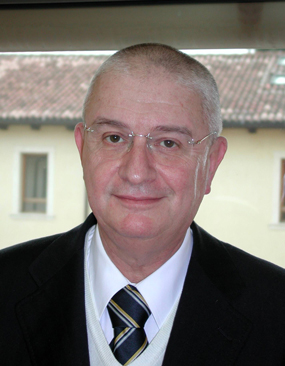
 giovanni.alberti@univr.it
 mariacaterina.baruffi@univr.it









Dalla Massara Tommaso
tommaso.dallamassara@univr.it
 +39 045 8028810




 roberto.flor@univr.it




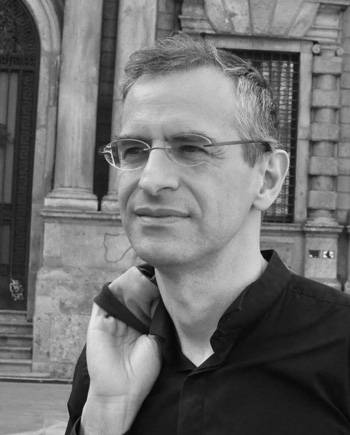 rita.maggi@univr.it

Manzoni Elena
elena.manzoni@univr.it
8783
 martina.menon@univr.it










Patrono Paolo
paolo.patrono@univr.it
+39 045 8028813



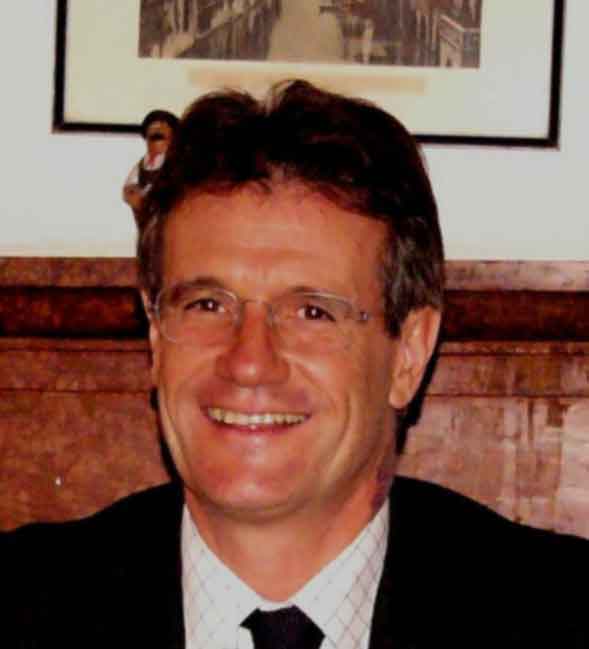



 lorenzo.salvatore@univr.it
marcello.stella@univr.it
lorenzo.salvatore@univr.it
marcello.stella@univr.it

Strano Silvana
silvana.stranoligato@univr.it
+39 045 8028856



 claudio.tomazzoli@univr.it

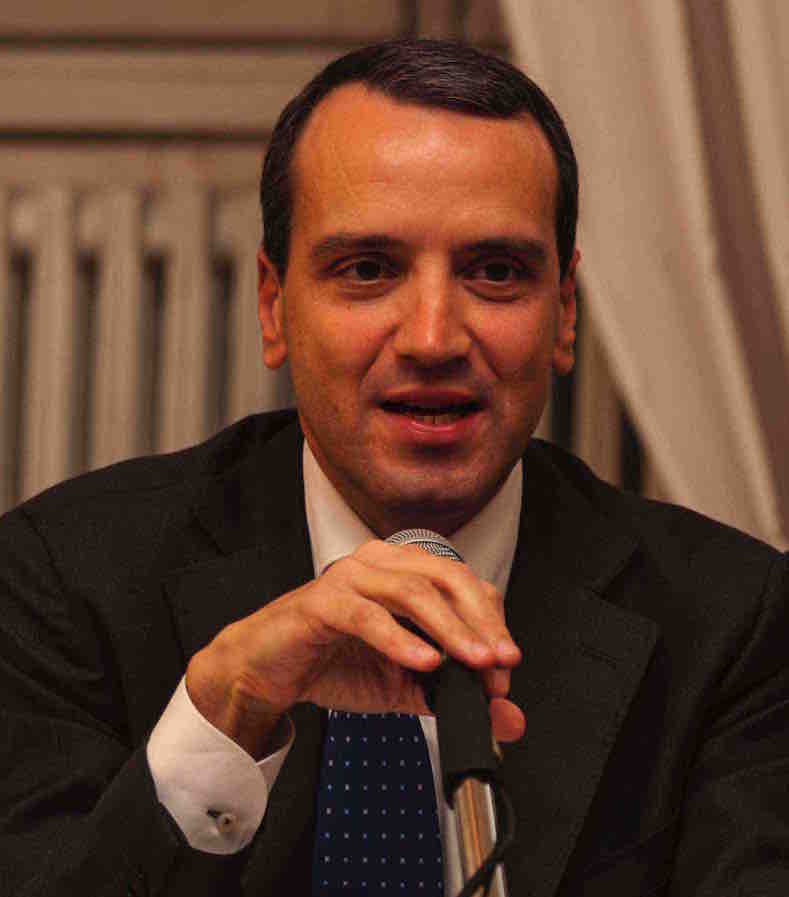

Study Plan
The Study Plan includes all modules, teaching and learning activities that each student will need to undertake during their time at the University.
Please select your Study Plan based on your enrollment year.
1° Year
| Modules | Credits | TAF | SSD |
|---|
History of Medieval and Modern Law
Principles of economics
Roman Law Institutions
2° Year activated in the A.Y. 2015/2016
| Modules | Credits | TAF | SSD |
|---|
3° Year activated in the A.Y. 2016/2017
| Modules | Credits | TAF | SSD |
|---|
Legal terminology in a foreign language4° Year activated in the A.Y. 2017/2018
| Modules | Credits | TAF | SSD |
|---|
5° Year activated in the A.Y. 2018/2019
| Modules | Credits | TAF | SSD |
|---|
5 disciplines at choice| Modules | Credits | TAF | SSD |
|---|
History of Medieval and Modern Law
Principles of economics
Roman Law Institutions
| Modules | Credits | TAF | SSD |
|---|
| Modules | Credits | TAF | SSD |
|---|
Legal terminology in a foreign language| Modules | Credits | TAF | SSD |
|---|
| Modules | Credits | TAF | SSD |
|---|
5 disciplines at choiceLegend | Type of training activity (TTA)
TAF (Type of Educational Activity) All courses and activities are classified into different types of educational activities, indicated by a letter.
Type D and Type F activities
Modules not yet included
Economic Law (2018/2019)
Teaching code
4S00339
Teacher
Coordinator
Credits
6
Language
Italian
Scientific Disciplinary Sector (SSD)
IUS/05 - ECONOMICS LAW
Period
2° periodo di lezioni - aprile/maggio 2019, 2° periodo di lezioni - febbraio/aprile 2019

Learning outcomes
The expected learning outcomes of the individual course are, in terms of KNOWLEDGE, the basic notions and tools for analyzing and understanding the relationship between law and the economy, and the awareness of issues such as the why and how production and exchange of goods and services are regulated on a legal level. In terms of SKILLS, on the other hand, the course has the objective of transmitting:
- the ability to apply legal reasoning to the rules and institutions governing the functioning of the economy. The aim is to develop the ability to understand and analyze the legal sources, internal and supranational, regulating economic activities, namely the production and exchange of goods, in relation to the protection of the different interests at stake, public and private, concerning in particular citizens, users and consumers;
- the ability to frame and set legal issues with reference to both the institutional aspects of the law and the substantive law rules, with an understanding of the main logic underlying the relationship between law and the economy and with the acquisition an appropriate and sector-specific legal terms,
- the ability to formulate independent judgments on concrete cases, using a method that allows the continuous learning and updating of knowledge.
Program
Part A
General Topics
1) The functions of the law in the economy: allowing, promoting, correcting and going beyond the market.
2) Multi-level regulation of the economy (international, EU and national law)
3) The law and the globalisation of the economy
Part B
Specific Topics
1) Economic systems: definition and typologies
2) The function of law and of public powers with regards to market economies.
3) The failures of public intervention in the economy
4) Economic functions of independent Authorities
5) The EU internal market and the fundamental freedoms: negative and positive integration
-Case-study: the legal and political implications of the implementation of the 2006 Service Directive (‘Bolkenstein’).
6) Law and technological innovation: the relationship between public authorities and innovation, especially in respect of the digital economy and the use of digital platforms to provide goods and services (uber, Airbnb, Amazon, etc.)
| Author | Title | Publishing house | Year | ISBN | Notes |
|---|---|---|---|---|---|
| M. Pellegrini (a cura di) | Corso di diritto pubblico dell’economia | Cedam | 2016 | Sono scluse le seguenti parti: il Capitolo Terzo della Sezione Prima, l’intera Sezione Terza e l’intera Sezione Quarta. | |
| Maria Lillà Montagnani | Internet, contenuti illeciti e responsabilità degli intermediari | egea | 2018 | 978-88-238-4598-5 |
Examination Methods
The exam aims at verifying if and to what extent the aforementioned objectives have been achieved.
Students who have attended classes have the option, only once at the end of the course, to take the final exam in writing. Excluding this possibility, the exam will only be oral. The exam (written and oral) consists of three/four questions. Students will be graded on the basis of three criteria:
1) in giving the answers to the above-mentioned questions, his/her ability to demonstrate: a) the knowledge of the relevant legislation and jurisprudence and of the relative doctrinal analysis; and b) the comprehension of the fundamental notions and general principles and above all of the underlying 'logic' of the subject learned during the lessons and by the study of the texts (eg, what objectives are pursued by the legislator, what public interests come into play, what are the basic general legal principles, what is the role of the various institutional actors, what are the macro-changes that took place in the legal framework).
2) in giving the answers to the above-mentioned questions, his/her ability to use the correct technical legal terms in his/her answers.
3) student’s class participation.
For students who have not attended classes, the exam is oral. They will be asked three/four questions and will be graded on the basis on two criteria:
1) ability to demonstrate: a) the knowledge of the relevant legislation and jurisprudence and of the relative doctrinal analysis; and b) the comprehension of the fundamental notions and general principles and above all of the underlying 'logic' of the subject learned by the study of the texts (eg, what objectives are pursued by the legislator, what public interests come into play, what are the basic general legal principles, what is the role of the various institutional actors, what are the macro-changes that took place in the legal framework).
2) the ability to use the correct technical legal terms in his/her answers.
Teaching materials e documents
-
 programma e testi consigliati (engl.)
(octet-stream, it, 15 KB, 02/10/18)
programma e testi consigliati (engl.)
(octet-stream, it, 15 KB, 02/10/18)
-
programma e testi consigliati (ita)
(octet-stream, it, 19 KB, 02/10/18)
Career prospects
Module/Programme news
News for students
There you will find information, resources and services useful during your time at the University (Student’s exam record, your study plan on ESSE3, Distance Learning courses, university email account, office forms, administrative procedures, etc.). You can log into MyUnivr with your GIA login details: only in this way will you be able to receive notification of all the notices from your teachers and your secretariat via email and also via the Univr app.
Language skills
Graduation
Internships
Internships are aimed at enabling students to gain direct knowledge of the world of work and to acquire specific professional skills.
Internships are carried out under the responsibility of an individual lecturer, and can be carried out in professional firms, public administration bodies and companies recognised by the University of Verona.
Any CFU credits gained by doing internships will be recognised and recorded by the University in accordance with the relevant University regulations in force (Regolamento d’Ateneo per il riconoscimento dei crediti maturati negli stage universitari).
For further information on internships, please go to: https://www.univr.it/it/i-nostri-servizi/stage-e-tirocini.
