Studying at the University of Verona
Here you can find information on the organisational aspects of the Programme, lecture timetables, learning activities and useful contact details for your time at the University, from enrolment to graduation.
Academic calendar
The academic calendar shows the deadlines and scheduled events that are relevant to students, teaching and technical-administrative staff of the University. Public holidays and University closures are also indicated. The academic year normally begins on 1 October each year and ends on 30 September of the following year.
Course calendar
The Academic Calendar sets out the degree programme lecture and exam timetables, as well as the relevant university closure dates..
| Period | From | To |
|---|---|---|
| I semestre | Oct 1, 2015 | Jan 9, 2016 |
| II semestre | Feb 22, 2016 | May 31, 2016 |
| Session | From | To |
|---|---|---|
| Appelli d'esame LINGUE - sessione invernale | Jan 11, 2016 | Feb 20, 2016 |
| Appelli d'esame LINGUE - sessione estiva | Jun 3, 2016 | Jul 29, 2016 |
| Appelli d'esame LINGUE - sessione autunnale | Aug 29, 2016 | Sep 29, 2016 |
| Session | From | To |
|---|---|---|
| TESI DI LAUREA - LINGUE | Nov 18, 2015 | Nov 20, 2015 |
| TESI DI LAUREA - LINGUE | Mar 30, 2016 | Apr 1, 2016 |
| TESI DI LAUREA - LINGUE E LL.SS | Jul 6, 2016 | Jul 8, 2016 |
| TESI DI LAUREA - LINGUE E LL.SS | Nov 23, 2016 | Nov 25, 2016 |
| Period | From | To |
|---|---|---|
| FESTA DELL'IMMACOLATA | Dec 8, 2015 | Dec 8, 2015 |
| VACANZE DI NATALE | Dec 23, 2015 | Jan 6, 2016 |
| Vancanze di Pasqua | Mar 24, 2016 | Mar 29, 2016 |
| FESTA DELLA LIBERAZIONE | Apr 25, 2016 | Apr 25, 2016 |
| FESTA DEI LAVORATORI | May 1, 2016 | May 1, 2016 |
| FESTA DEL SANTO PATRONO SAN ZENO | May 21, 2016 | May 21, 2016 |
| FESTA DELLA REPUBBLICA | Jun 2, 2016 | Jun 2, 2016 |
| Vacanze estive | Aug 8, 2016 | Aug 15, 2016 |
Exam calendar
Exam dates and rounds are managed by the relevant Foreign Languages and Literatures Teaching and Student Services Unit.
To view all the exam sessions available, please use the Exam dashboard on ESSE3.
If you forgot your login details or have problems logging in, please contact the relevant IT HelpDesk, or check the login details recovery web page.
Should you have any doubts or questions, please check the Enrollment FAQs
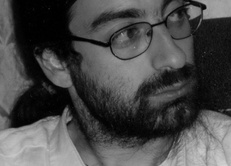
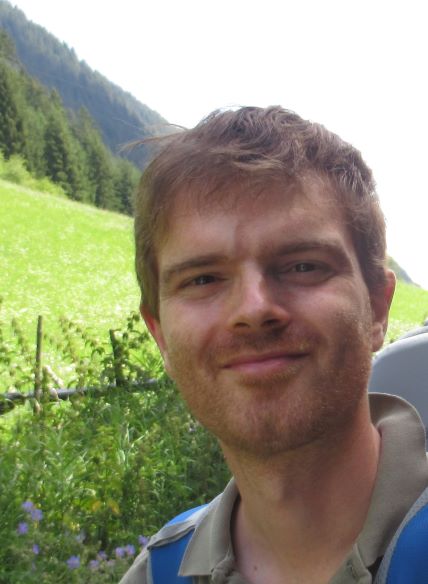
Academic staff
 angela.alaimo@univr.it


 alessandro.bigardi@univr.it







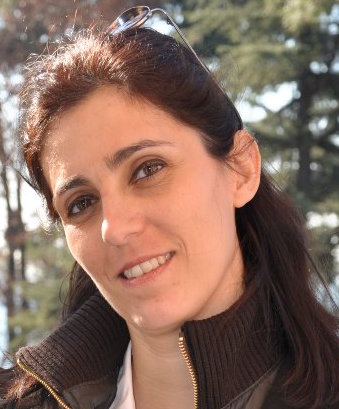






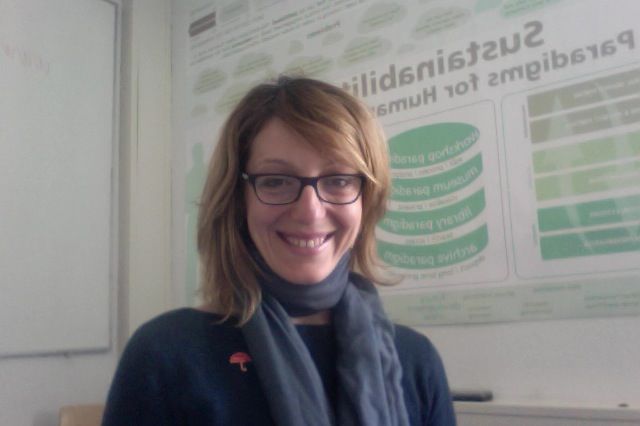 tiziana.mancinelli@univr.it


 sara.paolini@univr.it

 fabioantonio.scrignoli@univr.it

Zaccarello Michelangelo
michelangelo.zaccarello@univr.it
 +39 045 802 8330

Study Plan
The Study Plan includes all modules, teaching and learning activities that each student will need to undertake during their time at the University.
Please select your Study Plan based on your enrollment year.
1° Year
| Modules | Credits | TAF | SSD |
|---|
1st foreign language2nd foreign language1st foreign literature2nd foreign literature2° Year activated in the A.Y. 2016/2017
| Modules | Credits | TAF | SSD |
|---|
2nd foreign literature1st foreign literature1st foreign language2nd foreign languageOne course to be chosen among the following3° Year activated in the A.Y. 2017/2018
| Modules | Credits | TAF | SSD |
|---|
2nd foreign language1st foreign languagePhilology of the first or second language| Modules | Credits | TAF | SSD |
|---|
1st foreign language2nd foreign language1st foreign literature2nd foreign literature| Modules | Credits | TAF | SSD |
|---|
2nd foreign literature1st foreign literature1st foreign language2nd foreign languageOne course to be chosen among the following| Modules | Credits | TAF | SSD |
|---|
2nd foreign language1st foreign languagePhilology of the first or second language| Modules | Credits | TAF | SSD |
|---|
Legend | Type of training activity (TTA)
TAF (Type of Educational Activity) All courses and activities are classified into different types of educational activities, indicated by a letter.
History of Books and Publishing (2016/2017)

The teaching is organized as follows:
Learning outcomes
The course will analyze the book as a product of conveying ideas from the second half of the 14th century up to the present days. Techniques for building books have continually evolved, crossing with political, economic, and ultimately cultural interests. The book will be presented as an artefact, but also as a social object that over the span of decades has undergone into format and content transformations, shaping new ideas and influencing the intellectual renewal of Europe for which the publishing world still plays an essential role.
Program
During the course will be analyzed media, formats, writing tools, book types and different editions. The book will be considered not only as a material object, but also as a content vehicle. During the course, special attention will be paid to the publishing world and its roles in the cultural landscape, taking into account the major Italian publishers and the choices made as an industry.
Bibliography
| Author | Title | Publishing house | Year | ISBN | Notes |
|---|---|---|---|---|---|
| Andrew Piper | Il libro era lì. La lettura nell'era digitale | Franco Angeli | 2013 | 978-88-204-5665-8 | |
| L. Fevre – H.J. Martin | La nascita del libro | Laterza | 2000 | 9788842095293 | |
| Alberto Cadioli, Giuliano Vigini | Storia dell'editoria in Italia dall'unità ad oggi | Editrice la bibliografica | 2018 | ||
| Barbier, F. | Storia del libro dall'antichità al XX secolo | Dedalo | 2004 |
Examination Methods
Examination sessions provide, on the five fixed appendices, three in written form; they will usually be held on the second date of the summer and autumn sessions.
Written test divided in five open-ended questions for students of Languages and Cultures for Publishing and three for Cultural Heritage. The written test is intended to verify the acquired knowledge, the ability to synthesize and contextualize the subject.
Type D and Type F activities
To discover all the teaching activities accredited by the foreign teaching college click here
Career prospects
Module/Programme news
News for students
There you will find information, resources and services useful during your time at the University (Student’s exam record, your study plan on ESSE3, Distance Learning courses, university email account, office forms, administrative procedures, etc.). You can log into MyUnivr with your GIA login details: only in this way will you be able to receive notification of all the notices from your teachers and your secretariat via email and soon also via the Univr app.
Student login and resources
Assegnazione tutore
Attività accreditate D/F
Calendario didattico dettagliato
Cambio lingua curriculare
Competenze informatiche
Competenze linguistiche (prima e seconda lingua)
Competenze linguistiche in triennale (terza lingua CFU F)
Compilazione del piano didattico
Corso di Lingua portoghese
Erasmus+ e altre esperienze all'estero
Linguistic training CLA
Graduation
List of theses and work experience proposals
| Stage | Research area |
|---|---|
| PROGETTO MAMBRINO Stage per bibliografia | Various topics |
Stage e tirocini
Nel piano didattico della laurea triennale in Lingue e culture per l’editoria (L11 ED) è previsto un tirocinio/stage obbligatorio (CFU 6).
Le attività di stage sono finalizzate a far acquisire allo studente una conoscenza diretta in settori di particolare interesse per l’inserimento nel mondo del lavoro e per l’acquisizione di abilità professionali specifiche.
Le attività di stage sono svolte sotto la diretta responsabilità di un singolo docente presso studi professionali, enti della pubblica amministrazione, aziende accreditate dall’Ateneo veronese.
I crediti maturati in seguito ad attività di stage saranno attribuiti secondo quanto disposto nel dettaglio dal “Regolamento d’Ateneo per il riconoscimento dei crediti maturati negli stage universitari” vigente.
- Tutte le informazioni in merito agli stage per futuri studenti sono disponibili alla pagina Stage e tirocini.
- Tutte le informazioni in merito agli stage per studenti iscritti sono pubblicate in MyUnivr - come fare per - stage e tirocini.
- Tutte le informazioni in merito agli stage per le aziende sono disponili alla pagina Stage e tirocini per azienze.
Ulteriori informazioni al seguente link https://www.univr.it/it/i-nostri-servizi/gestione-carriere-studenti-lingue-e-letterature-straniere/stage-e-tirocini-lingue-e-letterature-straniere
