Studying at the University of Verona
Here you can find information on the organisational aspects of the Programme, lecture timetables, learning activities and useful contact details for your time at the University, from enrolment to graduation.
Academic calendar
The academic calendar shows the deadlines and scheduled events that are relevant to students, teaching and technical-administrative staff of the University. Public holidays and University closures are also indicated. The academic year normally begins on 1 October each year and ends on 30 September of the following year.
Course calendar
The Academic Calendar sets out the degree programme lecture and exam timetables, as well as the relevant university closure dates..
| Period | From | To |
|---|---|---|
| Sem 1A | Sep 23, 2019 | Oct 31, 2019 |
| Sem 1B | Nov 11, 2019 | Jan 11, 2020 |
| Sem 2A | Feb 17, 2020 | Mar 28, 2020 |
| Sem 2B | Apr 6, 2020 | May 30, 2020 |
| Session | From | To |
|---|---|---|
| Sessione d'esame invernale | Jan 13, 2020 | Feb 15, 2020 |
| Sessione d'esame estiva (gli esami sono sospesi durante la sessione di laurea) | Jun 3, 2020 | Jul 25, 2020 |
| Sessione d'esame autunnale | Aug 24, 2020 | Sep 19, 2020 |
| Session | From | To |
|---|---|---|
| Sessione di laurea estiva | Jul 6, 2020 | Jul 11, 2020 |
| Sessione di laurea autunnale 19-20 | Nov 2, 2020 | Nov 7, 2020 |
| sessione di laurea invernale 19-20 | Apr 7, 2021 | Apr 13, 2021 |
| Period | From | To |
|---|---|---|
| Festa di Ognissanti | Nov 1, 2019 | Nov 1, 2019 |
| Sospensione delle lezioni | Nov 2, 2019 | Nov 2, 2019 |
| Festa dell'Immacolata | Dec 8, 2019 | Dec 8, 2019 |
| Vacanze di Natale | Dec 23, 2019 | Jan 6, 2020 |
| Vacanze di Pasqua | Apr 10, 2020 | Apr 14, 2020 |
| Festa della Liberazione | Apr 25, 2020 | Apr 25, 2020 |
| Festa del Lavoro | May 1, 2020 | May 1, 2020 |
| Sospensione delle lezioni | May 2, 2020 | May 2, 2020 |
| Festa del Santo Patrono | May 21, 2020 | May 21, 2020 |
| Sospensione delle lezioni | May 22, 2020 | May 23, 2020 |
| Festa della Repubblica | Jun 2, 2020 | Jun 2, 2020 |
| Vacanze estive | Aug 10, 2020 | Aug 15, 2020 |
Exam calendar
Exam dates and rounds are managed by the relevant Culture and Civilisation Teaching and Student Services Unit.
To view all the exam sessions available, please use the Exam dashboard on ESSE3.
If you forgot your login details or have problems logging in, please contact the relevant IT HelpDesk, or check the login details recovery web page.
Should you have any doubts or questions, please check the Enrollment FAQs
Academic staff




Bassetti Massimiliano
 massimiliano.bassetti@univr.it
 045802 8376

 riccardo.bertolazzi@univr.it








 stefania.cretella@univr.it


 dario.donetti@univr.it



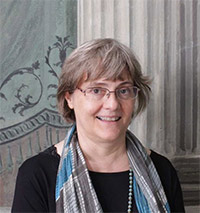
 vincenzo.giannotti@univr.it

 piergiovanna.grossi@univr.it

 elisa.lerco@univr.it


 francesco.lupi@univr.it

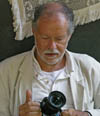
Mastrocinque Attilio
attilio.mastrocinque@univr.it
+39 045802 8386
marco.menato@univr.it


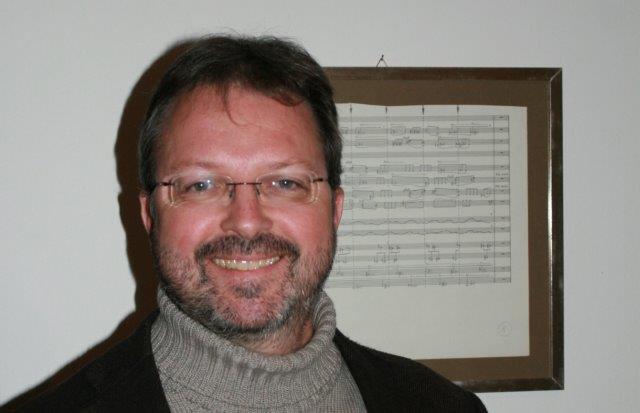





 alberto.scandola@univr.it
 cecilia.sideri@univr.it

 carlo.vannini@accademiabelleartiverona.it

Study Plan
The Study Plan includes all modules, teaching and learning activities that each student will need to undertake during their time at the University.
Please select your Study Plan based on your enrollment year.
1° Year
| Modules | Credits | TAF | SSD |
|---|
1 module to be chosen among the following2° Year activated in the A.Y. 2020/2021
| Modules | Credits | TAF | SSD |
|---|
1 module to be chosen among the following2 modules to be chosen among the following3 modules to be chosen among the following3° Year activated in the A.Y. 2021/2022
| Modules | Credits | TAF | SSD |
|---|
1 module to be chosen among the following1 module to be chosen among the following3 modules to be chosen among the following| Modules | Credits | TAF | SSD |
|---|
1 module to be chosen among the following| Modules | Credits | TAF | SSD |
|---|
1 module to be chosen among the following2 modules to be chosen among the following3 modules to be chosen among the following| Modules | Credits | TAF | SSD |
|---|
1 module to be chosen among the following1 module to be chosen among the following3 modules to be chosen among the following| Modules | Credits | TAF | SSD |
|---|
Legend | Type of training activity (TTA)
TAF (Type of Educational Activity) All courses and activities are classified into different types of educational activities, indicated by a letter.
Type D and Type F activities
| years | Modules | TAF | Teacher |
|---|---|---|---|
| 1° 2° 3° | Lectures "Musiche/Culture/Civiltà" | F |
Vincenzo Borghetti
(Coordinator)
|
| 1° 2° 3° | Musei civici Verona Conferences | F | Not yet assigned |
| 1° 2° 3° | C.T.G. Lectures | F |
Alessandra Zamperini
(Coordinator)
|
| 1° 2° 3° | Graphic and photographic documentation of the archaeological artefacts: from traditional drawings to digital sources | F |
Patrizia Basso
(Coordinator)
|
| 1° 2° 3° | Ephigraphy of production and distribution | F |
Alfredo Buonopane
(Coordinator)
|
| 1° 2° 3° | Introduction to the study of decorative arts | F |
Valerio Terraroli
(Coordinator)
|
| 1° 2° 3° | Presente e futuro del pianeta. economia, sostenibilità e politiche | F |
Gian Maria Varanini
(Coordinator)
|
| 1° 2° 3° | How to write your dissertation | F |
Alessandro Arcangeli
(Coordinator)
|
| 1° 2° 3° | Introductory seminar on art interpretation - BC | F |
Enrico Dal Pozzolo
(Coordinator)
|
| years | Modules | TAF | Teacher |
|---|---|---|---|
| 1° 2° 3° | Musei civici Verona Conferences | F | Not yet assigned |
| 1° 2° 3° | C.T.G. Lectures | F |
Alessandra Zamperini
(Coordinator)
|
| 1° 2° 3° | Graphic and photographic documentation of the archaeological artefacts: from traditional drawings to digital sources (Part II) | F |
Patrizia Basso
(Coordinator)
|
| 1° 2° 3° | Fai un giro in villa (1 cfu) | F |
Monica Molteni
(Coordinator)
|
| 1° 2° 3° | Workshop on classical archaeology | F |
Piergiovanna Grossi
(Coordinator)
|
| 1° 2° 3° | Laboratory of medieval archaeology | F |
Elisa Lerco
(Coordinator)
|
| 1° 2° 3° | Basic laboratory of data | F |
Maurizio Boscaini
(Coordinator)
|
| 1° 2° 3° | Educational workshop on bibliotherapy | F |
Marco Dalla Valle
(Coordinator)
|
| 1° 2° 3° | Workshop on prehistory and protohistory | F |
Anita Casarotto
(Coordinator)
|
| years | Modules | TAF | Teacher |
|---|---|---|---|
| 1° 2° 3° | Art Verona | F | Not yet assigned |
| 1° 2° 3° | Giovedì' culturali dell'ISSR I ciclo | F |
Tiziana Franco
(Coordinator)
|
| 1° 2° 3° | Giovedì' culturali dell'ISSR II ciclo | F |
Tiziana Franco
(Coordinator)
|
| 1° 2° 3° | Univero’ 2019 | F |
Tiziana Franco
(Coordinator)
|
| 1° 2° 3° | Urbs picta sulla storia dell’arte contemporanea | F | Not yet assigned |
| 1° 2° 3° | Urbs picta to be played - Video, immagine in movimento e videoinstallazione nella “generazione ottanta” | F | Not yet assigned |
Museology (i) (2021/2022)
Teaching code
4S01242
Teacher
Coordinator
Credits
6
Language
Italian
Scientific Disciplinary Sector (SSD)
L-ART/04 - MUSEOLOGY, ART AND RESTORATION CRITICISM
Period
1 B dal Nov 15, 2021 al Jan 12, 2022.

Learning outcomes
The student should be able to acquire the fundamental elements to critically interpret the History of Collecting, History of Museums, Museology and Museography. The student should be able to analyze and confront facts, formulating lines of reasoning and, consequently, the student should develop a smart and critic use of documents, sources, collectable materials, and architectural-expositive structures of museums. The course intends to give tools for a correct speaking ability on historic/artistic problems and critic/historic/structural analysis of a museum collection, and various professional figures in the museum management. The student should be able to use the correct glossary of the specific sector. The student should acquire the knowledge of various development lines of art history, History of Art Criticism and History of Taste, Collectionism, Museums; the student should also be able to reinforce different kind of critical approaches, to demonstrate capacity in reinterpretation of data and obtain critic notations.
Program
Museology as historic-artistic discipline through the history of museum as institution from Hellenistic tradition to the Twentieth century, with notions of History of Museography with the following information:
Definition of museion in the Classic Age and ICOM definition of Museum
Professional figures active within museum institutions
The collection of art objects in Roman and Medieval Culture
The Renaissance studiolo
The Wunderkammer
The royal and noble great collection
French Revolution and Louvre
The birth of museum of Neoclassical Age
The museum in Nineteenth century
The Madrid Conference of 1934
Scientific museums
World's fair and museums of Arts Décoratifs
House-Museum
Museum in Italy (1945-1960)
Museum of Modern and Contemporary Arts.
During the course various tours will be purposed: Verona, Museum of Castelvecchio (Carlo Scarpa’s project) and Modern Art Gallery Achille Forti.
In addition to the material indicated in the bibliography, students will have to study a book to choose from:
Adalgisa Lugli, Museologia, Jaca Book, Milano 1992 (Biblioteca Frinzi BF 30 B 435)
Julius von Schlosser, Raccolte d'arte e di meraviglie del tardo rinascimento, Firenze, Biblioteca Sansoni, 1974 (Frinzi BF 120 C 70 Biblioteca Ambrosoli STL 069 33)
Simona Troilo, La patria e la memoria. Tutela e patrimonio culturale nell’Italia unita, Electa, Milano 2005 (Biblioteca Frinzi BF 140 F 877)
Antonello Negri, L’arte in mostra. Una storia delle esposizioni, Bruno Mondadori, Milano 2011, pp. 5-153 (Biblioteca Frinzi BF 120 C 919)
The materials shown in class will be made available to students, via the e-learning platform.
Bibliography
Examination Methods
The exam purposes should verify the learning and critic reprocessing capacities of the treated topics, texts and bibliography.
The exam contents will be over the subjects recommended during the lectures and external tours.
The modalities will be oral through a conversation on the above subjects
The exam will be oral with a conversation between student and professor related to the topics of the course, the bibliography and critic texts, the external tours.
The evatuation is in 30/30.
Career prospects
Module/Programme news
News for students
There you will find information, resources and services useful during your time at the University (Student’s exam record, your study plan on ESSE3, Distance Learning courses, university email account, office forms, administrative procedures, etc.). You can log into MyUnivr with your GIA login details: only in this way will you be able to receive notification of all the notices from your teachers and your secretariat via email and soon also via the Univr app.
Graduation
List of theses and work experience proposals
| theses proposals | Research area |
|---|---|
| Ambiti di tesi | Art & Architecture - Art & Architecture |
| Stage | Research area |
|---|---|
| Lavorare in archivio | Various topics |
