Studying at the University of Verona
Here you can find information on the organisational aspects of the Programme, lecture timetables, learning activities and useful contact details for your time at the University, from enrolment to graduation.
Academic calendar
The academic calendar shows the deadlines and scheduled events that are relevant to students, teaching and technical-administrative staff of the University. Public holidays and University closures are also indicated. The academic year normally begins on 1 October each year and ends on 30 September of the following year.
Course calendar
The Academic Calendar sets out the degree programme lecture and exam timetables, as well as the relevant university closure dates..
| Period | From | To |
|---|---|---|
| Sem. IA (31.10.16 sosp.lezioni) | Oct 3, 2016 | Nov 12, 2016 |
| Sem. IB | Nov 14, 2016 | Jan 21, 2017 |
| Sem. IIA | Feb 27, 2017 | Apr 22, 2017 |
| Sem. IIB | Apr 24, 2017 | Jun 10, 2017 |
| Session | From | To |
|---|---|---|
| Sessione Estiva | Jun 12, 2017 | Jul 29, 2017 |
| Sessione Autunnale | Aug 21, 2017 | Sep 23, 2017 |
| Sessione Straordinaria | Jan 22, 2018 | Feb 24, 2018 |
| Session | From | To |
|---|---|---|
| Sessione Estiva | Jul 10, 2017 | Jul 15, 2017 |
| Sessione Autunnale | Dec 18, 2017 | Dec 21, 2017 |
| Sessione Invernale | Mar 23, 2018 | Mar 29, 2018 |
| Period | From | To |
|---|---|---|
| Festa di Ognissanti | Nov 1, 2016 | Nov 1, 2016 |
| Festa dell'Immacolata | Dec 8, 2016 | Dec 8, 2016 |
| Vacanze di Natale | Dec 23, 2016 | Jan 6, 2017 |
| Vacanze Pasquali | Apr 14, 2017 | Apr 18, 2017 |
| Festa della Liberazione | Apr 25, 2017 | Apr 25, 2017 |
| Festa dei Lavoratori | May 1, 2017 | May 1, 2017 |
| Festa del Santo Patrono - San Zeno | May 21, 2017 | May 21, 2017 |
| Festa della Repubblica | Jun 2, 2017 | Jun 2, 2017 |
| Vacanze Estive | Aug 14, 2017 | Aug 19, 2017 |
Exam calendar
Exam dates and rounds are managed by the relevant Humanistic Studies Teaching and Student Services Unit.
To view all the exam sessions available, please use the Exam dashboard on ESSE3.
If you forgot your login details or have problems logging in, please contact the relevant IT HelpDesk, or check the login details recovery web page.
Should you have any doubts or questions, please check the Enrollment FAQs
Academic staff
 alex.arcozzi@univr.it
Avezzu' Guido
guido.avezzu@univr.it
 augusto.barbi@univr.it

 evita.calabrese@univr.it
Carnero Roberto
roberto.carnero@univr.it
 alberto.cavarzere@univr.it

Chiecchi Giuseppe
giuseppe.chiecchi@univr.it
 +39 045802 8117

 francesco.depaola@univr.it


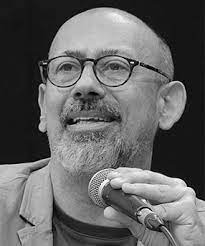

Mastrocinque Attilio
attilio.mastrocinque@univr.it
+39 045802 8386

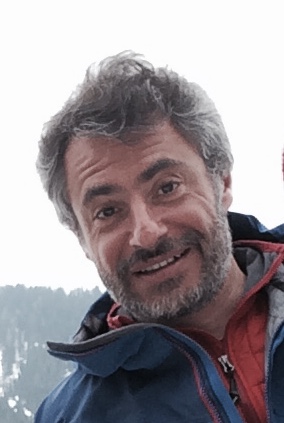
 linda.napolitano@univr.it
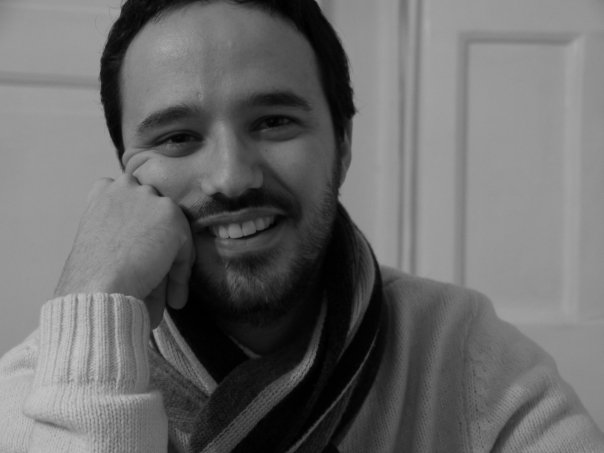









 gianmaria.varanini@univr.it

Study Plan
The Study Plan includes all modules, teaching and learning activities that each student will need to undertake during their time at the University.
Please select your Study Plan based on your enrollment year.
1° Year
| Modules | Credits | TAF | SSD |
|---|
One course to be chosen among the following2° Year activated in the A.Y. 2017/2018
| Modules | Credits | TAF | SSD |
|---|
One course to be chosen among the following
One course to be chosen among the following
One/two courses to be chosen among the followingOne course to be chosen among the following3° Year activated in the A.Y. 2018/2019
| Modules | Credits | TAF | SSD |
|---|
Two/four courses to be chosen among the followingOne/two courses to be chosen among the following| Modules | Credits | TAF | SSD |
|---|
One course to be chosen among the following| Modules | Credits | TAF | SSD |
|---|
One course to be chosen among the following
One course to be chosen among the following
One/two courses to be chosen among the followingOne course to be chosen among the following| Modules | Credits | TAF | SSD |
|---|
Two/four courses to be chosen among the followingOne/two courses to be chosen among the following| Modules | Credits | TAF | SSD |
|---|
Legend | Type of training activity (TTA)
TAF (Type of Educational Activity) All courses and activities are classified into different types of educational activities, indicated by a letter.
Philosophical Hermeneutics (i) (2017/2018)
Teaching code
4S02100
Teacher
Coordinator
Credits
6
Language
Italian
Scientific Disciplinary Sector (SSD)
M-FIL/01 - THEORETICAL PHILOSOPHY
Period
Sem. IA dal Sep 25, 2017 al Nov 11, 2017.
Learning outcomes
To achieve an adequate understanding of the egological foundation of experience in the phenomenological thought.
Program
EGO, CONSCIUOSNESS
At the end of the last century an elderly pope complained about the relativism of contemporary philosophy. It is a common place in our culture: in the twentieth century we are totally unsure what to do because the rock of the foundation was submerged by the tide of difference and perspectivism. Nothing more wrong than this. The great tradition of phenomenological thought begins with the attempt to find a certain foundation of our practices and ways of living in the world. It is an essentially Cartesian desire, which Husserl recognizes as the motive of his decade-long search: to find a univocal ground that does not deny but justifies the multifaceted and equivocal character of experience. It is not a metaphysical and speculative foundation, but an effective and self-evident one, capable of self-affirmation in the turmoils of existence. Husserl calls this ground "transcendental ego". The young Sartre moves to the attack of this egological perspective and argues that only the impersonality of Consciousness grounds the movement of experience. What is the difference between Ego and Consciousness? Which of the two is the true ground of the experience?
| Author | Title | Publishing house | Year | ISBN | Notes |
|---|---|---|---|---|---|
| Edmund Husserl | Idee per una fenomenologia pura e per una filosofia fenomenologica | Mondadori | 2009 | Libro I, §§ 2-5 , 85; Libro II, § 39 | |
| Carlo Sini | Introduzione alla fenomenologia | shake edizioni | 2012 | ||
| Jean-Paul Sartre | La trascendenza dell'Ego | Christian Marinotti | 2011 | ||
| Edmund Husserl | Meditazioni cartesiane | Bompiani | 2002 | ||
| Jean-Paul Sartre | Un'idea fondamentale della fenomenologia di Husserl: l'intenzionalità, in: Che cos'è la letteratura? | Il Saggiatore | 1963 |
Examination Methods
Orale exam.
Teaching materials e documents
-
 Husserl, Idee, Libro I, §§ 2-5
(pdf, it, 711 KB, 17/10/17)
Husserl, Idee, Libro I, §§ 2-5
(pdf, it, 711 KB, 17/10/17)
-
Husserl, Idee, Libro I, § 58 - Libro II § 39
(pdf, it, 919 KB, 29/08/17)
-
Sartre, Un'idea fondamentale della fenomenologia di Husserl: l'intenzionalità
(pdf, it, 22434 KB, 04/10/17)
Type D and Type F activities
Modules not yet included
Career prospects
Module/Programme news
News for students
There you will find information, resources and services useful during your time at the University (Student’s exam record, your study plan on ESSE3, Distance Learning courses, university email account, office forms, administrative procedures, etc.). You can log into MyUnivr with your GIA login details: only in this way will you be able to receive notification of all the notices from your teachers and your secretariat via email and soon also via the Univr app.
Student mentoring
Linguistic training CLA
Gestione carriere
Practical information for students
Documents
| Title | Info File |
|---|---|
|
1 - Guida per lo studente - AGGIORNAMENTO 2022
|
pdf, it, 325 KB, 02/05/23 |
|
2 - Guida per lo studente - AGGIORNAMENTO 2020
|
pdf, it, 212 KB, 02/05/23 |
|
3 - Guida per lo studente - AGGIORNAMENTO 2013
|
pdf, it, 131 KB, 02/05/23 |
Graduation
Documents
| Title | Info File |
|---|---|
|
Adempimenti amministrativi domanda di laurea Aprile 2024 - a.a. 2022/2023
|
pdf, it, 99 KB, 13/10/23 |
|
Adempimenti amministrativi domanda di laurea Luglio 2024-a.a. 2023/2024
|
pdf, it, 101 KB, 10/04/24 |
