Studying at the University of Verona
Here you can find information on the organisational aspects of the Programme, lecture timetables, learning activities and useful contact details for your time at the University, from enrolment to graduation.
Academic calendar
The academic calendar shows the deadlines and scheduled events that are relevant to students, teaching and technical-administrative staff of the University. Public holidays and University closures are also indicated. The academic year normally begins on 1 October each year and ends on 30 September of the following year.
Course calendar
The Academic Calendar sets out the degree programme lecture and exam timetables, as well as the relevant university closure dates..
| Period | From | To |
|---|---|---|
| Primo semestre | Oct 4, 2021 | Jan 28, 2022 |
| Secondo semestre | Mar 7, 2022 | Jun 10, 2022 |
| Session | From | To |
|---|---|---|
| Sessione invernale d'esame | Jan 31, 2022 | Mar 4, 2022 |
| Sessione estiva d'esame | Jun 13, 2022 | Jul 29, 2022 |
| Sessione autunnale d'esame | Sep 1, 2022 | Sep 30, 2022 |
| Session | From | To |
|---|---|---|
| Sessione Estiva | Jul 15, 2022 | Jul 15, 2022 |
| Sessione Autunnale | Oct 14, 2022 | Oct 14, 2022 |
| Sessione Invernale | Mar 14, 2023 | Mar 14, 2023 |
| Period | From | To |
|---|---|---|
| Festa di Tutti i Santi | Nov 1, 2021 | Nov 1, 2021 |
| Festa dell'Immacolata Concezione | Dec 8, 2021 | Dec 8, 2021 |
| Festività natalizie | Dec 24, 2021 | Jan 2, 2022 |
| Festa dell'Epifania | Jan 6, 2022 | Jan 7, 2022 |
| Festività pasquali | Apr 15, 2022 | Apr 19, 2022 |
| Festa della Liberazione | Apr 25, 2022 | Apr 25, 2022 |
| Festività Santo Patrono di Verona | May 21, 2022 | May 21, 2022 |
| Festa della Repubblica | Jun 2, 2022 | Jun 2, 2022 |
| Chiusura estiva | Aug 15, 2022 | Aug 20, 2022 |
Exam calendar
Exam dates and rounds are managed by the relevant Science and Engineering Teaching and Student Services Unit.
To view all the exam sessions available, please use the Exam dashboard on ESSE3.
If you forgot your login details or have problems logging in, please contact the relevant IT HelpDesk, or check the login details recovery web page.
Should you have any doubts or questions, please check the Enrollment FAQs
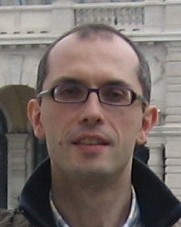
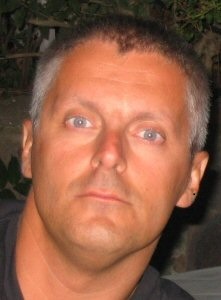
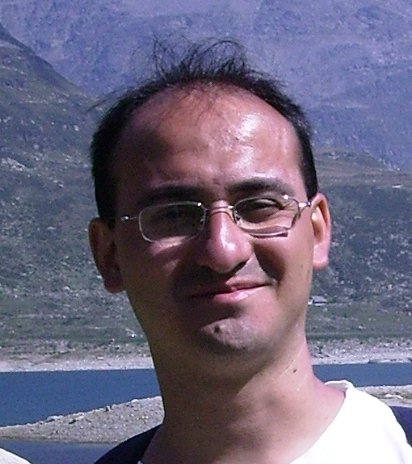
Academic staff

 +39 045 802 7980

 mariano.ceccato@univr.it







 giulio.mazzi@univr.it

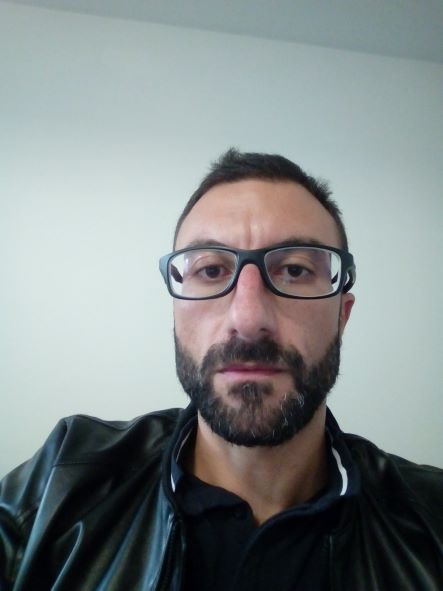 giovannigerardo.muscolo@univr.it

 daniela.pianezzi@univr.it







Study Plan
The Study Plan includes all modules, teaching and learning activities that each student will need to undertake during their time at the University.
Please select your Study Plan based on your enrollment year.
1° Year
| Modules | Credits | TAF | SSD |
|---|
Compulsory activities for Embedded & Iot SystemsCompulsory activities for Smart Systems & Data Analytics2° Year activated in the A.Y. 2022/2023
| Modules | Credits | TAF | SSD |
|---|
Compulsory activities for Embedded & Iot SystemsCompulsory activities for Robotics SystemsCompulsory activities for Smart Systems & Data Analytics| Modules | Credits | TAF | SSD |
|---|
Compulsory activities for Embedded & Iot SystemsCompulsory activities for Smart Systems & Data Analytics| Modules | Credits | TAF | SSD |
|---|
Compulsory activities for Embedded & Iot SystemsCompulsory activities for Robotics SystemsCompulsory activities for Smart Systems & Data Analytics| Modules | Credits | TAF | SSD |
|---|
3 modules among the followingLegend | Type of training activity (TTA)
TAF (Type of Educational Activity) All courses and activities are classified into different types of educational activities, indicated by a letter.
Type D and Type F activities
Le attività formative di tipologia D sono a scelta dello studente, quelle di tipologia F sono ulteriori conoscenze utili all’inserimento nel mondo del lavoro (tirocini, competenze trasversali, project works, ecc.). In base al Regolamento Didattico del Corso, alcune attività possono essere scelte e inserite autonomamente a libretto, altre devono essere approvate da apposita commissione per verificarne la coerenza con il piano di studio. Le attività formative di tipologia D o F possono essere ricoperte dalle seguenti attività.
1. Insegnamenti impartiti presso l'Università di Verona
Comprendono gli insegnamenti sotto riportati e/o nel Catalogo degli insegnamenti (che può essere filtrato anche per lingua di erogazione tramite la Ricerca avanzata).
Modalità di inserimento a libretto: se l'insegnamento è compreso tra quelli sottoelencati, lo studente può inserirlo autonomamente durante il periodo in cui il piano di studi è aperto; in caso contrario, lo studente deve fare richiesta alla Segreteria, inviando a carriere.scienze@ateneo.univr.it il modulo nel periodo indicato.
2. Attestato o equipollenza linguistica CLA
Oltre a quelle richieste dal piano di studi, per gli immatricolati dall'A.A. 2021/2022 vengono riconosciute:
- Lingua inglese: vengono riconosciuti 3 CFU per ogni livello di competenza superiore a quello richiesto dal corso di studio (se non già riconosciuto nel ciclo di studi precedente).
- Altre lingue e italiano per stranieri: vengono riconosciuti 3 CFU per ogni livello di competenza a partire da A2 (se non già riconosciuto nel ciclo di studi precedente).
Tali cfu saranno riconosciuti, fino ad un massimo di 6 cfu complessivi, di tipologia F se il piano didattico lo consente, oppure di tipologia D. Ulteriori crediti a scelta per conoscenze linguistiche potranno essere riconosciuti solo se coerenti con il progetto formativo dello studente e se adeguatamente motivati.
Gli immatricolati fino all'A.A. 2020/2021 devono consultare le informazioni che si trovano qui.
Modalità di inserimento a libretto: richiedere l’attestato o l'equipollenza al CLA e inviarlo alla Segreteria Studenti - Carriere per l’inserimento dell’esame in carriera, tramite mail: carriere.scienze@ateneo.univr.it
3. Competenze trasversali
Scopri i percorsi formativi promossi dal TALC - Teaching and learning center dell'Ateneo, destinati agli studenti regolarmente iscritti all'anno accademico di erogazione del corso https://talc.univr.it/it/competenze-trasversali
Modalità di inserimento a libretto: non è previsto l'inserimento dell'insegnamento nel piano di studi. Solo in seguito all'ottenimento dell'Open Badge verranno automaticamente convalidati i CFU a libretto. La registrazione dei CFU in carriera non è istantanea, ma ci saranno da attendere dei tempi tecnici.
4. Periodo di stage/tirocinio
Oltre ai CFU previsti dal piano di studi (verificare attentamente quanto indicato sul Regolamento Didattico): qui informazioni su come attivare lo stage.
Insegnamenti e altre attività che si possono inserire autonomamente a libretto
| years | Modules | TAF | Teacher |
|---|---|---|---|
| 1° 2° | Data Analysis for Biomedical Sciences | D |
Gloria Menegaz
(Coordinator)
|
| 1° 2° | Introduction to Robotics for students of scientific courses. | D |
Paolo Fiorini
(Coordinator)
|
| 1° 2° | Matlab-Simulink programming | D |
Bogdan Mihai Maris
(Coordinator)
|
| years | Modules | TAF | Teacher |
|---|---|---|---|
| 1° 2° | Introduction to Robotics for students of scientific courses. | D |
Paolo Fiorini
(Coordinator)
|
| 1° 2° | Introduction to 3D printing | D |
Franco Fummi
(Coordinator)
|
| 1° 2° | HW components design on FPGA | D |
Franco Fummi
(Coordinator)
|
| 1° 2° | Rapid prototyping on Arduino | D |
Franco Fummi
(Coordinator)
|
| 1° 2° | Protection of intangible assets (SW and invention)between industrial law and copyright | D |
Roberto Giacobazzi
(Coordinator)
|
| years | Modules | TAF | Teacher |
|---|---|---|---|
| 1° 2° | Python programming language | D |
Giulio Mazzi
(Coordinator)
|
Dynamic System Theory (2021/2022)
Teaching code
4S009000
Teacher
Coordinator
Credits
9
Language
English
Scientific Disciplinary Sector (SSD)
ING-INF/04 - SYSTEMS AND CONTROL ENGINEERING
Period
Primo semestre dal Oct 4, 2021 al Jan 28, 2022.

Learning outcomes
The course aims to provide knowledge on the theoretical basis of the theory of dynamic systems, in the representation of state, with particular reference to the properties of time invariant linear systems and the methods for the synthesis of controllers for these systems. At the end of the course the student will have to demonstrate ability to apply the acquired knowledge: to provide the knowledge to analyze the structural properties of a linear dynamic system (e.g. reachability and observability) and its stability. Calculate the observability and reachability matrices; design a state feedback controller; design an asymptotic state observer; apply Lyapunov's theory of stability. Must have the ability to define the technical specifications to design a controller for linear dynamic systems described by differential or difference equations. S/He will have to be able to deal with other engineers (e.g. electronic, automatic, mechanical) to design advanced controllers for complex electromechanical systems. It will have to show ability to continue studies independently in the field of designing robust and optimal controllers for linear and non-linear systems.
Program
Review of the basic concepts of system analysis:
- Definitions and properties of linear, time invariant (LTI) systems,
- models in time, frequency and "s" and "z" domains,
- the transfer function
- main properties of LTI systems in "t", "f", "s" and "z",
- discrete time systems and Z transform
- main properties of feedback systems.
State models:
- AR, MA, ARMA models,
- input-state-output representation,
- definitions of state, causality, algebraic equivalence,
- state and output update map,
- exponential matrix and its properties,
- Jordan canonical form, characteristic polynomial, algebraic and geometric multiplicity,
- modes, their characteristics, simple/asymptotic/BIBO stability,
- Relation between state representation and Laplace and Z transforms,
- Transfer functions, eigenvalues and poles.
Stability in state models:
- equilibrium state,
- stability of an equilibrium state,
- Lyapunov stability criterion,
- Lyapunov equation,
- linearization and reduced Lyapunov criterion.
Reachability:
- main concepts and the reachability Gramian,
- state space control,
- standard form of reachability, canonical control form,
- PBH criterion of reachability,
- state feedback.
Observability:
- main concepts and observability Gramian,
- State estimation (open and closed loop),
- standard form of observability, canonical observation form,
- PBH criterion of observability.
Duality:
- overview of discrete time Kalman filter,
- overview of optimal linear, quadratic controller in discrete time domain.
Bibliography
Examination Methods
The exam will consist of a written test on the course topics. The exam will contain questions in the form of theoretical questions and exercises where it will be required to apply specific theoretical knowledge. Each question will contribute to the total score according to an additive metric that will be specified before the exam.
If the written test is evaluated positively, an optional oral test is foreseen, which will cover the theoretical part of the course. The overall score will be the mean of the oral and written tests scores.
Both tests (written and oral optional) will be aimed at understanding the theoretical arguments and the ability to apply logic schemes to specific problems.
Career prospects
Module/Programme news
News for students
There you will find information, resources and services useful during your time at the University (Student’s exam record, your study plan on ESSE3, Distance Learning courses, university email account, office forms, administrative procedures, etc.). You can log into MyUnivr with your GIA login details: only in this way will you be able to receive notification of all the notices from your teachers and your secretariat via email and also via the Univr app.
Graduation
Deadlines and administrative fulfilments
For deadlines, administrative fulfilments and notices on graduation sessions, please refer to the Graduation Sessions - Science and Engineering service.
Need to activate a thesis internship
For thesis-related internships, it is not always necessary to activate an internship through the Internship Office. For further information, please consult the dedicated document, which can be found in the 'Documents' section of the Internships and work orientation - Science e Engineering service.
Final examination regulations
Upon completion of the Master’s degree dissertation, students are awarded 24 CFU, which equates to no more than 4-5 months of full-time work.
Goals
The primary goal of a dissertation is to develop an original study that may include an application project or a theoretical topic related to specific design issues, or a critical review of the most recent developments in a given field of study. During the preparation of the dissertation, under the guidance of the Supervisor and co-supervisors (if any), the student is expected to conduct an in- depth study of the chosen topic, while gaining the ability to summarise and creatively apply the knowledge acquired. The dissertation should focus on topics of engineering and computer science, or closely related areas of study. The work shall consist in the written presentation of activities that may be structured as follows:
- design and development of applications or systems;
- critical analysis of contributions from the scientific literature;
- original research contributions.
The dissertation shall be written in English and can be presented either in English or in Italian, also relying on multimedia tools such as presentations and videos.
Assessment methods and examination procedures
Each dissertation can be either internal or external, depending on whether it is carried out at the University of Verona or in collaboration with another institution. For each dissertation a Supervisor, one or more co-supervisors (optional) and an Examiner will be appointed. The Examiner is appointed by the Computer Science Teaching Committee at least 20 days before the presentation of the dissertation, once the student's eligibility to take the Master's degree examination has been verified. With regard to the legal aspects related to the dissertation and its scientific outcomes (e.g. intellectual property of research outcomes), please refer to the relevant legislation and the University Regulations.
Evaluation of the dissertation
The Supervisor, the co-supervisor/s (if any) and the Examiner will evaluate the dissertation based on the following criteria:
- level of in-depth analysis carried out, in relation to the most recent developments in the areas related to information technology, with a focus on medical and biological applications;
- scientific and/or technological outcomes of the dissertation;
- student’s critical thinking;
- student’s experimental and/or formal development;
- student’s ability to carry out independent work (this point will not be assessed by the Examiner);
- value of the methodologies used;
- accuracy in planning and writing the dissertation.
Graduation mark
The graduation mark (based on a 110-point scale) is a whole value between 66/110 and 110/110 and is calculated by adding together the following elements (then rounding the result to the nearest whole number, e.g. 93.50 => 94; 86.49 => 86):
- 1) the average of the marks gained in the modules, weighted according to CFU, converted to a 110-point scale;
- 2) evaluation of the dissertation and the oral presentation during the final examination, based on the following methods:
- a) each of the points 1-7 listed above will be assigned a coefficient between 0 and 1 (fractional coefficient with one decimal place);
- b) the quality of the presentation will be assessed by awarding a coefficient between 0 and 1 (fractional coefficient with one decimal place);
- c) the sum of the points resulting from (a) and (b).
The Graduation Committee may award one extra point in the following cases: cum laude honours obtained in the exams taken during the degree programme; participation in internships officially recognised by the Computer Science Teaching Committee; taking extra modules; and the achievement of the degree in a time that is shorter than the normal duration of the degree programme. If the final score is 110/110, the Graduation Committee may award cum laude honours by unanimous decision.
External dissertations
An external dissertation is a work carried out in collaboration with an institution/body other than the University of Verona. In this case, the topic of the dissertation must be agreed in advance with a Supervisor from the University of Verona. In addition, the student must indicate at least one co- supervisor belonging to the external institution/body, who will support the student during the work on the dissertation. The Supervisor and the co- supervisors must be indicated in the online graduation application. The insurance aspects relating to the student's stay at the external institution are regulated by the regulations in force at the University of Verona. If the dissertation involves a period of training at the external institution/body, then it is necessary that the University of Verona enters into a specific agreement with such institution/body. The scientific outcomes of the dissertation will be available to all parties involved. In particular, the contents and results of the dissertation are to be considered public. For all matters not strictly scientific (e.g. agreements, insurance) the resolution of the Academic Senate of 12 January 1999 shall be taken as a reference.
Supervisor, co-supervisors, examiners
The dissertation presentation is introduced by the Supervisor. Professors belonging to the Department of Computer Science may be appointed as Supervisors, as well as any external lecturers who are deemed suitable by the Teaching Committee based on their area of study and level of expertise.
In addition to those who have the above requirements to be appointed as Supervisor, the following individuals may be appointed as co-supervisors: researchers working in external research institutes, research grant holders, post-doctoral fellowship holders, PhD students, technical staff of the Department, external experts appointed by an Italian University, corporate officers who have a remarkable experience in the field relevant to the topic of the dissertation. Examiners may be appointed among lecturers and researchers at the Department of Computer Science of the University of Verona, who are deemed to be experts in the specific field of the dissertation topic.
Graduation Committee
The Graduation Committee shall include five members, of which at least four are professors in the Master's degree programme in Computer Engineering for Robotics and Smart Industry. Based on the number of graduates, the Computer Science Teaching Committee will identify the most appropriate organisational methods for administering the examination, and it shall make available the calendar of tests at least one week before the examination itself. The procedures and deadlines for the submission of the graduation application are established by the Computer Science Teaching Committee and by the relevant offices.
List of thesis proposals
| theses proposals | Research area |
|---|---|
| Domain Adaptation | Computer Science and Informatics: Informatics and information systems, computer science, scientific computing, intelligent systems - Computer graphics, computer vision, multi media, computer games |
| Domain Adaptation | Computer Science and Informatics: Informatics and information systems, computer science, scientific computing, intelligent systems - Machine learning, statistical data processing and applications using signal processing (e.g. speech, image, video) |
| Domain Adaptation | Computing Methodologies - IMAGE PROCESSING AND COMPUTER VISION |
| Domain Adaptation | Computing methodologies - Machine learning |
| THESIS_1: Sensors and Actuators for Applications in Micro-Robotics and Robotic Surgery | Various topics |
| THESIS_2: Force Feedback and Haptics in the Da Vinci Robot: study, analysis, and future perspectives | Various topics |
| THESIS_3: Cable-Driven Systems in the Da Vinci Robotic Tools: study, analysis and optimization | Various topics |
